B2B wholesale platform

What does digital transformation look like in B2B commerce?

See what digital transformation really looks like in B2B commerce and how leading wholesale brands are putting it into practice.

banner_image

Discover a better way to run your wholesale

Even in the new era of AI, many wholesale leaders are still debating what exactly success looks like when it comes to “digital transformation.” What processes need to change, and how? Which technologies matter most, and where should you start? This article walks through the key forces accelerating the digital shift, common challenges and pain points, and a framework leading brands have used to find their edge.

Key takeaways


  • Digital transformation in B2B commerce goes beyond adopting new software—it reshapes how brands sell, how buyers purchase, and how teams collaborate across the entire wholesale relationship.

  • B2B buyers now expect the speed, transparency, and self-service convenience they're accustomed to as consumers, and those expectations raise the bar for every brand they work with.

  • Core technologies driving the shift include digital showrooms, real-time analytics, AI-powered personalization, and connected order management systems.

  • The biggest obstacles aren't technical, but organizational: change resistance, legacy systems, and disconnected data across teams.

  • Brands that approach digital transformation with a clear strategy and the right platform partner gain an edge in buyer retention, operational efficiency, and revenue growth.

What is digital transformation in B2B commerce?

In B2B commerce, “digital transformation” is more than simply moving processes online. It involves rethinking how brands and retailers buy and sell, using technology to improve the experience on both sides. This spans strategy, organizational culture, business models, and go-to-market approach, not just which software to use.

For decades, wholesale ran on a familiar rhythm: printed catalogs, in-person market appointments, handwritten orders, and follow-up emails to confirm quantities and ship dates. That model worked when buying cycles were predictable and the number of retail touchpoints was manageable. Today, retailers are buying more cautiously, managing tighter inventory, and expecting real-time information at every step.

This shift applies across the board in B2B—from wholesale ordering and distribution to retail buying and assortment planning—wherever brands and retailers transact and collaborate.

Why B2B buyers are driving the shift to digital

According to NuORDER's 2026 State of B2B eCommerce Report, 78% of senior leaders now rank wholesale as their top investment priority. On the buyer's side, retailers increasingly expect the same speed, transparency, and self-service of B2C channels: to browse assortments on their own time, see real-time inventory, and place orders without chasing a sales rep for a PDF. When one brand delivers that experience, the choice becomes obvious.

Internally, the case is just as compelling. Manual workflows are expensive. Spreadsheet-based order management introduces errors. Disconnected systems make it harder to see what's selling, what needs restocking, and where margins are under pressure. During unpredictable economic conditions—tariff shifts, cautious consumer spending, tightening margins—these inefficiencies become harder to absorb.

Download The Death of Disconnected Wholesale Guide

We're not mourning the end of disconnected wholesale. Explore what's changing across the industry—and how brands and retailers are adapting.

Key technologies shaping B2B digital transformation

When we asked over 200 senior wholesale leaders about their biggest operational pain points, the answers pointed in one direction: the tools they rely on aren't keeping pace with their ambitions. Here's the technology that closes that gap.

Digital showrooms and virtual selling

Physical showrooms and market-week appointments still matter, but they're no longer enough on their own. Digital showrooms give brands an always-on, branded environment where buyers can explore collections, view pricing, build assortments, and place orders—from anywhere. For sales teams, virtual showrooms reduce the dependency on travel and trade-show schedules. This leads to faster buying cycles, broader reach, and a more consistent brand experience.

Data, analytics, and smarter decision-making

Maybe the clearest difference between digitally mature and immature B2B organizations is how they use data. According to NuORDER’s 2026 report, brand visibility into retail sell-through jumped from 36% to 74% year over year—and 67% of brands now use that data in daily decision-making. With actionable insights into sell-through rates, order trends, and buyer behavior, brands can plan smarter assortments, allocate inventory more effectively, and identify opportunities before competitors do. 

AI and automation in order management

AI and automation are also changing daily B2B operations. Top AI use cases in wholesale include inventory forecasting (44%, up 22 points YoY), automating routine processes (41%), and optimizing pricing strategies (38%, up 26 points YoY). AI-powered tools can flag trends at scale and surface opportunities for cross-selling. Automation streamlines order capture and fulfillment and eliminates manual re-entry of data, which results in lower error rates, faster confirmations, and shorter path from order to delivery.

What digital transformation looks like in practice for wholesale brands

Consider a brand that manages its wholesale business the traditional way: emailed line sheets, phone-based order taking, and a patchwork of spreadsheets shared across sales, merchandising, and operations. A buyer who wants to place a reorder has to email their rep, wait for confirmation on availability, and then follow up again once the order is processed. Internally, someone on the brand's team re-enters that order into an ERP by hand.

Alternatively, once the brand has digitized its wholesale operations, the process becomes far less tedious and prone to error: 

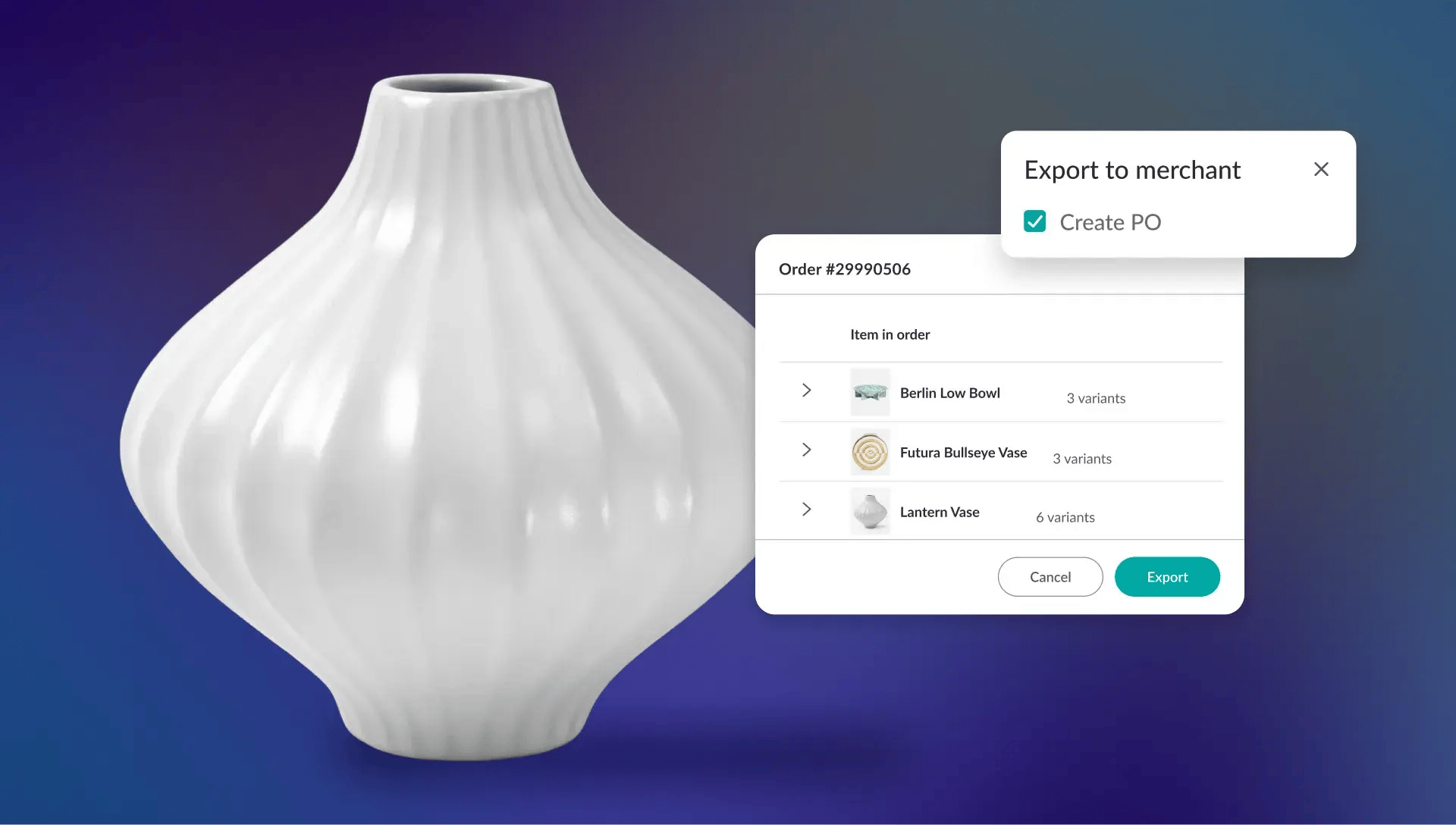
  • Buyers log into a branded online wholesale ordering portal, browse live inventory, and place orders on their own schedule

  • Order data flows directly into the brand's systems, so sales reps spend less time on admin work and more on relationship-building

  • Merchandisers get cleaner data on what's performing and can adjust assortments mid-season, while operations teams field fewer order errors and chargebacks.

Retailers collect more accurate data, with less manual work, and buyers enjoy a streamlined experience that makes them more likely to reorder—and less likely to look elsewhere.
online wholesale ordering

Common challenges in B2B digital transformation

Most wholesale leaders have attempted some kind of digital transformation, but many initiatives lose momentum after launch. The biggest obstacles aren't technical but human and organizational. 

Change resistance is the most common barrier. Teams that have spent years building workflows around spreadsheets, phone calls, and in-person selling don't always embrace new systems enthusiastically—especially if the short-term disruption feels bigger than the long-term upside. Clear communication about why the change is happening, hands-on training, and early wins that demonstrate real improvements are what help teams make the shift.

Legacy systems present a different challenge. Many brands have invested significantly in tools that technically work but don't connect well to modern platforms. The fear of ripping everything out and starting over keeps teams stuck. A phased integration approach—starting with the highest-impact workflows and expanding from there—reduces that risk considerably.

Disconnected data might be the most insidious problem. When product information, pricing, inventory, and order history live in separate systems that don't talk to each other, no single team has a complete view of the business. That fragmentation leads to slower decisions, inconsistent buyer experiences, and the kind of operational drag that compounds over time.

How to approach digital transformation in B2B

Digital transformation doesn't require a single, dramatic overhaul. The brands that execute it well tend to follow a practical, phased approach.

Assess your starting point. Take an honest look at your current tech stack, your team's processes, and where the most friction exists for both your internal team and your buyers. Where are orders getting delayed? Where do errors creep in? What questions can't your team answer quickly because the data is scattered?

Set a strategy with clear goals. Digital transformation without a defined destination becomes a series of disconnected tool purchases. Decide what you're solving for—whether that's faster order processing, better buyer retention, cleaner data—and build a roadmap that prioritizes the highest-impact changes first. And get leadership aligned early, because transformation stalls fast without executive buy-in.

Choose the right platform partner. The technology you build on determines how fast you can move and how far you can scale. Look for a platform purpose-built for B2B commerce—not a consumer storefront retrofitted for wholesale. The right partner should reduce internal strain, not add to it, and grow with your business as your digital maturity increases.

How NuORDER supports digital transformation in B2B commerce

NuORDER by Lightspeed was built for exactly this shift. Brands use NuORDER's B2B commerce platform to move off spreadsheets and paper catalogs and into a connected digital environment where linesheets, orders, assortments, and buyer relationships are managed in one place. That centralization removes the operational friction that stalls most digital transformation efforts, and brings real-time visibility into product data, approvals, and order workflows in one place.
 
For brands at any stage of the digital transformation journey, NuORDER provides the infrastructure to start where they are and scale as they grow. Some proven real-world examples:

  • French Connection replaced their legacy B2B tools with NuORDER to consolidate product and order data into a single platform — and saw a 40% increase in new accounts at trade shows in the first year. 

  • Chubbies partnered with NuORDER to build a custom NetSuite ERP integration that connected their wholesale workflows to core operational systems, eliminating manual tasks and enabling near-real-time order processing.

  • Skida, an outdoor accessories brand, moved 81% of its wholesale orders to self-serve through NuORDER, freeing the team to focus on strategic selling rather than administrative order management.

Skida

Digital transformation is the new baseline

The wholesale brands gaining ground in 2026 don’t have the largest product lines or the biggest trade-show booths. They're the easiest to work with, and digital transformation is how they got there. In our 2026 B2B eCommerce survey, 77% of brands now say their B2B eCommerce solution plays a critical or significant role in their end-to-end operations. 

If the technologies and practices covered in this article feel aspirational, it's worth evaluating where your current tools and processes stand. Brands ready to move past manual workflows can see how a connected wholesale platform simplifies ordering, data, and buyer relationships. The fastest way to evaluate fit is to see the platform in action.

Frequently asked questions about digital transformation in B2B commerce

What does digital transformation look like in B2B commerce?

Digital transformation in B2B commerce is the shift from manual, disconnected processes—like paper catalogs, emailed orders, and spreadsheet-based reporting—to connected digital systems that streamline how brands sell and how retailers buy. It encompasses strategy, technology, and organizational change.

What is included in a B2B digital transformation strategy?

A B2B digital transformation strategy typically includes an assessment of current tools and workflows, defined goals for operational improvement and buyer experience, a technology roadmap, leadership alignment, and a phased implementation plan that prioritizes the highest-impact changes first.

What should you look for in a B2B commerce platform?

Look for a platform purpose-built for wholesale—not a consumer storefront adapted for B2B. Key capabilities include digital showrooms, real-time inventory visibility, order management, buyer-specific pricing and catalogs, analytics and reporting, and seamless ERP integrations.

Why is digital transformation important for wholesale brands?

Wholesale buyers now expect the same speed, transparency, and convenience they experience as consumers. Brands that can't deliver risk losing accounts to competitors who can. Digital transformation also reduces operating costs, minimizes order errors, and gives teams better data for faster decisions.

What technology do you need for B2B digital transformation?

The core technology stack includes a B2B eCommerce platform, digital showroom or virtual selling tools, order management and fulfillment systems, analytics and reporting dashboards, and integrations with ERP and CRM systems.

What are the biggest challenges companies face going digital?

The most common challenges are internal resistance to change, legacy systems that don't integrate well with modern tools, and disconnected data across departments. A phased approach, clear communication, and the right platform partner help overcome each of these.

How is AI used in B2B commerce?

AI is used to analyze buying patterns, recommend products, support cross-selling and upselling, and forecast demand. Automation—often paired with AI—streamlines order capture, reduces manual data entry errors, and speeds up the fulfillment process.

Share article

Inside this post

Get on the list

Wholesale tips and industry news you can’t miss, delivered weekly
Are you ready to transform your wholesale business?

See how NuORDER by Lightspeed can help you reach new heights.