
wholesale

How do brands reduce errors in wholesale ordering?

Discover how brands reduce errors in wholesale ordering with digital order capture, automated validation, and connected systems for stronger order accuracy.

banner_image

Discover a better way to run your wholesale

Brands reduce wholesale ordering errors when they make the transition from capturing orders with manual tools (emails, paper, PDFs, spreadsheets) to capturing orders with a connected B2B eCommerce platform that automates validation, reduces the risk of human error, integrates seamlessly across key systems, and tracks orders with accuracy.

Errors can be extremely costly in the wholesale business. Without the right systems in place, leaders can end up grappling with reshipment costs, retailer chargebacks, reduced time and productivity due to fixing and reconfirming orders, and subtle erosion of retailer trust that can manifest as fewer reorders. Read on to learn more about where wholesale errors start and how to prevent them from occurring in the first place by putting the right systems in place for capture, validation, integration, process, and finally, measurement.

Key takeaways


  • The vast majority of wholesale ordering errors occur at the point of capture when reps enter orders from emails, PDFs, spreadsheets, and paper.

  • When you digitize your orders via a connected platform with accurate linesheets, you remove the greatest source of errors before bad data can reach your inventory management system or ERP.

  • Automated order validation, clean integration, and accuracy tracking change error prevention from a one-time fix into an ongoing, measurable process.

What are wholesale ordering errors?

A wholesale ordering error is any mistake between a brand and a retailer regarding what gets ordered, priced, or fulfilled. If you have a wholesale fashion business, that might look like receiving sneakers in the wrong colorways, buying earrings with prices that don’t reflect your negotiated terms, accidentally receiving a duplicate summer shipment from the same brand, or similar hiccups. What’s more, wholesale distribution errors are highly likely to occur when your operations include manual processes for buying or selling. 

The most common types of wholesale order errors

The most common wholesale orders are incorrect SKUs or styles, incorrect quantities or case packs, outdated pricing, duplicate orders, and missed or dropped orders. 

Here are examples of each:

  • Incorrect SKUs or styles: when buyers receive last season’s colorway, when the wrong SKU is fulfilled due to a typing error or a handwriting misinterpretation, etc.

  • Incorrect quantities or case packs: when units are ordered as singles instead of packs

  • Outdated pricing: when an item was accidentally sold with an expired wholesale price that will ultimately need to be honored

  • Duplicate orders: when the same PO is entered twice by email and by phone

  • Missed or dropped orders: an emailed order wasn’t manually entered into your system, a physical order form was lost, etc.

Why these errors are costly for brands

Shipping the wrong orders or duplicate orders will augment your expenses in the form of reshipment and return freight fees. If you send fewer items than what a merchant actually ordered, you could end up facing costly chargebacks and even compliance fines. What’s more, if you end up facing any and all of the common wholesale errors listed above, your staff members will need to devote valuable time and energy into order reconciliation and you’ll experience some degree of margin erosion. Still, the most expensive cost is the damage wholesale errors can create in your relationships. It’s difficult for buyers to rely on brands that repeatedly make errors, and it’s an easy route to lose business to the competition. Thankfully, it doesn’t have to be this way at all. You can transform your order accuracy by getting the right tech and operations in place.

Where wholesale ordering errors actually start

Wholesale order entry errors usually happen at the start. And when you create an order via manual processes, there are several opportunities for things to go wrong. For example, your reps can enter incorrect information pulled from emailed or paper notes or buyers might place orders from your static, PDF linesheets that don’t reflect updated styles or prices. Complicating matters further, every time order data goes from one disconnected tool to another (such as email to a spreadsheet to your ERP), it creates a new opportunity to mistype or mismatch info or to omit an essential line of data. NuORDER was designed to eliminate the hurdles created by these manual, disconnected order capture processes—from seamless integrations to digital linesheets that update in real time. 

Let’s take a closer look at how common errors start:

Manual order writing and rekeying

Picture this: a buyer emails an order draft, then a rep types the order into a spreadsheet. Someone else on your team retypes those order details into your ERP, accidentally entering the incorrect SKU, style code, quantity, or price.  

Disconnected systems and data silos

When your tech stack is full of disconnected systems, it becomes impossible to trust your data. When product, pricing, and inventory data exist in separate tools, you can end up seeing different versions of data in different systems and your reps or team members can end up writing orders based on data that’s no longer accurate.

Outdated or inconsistent product and pricing data

There are other ways outdated or inconsistent product and pricing data can emerge. A buyer might be referencing a PDF linesheet they received months ago (rather than an always-current, digital source of data), not realizing it contains discontinued styles or outdated prices. 

Digitize the order-capture process

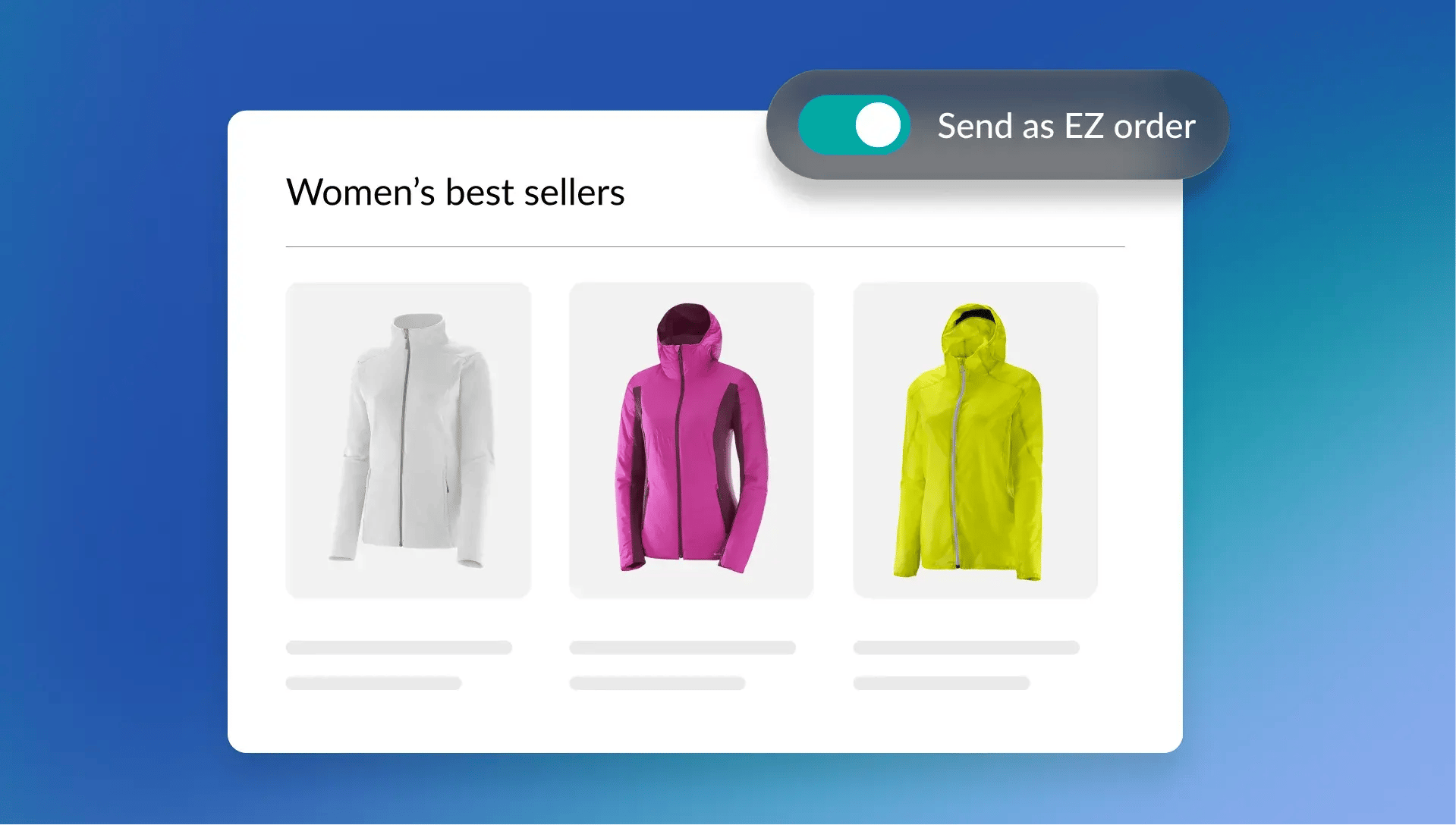
If there’s one move you can make in your wholesale business to make the greatest impact, it’s to digitize your order-capture process. Since most errors originate there, you can instantly eliminate the risk of several common wholesale errors at once. To digitize your process, use a B2B wholesale platform to replace your manual order processes. This will ensure data for each order will only be entered once, accurately, and at the point of sale. You’ll be able to share digital linesheets and a digital showroom to ensure your reps and your retail partners are working from the same, up-to-date product and pricing data; you’ll be able to make real-time updates too. When you digitize the order-capture process, you open the door for buyers to be able to place orders whenever they desire. And these buyer-submitted orders make it more likely that buyers will place reorders which can help increase your revenue. 

NuORDER offers all of this and more. Merchants can place orders 24/7 from your custom portal, digital showroom, and digital linesheets using features designed to make it interesting and efficient to place buys on their own. The wholesale ordering platform offers an experience that’s designed to meet the needs and nuances of the wholesale business, while offering the feel of B2C shopping.
NuORDER IU

Replace manual order writing with a B2B ordering platform

By its most basic definition, digitizing your order-capturing process means you’ll need to swap out your manual order-creation tasks. This means you’ll stop accepting error-prone orders submitted by email or spreadsheets to start accepting platform-submitted orders instead. Because platform-submitted orders are entered once, validated, and visible to both parties, they have vastly lower risks of error.

Accurate digital linesheets and a digital showroom

You can also vastly reduce the risk of human error by using digital linesheets and a digital showroom. Reps and buyers will be able to trust the product and pricing data at hand, and you’ll be able to wave goodbye to the days of selling discontinued styles or selling goods with outdated prices. You can also avoid overselling inventory you don’t have on hand which can do a great deal to preserve your relationships with buyers.

Digital showroom

Let retailers self-serve their orders

Finally, buyers will be able to enjoy the speed, ease, and convenience of placing orders at times and from places that work best for them. When you use a B2B eCommerce platform, they no longer need to rely on meeting with a rep to make everything happen. Merchants can log on, plan assortments, create order drafts, and place buys knowing that they only have access to accurate, real-time information.

Leverage automated validation and order confirmation

While your digitized order-capturing process will prevent most common wholesale orders, automated validation will handle the rest. This is when your B2B eCommerce platform runs rule-based checks on every submitted order before they’re accepted. It’s incredibly useful because errors can be flagged before payments have been remitted or fulfillment begins. An automated order confirmation is basically a valuable proof of purchase designed to support your relationships with buyers. Your wholesale platform automatically sends both you and the buyer matching records of precisely what was ordered to prevent future confusion or disputes. It’s a great way to ensure everyone is on the same page. And when you have access to real-time inventory visibility, merchants can place buys with confidence and you can encourage them to submit orders at their convenience without worrying about selling units you don’t have (overselling).

Rule-based checks before an order is processed

Some of the rule-based checks you can create include ensuring a price matches the current wholesale price, that quantities respect case-pack rules, that orders fulfill account minimums, and that the buying account is both valid and in good standing.

Real-time availability so retailers do not oversell

The power of having access to real-time inventory availability as opposed to static lists of inventory cannot be overstated. When your wholesale platform has access to this data at the moment an order is placed, it means you won’t have to deal with wholesale backorders or overselling issues—both of which can create inconveniences for buyers and be costly.

Connect your systems so order data flows cleanly

As powerful as it is to have accurate order capture and validation, you still need clean, automated data flows after those initial steps or the integrity of your data will still be at risk. That’s where seamless, reliable integrations across your tech stack come in. Integrate your wholesale platform with your ERP and inventory management system so that all validated orders will move through your key systems automatically. When you remove the need for reconciliation or manual entry, you can trust your data will go where it needs to be and that it will be reliable. Your B2B eCommerce platform, inventory management, and ERP integration creates a single source of truth you can rely on: a trusted flow of order data from capture through fulfillment that keeps everyone on the same page. That’s why NuORDER serves as a connected order layer that feeds clean data into your preexisting systems. 

Integrating the ordering platform with ERP and inventory

It’s important to note that integrations can vary wildly. Make sure your wholesale platform offers a clean, seamless integration across your systems. This will ensure you can avoid frustrating issues like duplicate data entry, manual reconciliation, and lags that don’t reflect your updated data.

Keeping one accurate source of order data

When you use a well-integrated wholesale platform, you can also maintain a single connected order record. This will ensure you won’t end up with conflicting versions of orders, such as the email version, the spreadsheet version, and the one in your ERP. It becomes the centralized information that you and your team can trust.

Standardize processes and train your team

Along with getting the right tech systems in place, it’s important to standardize your processes and then train your team members according to your new operations. It might seem harmless to allow everyone to approach wholesale orders in their own way, but it opens the door for errors, confusion, and miscommunication. When every rep and account is approached in slightly different ways, it’s not uncommon to uncover mistakes within those variations. Instead, build consistent workflows and consistent processes for onboarding retailers and reps.

Build consistent order workflows on one platform

Train all of your reps and any team members who are involved with your wholesale ordering process to use your B2B eCommerce platform with a set of standard, consistent workflows. This greatly reduces the risk of error and ensures everyone stays on the same page. It will also make it faster and easier to create and submit orders—which is a win for everyone.

Onboard your reps and retailers

Develop your own standard operating procedures (SOPs) so reps and retailers will understand how to navigate your B2B eCommerce portal from day one. Show them how to write and submit orders according to your standardized processes, and show them how to teach merchants how to submit orders at their convenience.

Measure and improve order accuracy

You can only create solutions for the processes and results that get measured in your wholesale business. Thankfully, order accuracy is a concrete, trackable metric (the percentage of orders that ship correctly and completely). Measure and track your error rate by the various types of errors, by rep, and by order-entry method; measure your reshipment and chargeback rates too. Use your wholesale platform to create a feedback loop. Its reporting brings errors to light so then you can then trace any errors back to the source. Platforms with deep insights and analytics, like NuORDER, can help you identify any such patterns so you can see how much your order accuracy rates have improved or identify errors if you still have some of your manual processes in place.

The order-accuracy metrics to track

Before you digitize and automate your wholesale prices, see where you stand: measure your current accuracy and error rate. Now you’ll be able to compare them to your new results. Be sure to segment your accuracy and error rates by type and rep so the most noticeable improvements will quickly become clear.

Use reporting to catch error patterns

Analyze your reporting to identify trends and patterns that take shape over time. For instance, you can track your manual phone orders to see what kind of error they’re prone to so you can come up with a viable solution.

Additional considerations: Other error-reducing tools

PIM

Some brands use a Product Information Management (PIM) system to keep their SKU and catalog data consistent across every channel. If you’re one of them, you can continue to use your PIM and integrate it with NuORDER.

Barcode scanning and warehouse verification

NuORDER isn’t a replacement for your barcode scanning and warehouse order verification tools, but it can integrate with them seamlessly. This will allow you to detect warehouse packing errors during fulfillment to save considerable resources.

Reduce errors to elevate your wholesale business

To reduce order errors fast, switch to an automated order-capturing process that validates orders and seamlessly integrates with the most essential elements of your tech stack, including your ERP. Then implement standardized processes, train your team members to use those processes, and measure your accuracy improvements over time. Remember, the greatest error reduction wins happen when you stop them from happening in the first place by setting up your point of capture for success. NuORDER is a global eCommerce platform designed to reduce errors, speed up your wholesale operations, and strengthen your relationships with buyers. What’s more, you know you can rely on its in-depth, insights-rich reporting because of its powerful, two-way sync integrations.

Experience accurate, connected order capture firsthand—request a demo.

Wholesale ordering FAQs

What causes the most wholesale ordering errors?

Most wholesale ordering errors come from manual order-capturing processes like reentering orders from emails, PDFs, and spreadsheets. When you implement an accurate order-capturing process, you can eliminate the risk of most wholesale errors right at the source.

How does a B2B ordering platform reduce errors?

A good B2B platform reduces errors by ensuring order data is only ever entered once and that the data comes from live digital linesheets with accurate information that’s only ever updated in real time. It also validates order data before it accepts it and shares it with other key systems like your ERP and inventory management system. This eliminates the risk of needing to manually reenter orders, overselling goods that do not exist in your inventory, and selling the wrong items or the right items at incorrect price points.

What is a good order accuracy rate for wholesale?

The best wholesale accuracy rate to aim for will depend on where you stand today—set a benchmark that would significantly reduce your current error rate. So measure your current accuracy rate to use it as a baseline before you implement your new wholesale platform and upgrade your processes.

Does reducing errors require replacing my ERP?

No, you don’t have to replace your ERP. Get an order platform (B2B eCommerce platform) that can integrate seamlessly with your current ERP. The right platform will send it clean, validated data so you can maintain accurate records and safeguard your operations with reliable information.

Share article

Inside this post

Get on the list

Wholesale tips and industry news you can’t miss, delivered weekly
Are you ready to transform your wholesale business?

See how NuORDER by Lightspeed can help you reach new heights.