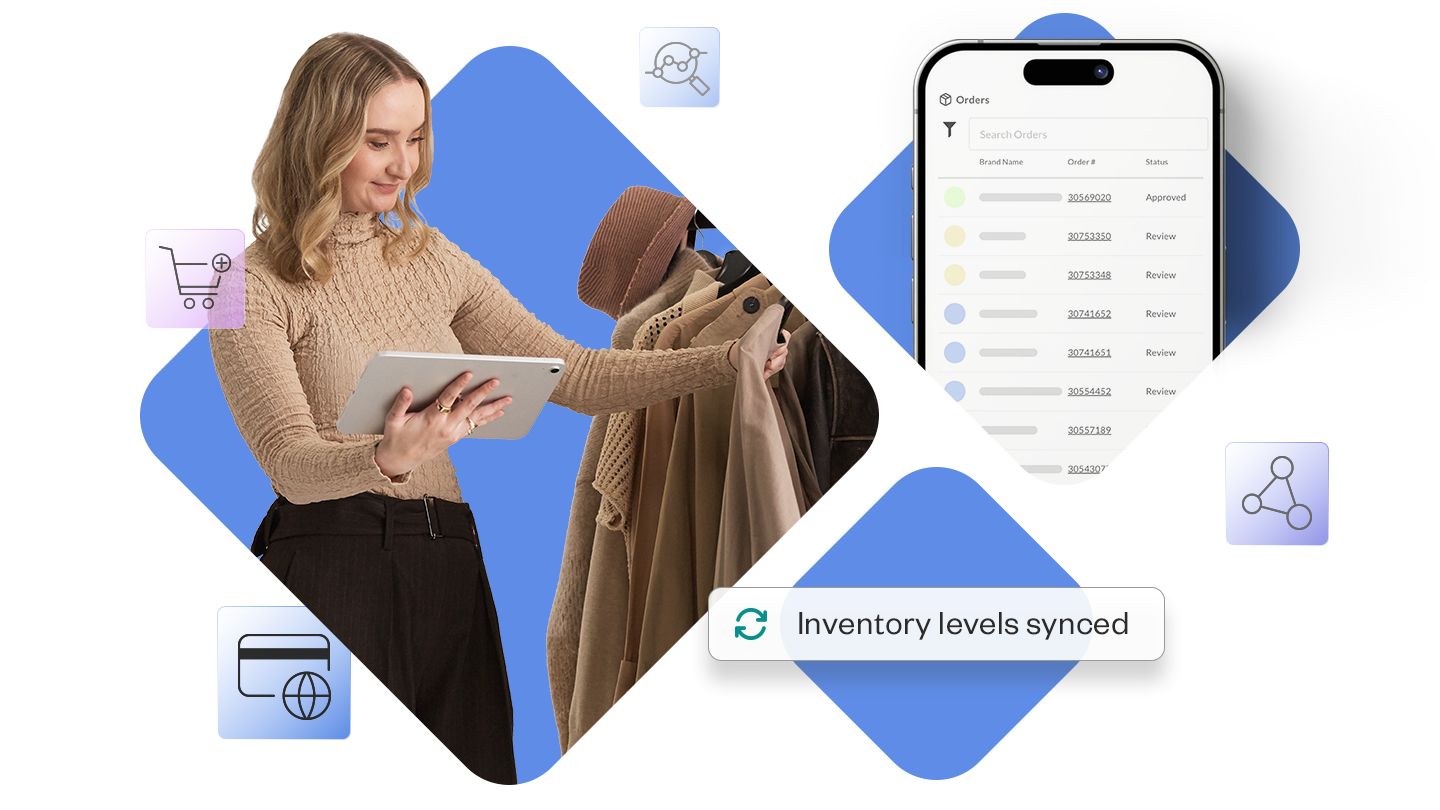
Wholesale eCommerce lets brands sell in bulk to retailers online with custom pricing, virtual showrooms, digital linesheets, and fast reorders.
Times have changed; B2B buyers now expect the same level of clarity, ease, and speed and the same breadth of self-service in wholesale eCommerce as consumers experience when they shop online. The evolution of B2B tech platforms in recent years have really transformed how buyers do business. And since these platforms have been adopted far and wide across the industry, brands are expected to maintain these new, higher standards as part of business as usual.
One of the best things you can do for your wholesale business is to gain a complete understanding of what these new expectations entail. Read and reference this in-depth guide to learn the new definition of wholesale eCommerce, how it differs from retail, key platform features to prioritize, the top benefits of the best platforms, and how to choose the right one for you.
Discover the importance of wholesale eCommerce—bulk B2B online sales.
The best platforms feature purpose-built features, including pricing tiers, MOQs, wholesale payments, and fast reorder.
It’s important to adopt a platform that offers efficiency, 24/7 ordering, and the ability to scale.
Look for a platform with a fashion showroom-style experience; it makes the self-service route both attractive and viable for buyers.
Finally, make sure your wholesale eCommerce platform can seamlessly connect your catalog, inventory, and fulfillment.
Wholesale eCommerce is the sale of goods in bulk quantities by one business to another business that takes place in an online setting, such as via a digital portal. True B2B eCommerce for wholesale is built with the realities of the industry in mind. That means they don’t simply mimic B2C sites, but instead include such necessities as negotiated terms, large baskets, seasonal windows, repeat orders, and account-specific catalogs. If a wholesale website simply features a retail store with wholesale prices hidden behind a private log-in, it isn’t a true wholesale eCommerce site.
Wholesale eCommerce (B2B) differs from retail (B2C) in five key areas: pricing, order sizes, relationships, competition, and fulfillment. B2B prices are always associated with volume and often feature negotiated rates, while B2C prices are usually fixed prices which are almost always available to the public. B2B orders are considerably larger and planned far in advance—they’re usually centered around specific seasons and sale cycles too. In contrast, B2C orders are smaller and may also involve impulse purchases. B2B sales occur between businesspeople who share professional relationships. They usually have ongoing accounts (or that’s the goal), and they work within the parameters of specific, mutually agreed-upon terms. With the exception of loyal clientele, B2C sales tend to be largely anonymous.
Even competition looks different in wholesale eCommerce than it does in retail. B2B competition is less saturated and tends to focus on specialization, such as specific categories; B2C competition can be very saturated, even within a single store. Finally, B2B fulfillment requires more sophisticated logistics and shipping operations due to the volumes involved in wholesale, while B2C fulfillment involves far smaller orders and thus features much more simple shipping and logistics.
|
Wholesale |
Retail |
|
|
Pricing |
Consider volume, are private, often feature negotiated rates |
Usually fixed prices, almost always available to the public (special luxury items presented at “price available upon request” represent one such exception) |
|
Order sizes |
Large, planned far in advance, often seasonal |
Small, may include impulse buys |
|
Relationships |
An integral part of B2B sales, usually ongoing, specific accounts with mutually agreed-upon terms |
Largely anonymous aside from loyal customers (such as a repeat visitor to a local brick-and-mortar store) |
|
Competition |
Less saturated, focused on specialization |
Saturated |
|
Fulfillment |
Sophisticated shipping and logistics support larger orders |
Simple shipping and logistics support smaller orders |
These considerable differences can help shed light on why shopping carts designed for B2C fail when they’re used for B2B sales. Wholesale eCommerce transactions require account pricing, enforced minimums, specific terms, and more.
A true wholesale eCommerce platform presents account-specific, negotiated rates every time a buyer logs in. They’re able to hit the ground running thanks to access to the right volume discounts, contract pricing, and currency-specific price lists. These specific transactional details represent an inextricable aspect of wholesale.
You can use your platform to inform buyers of your minimum order quantities. You can also protect your margins by setting up specific unit or dollar thresholds needed to complete a transaction.
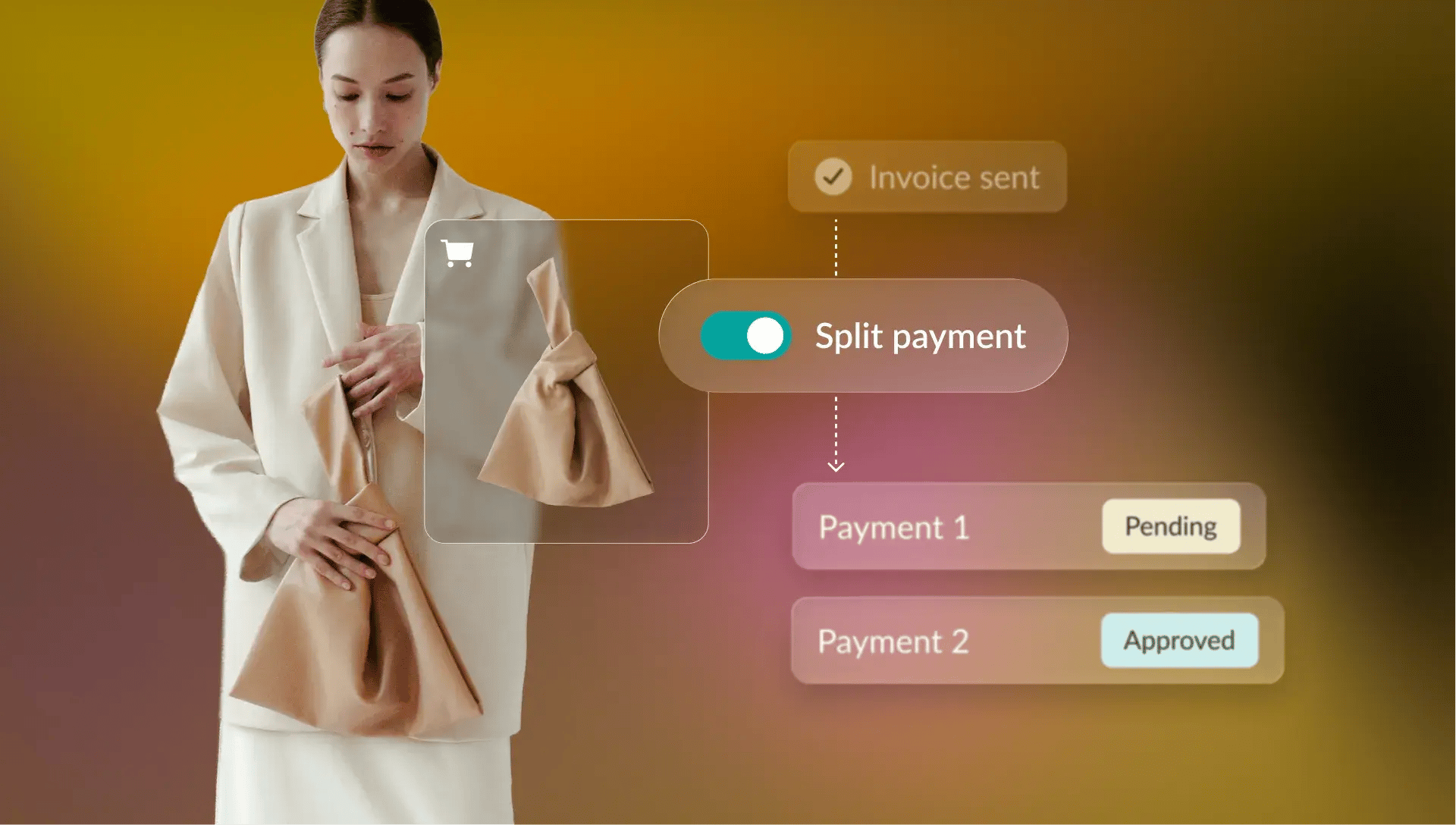
True B2B platforms make it simple to offer flexible wholesale payments. For instance, you should be able to offer customer payment terms for invoicing (such as Net 30 or Net 60), as well as credit lines. You should also have the option of accepting bank transfers and card payments and be able to accept full or partial wholesale payments. Whatever you decide to offer, make sure it lines up with your business’ needs. Pay close attention to the timing of your cash flow as well as your average order size.
The best platforms make it easy for you to improve the buying process. For instance, merchants can quickly place buys in bulk amounts when you create a shoppable matrix grid. Once you upload your SKUs and key attributes, it displays everything buyers need to know, including sizes and colors, so they build their orders with clarity, convenience, and speed. Digital linesheets work similarly. Buyers can use them to reorder in just a few clicks—a great sign of healthy demand for your products.
One major advantage of these tech tools is the ability to access live availability. When a buyer adds an item to an order draft or makes a purchase, you can feel confident that the colors, sizes, and quantities they order and the items they’ll be able to receive; no friction-filled, inconvenient stockouts in sight. You can also use your wholesale platform to access detailed inventory reports and eCommerce metrics to make better-informed decisions, and to stay in the know (such as regarding sell-through rates, reorder rates, and average order value (AOV)).
The right integrations also have the power to vastly transform your wholesale operations. Look for a wholesale platform that syncs well with all of the other key platforms in your tech stack, such as via two-way sync technology. When your wholesale distribution software is properly integrated, you won’t have to face such issues as double order entries, fulfillment issues caused by manual entry, financial discrepancies, and various errors and delays that could strain your wholesale relationships. It’s the difference between adding software to your operations that will create more work for your teams and greater complexities, and adopting one that simplifies and improves your processes.
It’s clear that wholesale eCommerce offers a wide range of benefits. However, its greatest benefits are:
cost efficiency
scalable reach
integrated operations
Use your platform to improve your costs by automating orders, reorders, inventory replenishment, and reducing the manual workload on your teams. Enjoy scalable reach by making it possible for buyers to submit orders 24/7 from around the world and by configuring your platform for global sales (such as via multiple currencies, preferred local shipping and fulfillment options, custom assortments, and more). Finally, take advantage of the power of integrated operations with reliable, trusted data that flows seamlessly between your wholesale eCommerce platform, ERP, CRM, fulfillment software, and more.
With the right wholesale eCommerce tech in place, your ability to grow your wholesale business is no longer a pursuit that depends on the size of your teams. You can scale without increasing headcount and relieve your teams of manual, repetitive, time-consuming tasks so they can contribute in more meaningful, strategic ways. For instance, if you use NuORDER, you can reduce your pre-market appointments admin time by more than 75%.
The lifecycle of wholesale eCommerce looks like this on an individual level: Onboard the buyer and set the terms of your account, then publish your digital catalog and pricing. The buyer can then order and reorder whenever they desire (whether during an appointment with you or on their own time). Each of those orders auto-routes to fulfillment, and you can request a report on these results. Now it should also be easy to imagine how this works at scale.
What is wholesale distribution? Wholesale distribution is the movement of goods from manufacturers to resellers, such as from a shoe brand’s factory to a department store. eCommerce is the digital layer that makes this far faster and scalable for B2B wholesale distributors.
While B2B marketplaces can help you expand your reach and drum up demand, they may also include significant fees. They also limit how much control you have over the buying process, pricing, and even your relationships with buyers. When you have a wholesale eCommerce platform with your own branded portal, you can control every step of the buying process, offer an on-brand wholesale experience online, gain access to robust data and reporting, and more.
Still, B2B marketplaces still hold value, though. Take a blended approach; use marketplaces to discover new accounts, then bring your best, highest-volume relationships into your own channel. Your wholesale eCommerce platform is your owned channel. That means you own the data, the experience, and the margins.
As you strategize how to get your product in stores, be sure to present a polished digital catalog of your products. Stay true to your brand and use aesthetically pleasing visuals. This allows buyers to view your full line, get a good sense of the details, and access vital ordering information, such as pricing and minimums. When buyers have all of this at their fingertips, they’ll feel a lot more comfortable submitting orders on their own—no back-and-forth email chains required. Not only does this speed up the time to sale but it can also greatly strengthen your relationship with buyers since you’re making their job faster and easier.
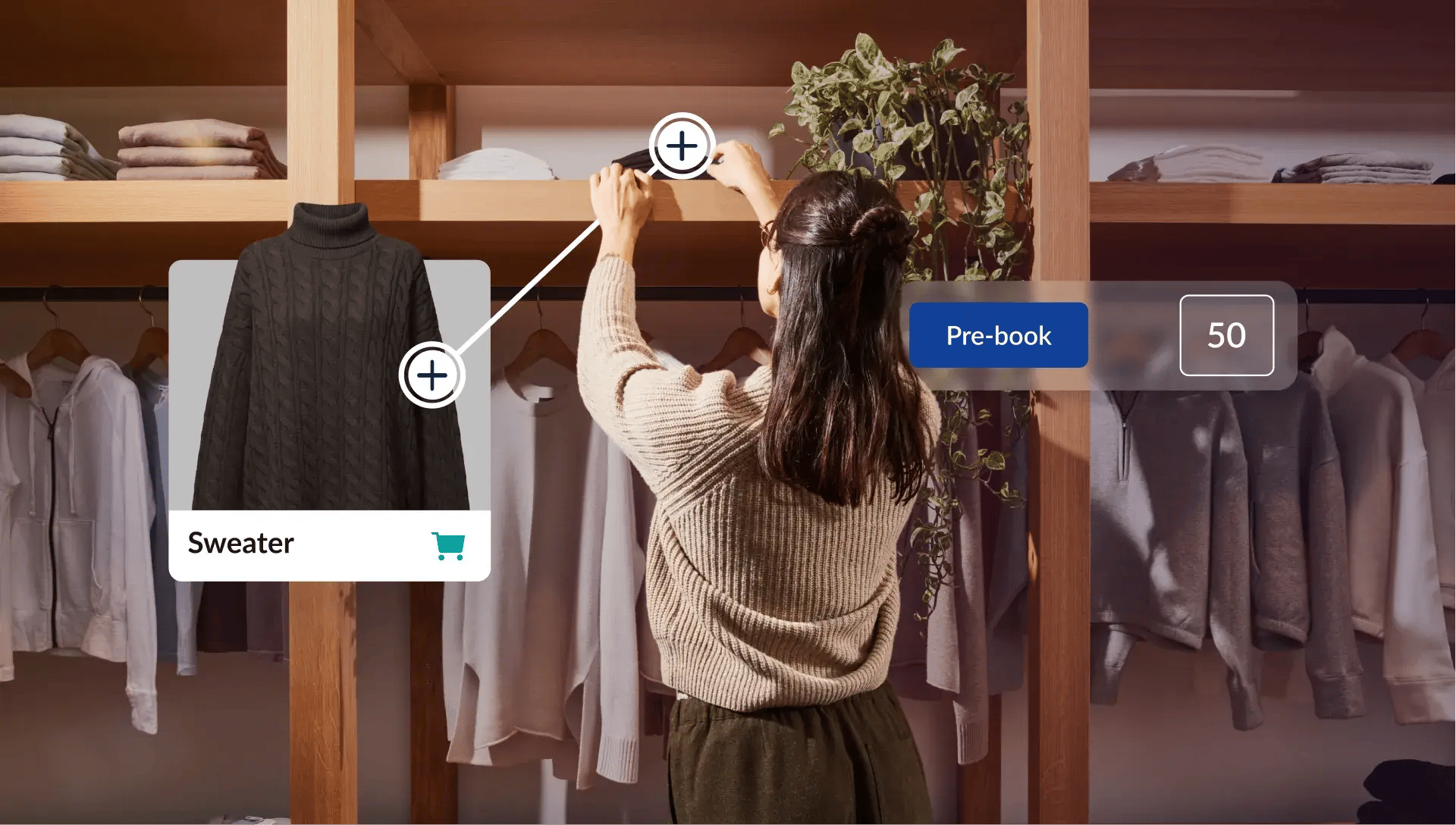
What is cross-selling? Cross-selling is the act of leveraging the opportunity of an existing order to offer other additional, relevant goods. It’s a great way to increase AOV. And you can use your wholesale platform to suggest complementary SKUs or bundles at the point of order. Think of it as the virtual equivalent of a showroom rep presenting additional, relevant styles. If a buyer adds sunglasses to their order draft, for example, you might cross-sell sunhats or bags designed for the beach. If a buyer only adds monochromatic activewear SKUs to their order, you might suggest a fun pop of color like brightly colored visors or plush workout towels their shoppers might enjoy.
When merchants can buy your fashion and lifestyle products via a true wholesale platform, it elevates the online buying process from browsing tedious grids of SKUs to shopping visually rich displays that are on par with the best B2C eCommerce sites. Buyers also enjoy the convenience and speed of category-specific buying to meet their needs. For instance, buyers can shop visual presentations of wholesale fashion apparel, footwear, and accessories and shop by collection or delivery window. What’s more, the experience is elevated even further with the addition of features that mirror in-person showroom environments. Expect digital linesheets, high-resolution imagery, immersive virtual showrooms, the ability to inspect essential design features, and more.
NuORDER was built on the premise that wholesale fashion buying should feel like the best showroom appointment a buyer has ever experienced offline: fast, visually engaging, and accurate. The better the buying experience, the more likely it is that you’ll be able to increase order frequency and size. In fact, brands are getting a lot more sophisticated with how they leverage wholesale platforms for their success. “Another big focus we’re seeing is on assortment precision,” says Tom Groves, NuORDER’s Senior Director of Account Management, in NuORDER’s 2026 State of B2B eCommerce Report.
“Brands are tailoring assortments more specifically to individual retail partners or regions, rather than pushing broad seasonal lines across all retailers.”
Prioritize the following as you vet your options: account-specific pricing and the enforcement of MOQ, customizable wholesale payments/terms, a fast and highly visual reorder experience, access to in-depth inventory reports and deep eCommerce metrics, and the ability to integrate seamlessly with your ERP, CRM, fulfillment and solutions. Your wholesale distribution software should also be able to unify your retail and wholesale channels through a single, unified hub. Once you’ve started using your wholesale eCommerce platform, measure your results closely to identify any areas of opportunity or room for improvement. Pay special attention to sell-through rates, AOV, reorder rates, and buyer-submitted orders.
The three greatest challenges you can face when you move your wholesale business online are the following: catalog/pricing complexity, buyer adoption, and internal alignment. Centralize your pricing so it renders correctly and automatically. Entice buyers to order from your eCommerce wholesale store by offering them a premium buying experience that is faster, more reliable, and more interesting to engage in than confusing chains of emails. Finally, make sure Sales, Operations, and Finance have access to a single source of truth; choose a wholesale eCommerce platform that truly integrates with all of the essential software in your tech stack.
Wholesale eCommerce has the power to quickly transform your business via efficiency, scalability, and the ability to sell 24 hours a day around the globe. NuORDER was specifically designed for these essential considerations and more to produce a powerful experience for both you and your valued wholesale partners.
Wholesale eCommerce is the buying and selling of goods in bulk quantities that take place in transactions between businesses online. Wholesale eCommerce is most successful online when it takes the nuances and needs of the traditional wholesale business into consideration, including negotiated terms, custom assortments, and account-based pricing.
The Pareto Principle is an interesting phenomenon that applies to many scenarios in business, including eCommerce. This means you can generally expect 80% of your revenue or profits to come from just 20% of your customers.
The four types of eCommerce are business-to-consumer (B2C), business-to-business (B2B), consumer-to-consumer (C2C), and consumer-to-business (C2B). Wholesale eCommerce is represented by B2B; while retailers can purchase wholesale from brands to also engage in B2C sales (selling to their end consumers in brick-and-mortar and/or eCommerce stores).
You do not need an LLC to be in the wholesale business, but you will require certain permissions depending on where you’re based. For instance, if you live in the U.S., you’ll need a reseller’s permit or a sales tax permit (depending on your state), and an Employer Identification Number (EIN). When you have these in place, brands and wholesale distributors will know that you’re in legal standing to do business, and that they can sell you goods in bulk quantities at special, negotiated rates.
Wholesale tips and industry news you can’t miss, delivered weekly