---
title: How your wholesale operations can drive sustainability
description: Sustainability in wholesale goes beyond recycled fabrics. See how some of the biggest gains are in how you plan, sell, and connect with retail partners.
image: https://blog.nuorder.com/hubfs/Blog_Webinar-Mandatory25_sustainability.jpg
---
[](https://nuorder.com)

- Solutions
- [Brand](https://www.nuorder.com/wholesale/)
- [Department Stores](https://www.nuorder.com/assortments/)
- [Specialty Retailers](https://www.nuorder.com/wholesale-buying/)
- [⏩ **Watch on demand** Winning in Wholesale: Closing the Tech Gap](https://go.nuorder.com/winning-wholesale-closing-the-tech-gap?utm_campaign=Winning+in+wholesale&utm_medium=display&utm_source=www&utm_content=blog+nav)
- Products
- [Wholesale](https://www.nuorder.com/wholesale)
- [eCommerce](https://www.nuorder.com/wholesale/ecommerce/)
- [Advanced Sales Tools](https://www.nuorder.com/wholesale/advanced-sales-tools/)
- [Order Management](https://www.nuorder.com/wholesale/order-management/)
- [Flexible Configurations](https://www.nuorder.com/wholesale/flexible-configurations/)
- [Integrated Payments](https://www.nuorder.com/wholesale/integrated-payments/)
- [Actionable Insights](https://www.nuorder.com/wholesale/actionable-insights/)
- [Assortments](https://www.nuorder.com/assortments/)
- [For Brands](https://www.nuorder.com/assortments/brands/)
- [For Retailers](https://www.nuorder.com/assortments/retailers/)
- [Point of Sale](https://www.lightspeedhq.com/pos/retail/)
- [📖 **Get the Guide ** The Death of Disconnected Wholesale: Learn how wholesale has become more connected](https://go.nuorder.com/death-of-disconnected-wholesale-guide)
- Resources
- Resource Library
- [Case Studies](https://www.nuorder.com/resources-archive/#filter-case-study)
- [Blog](https://blog.nuorder.com/)
- [Knowledge Base](https://helpdesk.nuorder.com/hc/en-us/)
- [Learning & Support](https://learning-support.nuorder.com/)
- [📖 **NEW!** State of B2B eCommerce 2026: Wholesale Reengineered](https://go.nuorder.com/report-state-b2b-ecommerce-2026-wholesale-reengineered?utm_campaign=2026+b2b+report&utm_medium=display&utm_source=www&utm_content=blog+nav)
Log In
Get Started
Blog home B2B eCommerce Blog eCommerce tools All topics

## Blog menu
Blog home B2B eCommerce Blog eCommerce tools All topics

[ wholesale ](https://6465908.hs-sites.com/topic?slug=wholesale&page=1)
# How your wholesale operations can drive sustainability
Sustainability in wholesale goes beyond recycled fabrics. See how some of the biggest gains are in how you plan, sell, and connect with retail partners.

### Discover a better way to run your wholesale
[ Talk to our team **
](https://cta-service-cms2.hubspot.com/web-interactives/public/v1/track/click?encryptedPayload=AVxigLK26dqakqd%2FGfw8YDOhem1QoEDs7VL9UzC6foJig7hO%2F3kMQMzp6USlKsEZ0IQmM2cqePGYwdQdBbg0KKDZIYwtr9sHcIcTbPgU%2B1wL4NHySGVMsBNQto4jeX9wTIyGoUaoCoY5wHNN%2Fhyhvf03FkXxUfLOcLH18Mom%2FBxUrQ%2Bi&portalId=6465908)
When most people think about sustainability in fashion, they picture recycled fabrics, organic cotton, or eco-friendly packaging. But as Earth Month puts sustainability back in the spotlight, it’s worth recognizing that product-level innovation only tells part of the story. For brands operating in wholesale, some of the biggest sustainability gains are happening in how you plan, sell, and connect with retail partners.
Let's look beyond the label to see where the real opportunities are.
## Fashion’s biggest sustainability problem
The fashion industry produces an estimated 100 to 150 billion garments every year—for a global population of 8 billion. According to the [United Nations Environment Programme](https://www.unep.org/news-and-stories/press-release/unsustainable-fashion-and-textiles-focus-international-day-zero), roughly 92 million tonnes of textile waste are generated annually, set to reach 148 million by 2030.
Much of this waste starts with overproduction. Industry estimates show as much as 30% of all garments produced are never sold. The root cause often traces back to planning: relying on gut instinct rather than demand data. NuORDER research found that [68% of retailers](https://blog.nuorder.com/order-trends-introducing-a-powerful-new-tool-for-deeper-insights-to-elevate-wholesale-buys) still rely on intuition and past experience to plan what inventory to buy.
The good news? Smarter wholesale operations can directly address this.
## Better data = more efficient production
When brands have [visibility into what's selling](https://blog.nuorder.com/order-trends-introducing-a-powerful-new-tool-for-deeper-insights-to-elevate-wholesale-buys)—by style, color, size, and region—they can forecast with far greater accuracy. Instead of producing excess inventory “just in case,” they can align production to real demand signals.
This is where [wholesale performance metrics](https://blog.nuorder.com/essential-wholesale-metrics) become a sustainability tool. Tracking sell-through rates, analyzing seasonal comparisons, and monitoring bestseller trends helps brands produce what the market actually wants, reducing the excess that ends up in landfills or discount racks.
Take [French Connection](https://blog.nuorder.com/french-connection-success-story-moving-b2b-platforms-to-nuorder), which moved to NuORDER specifically to unlock deeper reporting. With visibility into bestsellers, most-drafted styles, and which retail accounts were underperforming, the brand could plan assortments around real-time market trends. This led to a 40% increase in account volumes at trade shows.

French Connection
## Collaborative planning eliminates waste
Forecasting what to produce is only half the equation. The other half is making sure the right products reach the right stores in the right quantities—and that's where the brand-retailer relationship becomes a sustainability lever.
Historically, wholesale buying has been a fragmented process. Retailers work off spreadsheets, brands guessing at allocation, neither side seeing the full picture until it's too late. This confusion can lead to overbuying, stockouts, and markdowns that erode both margins and materials.
[Visual assortment planning](https://blog.nuorder.com/retail-assortment-planning) changes that dynamic. When brands and retailers can collaborate in a shared environment—visualizing product mixes by store, applying pre-set size curves, and comparing buys against financial targets in real time—the entire order becomes more precise.
Brands investing in this kind of allocation technology have seen [inventory predictions improve by 20%](https://blog.nuorder.com/revolutionize-merchandising-nuorder-assortments), and [Gartner research](https://www.retaildive.com/news/5-predictions-for-the-future-of-retail/570085/) shows retailers are targeting 30% less inventory overall—not to sell less, but to waste less.
## Digital tools cut wholesale’s CO2 footprint
Beyond physical waste, wholesale carries a significant carbon footprint. Picture a typical market week: flights and hotel stays for sales reps and buyers, thousands of printed linesheets and catalogs, physical samples shipped across the world, and showrooms that require energy and upkeep.
The fashion industry already [accounts for up to 10%](https://www.sciencedirect.com/science/article/abs/pii/S0048969724016498) of global carbon emissions. Every one of those touchpoints adds to the total.
Digital [wholesale platforms](https://www.nuorder.com/wholesale/) have been replacing these processes—and the environmental impact adds up:
- [Virtual showrooms](https://blog.nuorder.com/virtual-showrooms-nuorder) allow buyers to browse full collections without booking a flight
- [Digital linesheets](https://blog.nuorder.com/new-linesheets) eliminate printed catalogs that are outdated by next season
- [Shared product data](https://blog.nuorder.com/how-to-use-big-data-for-wholesale-and-retail-success) means fewer sample rounds and less back-and-forth shipping
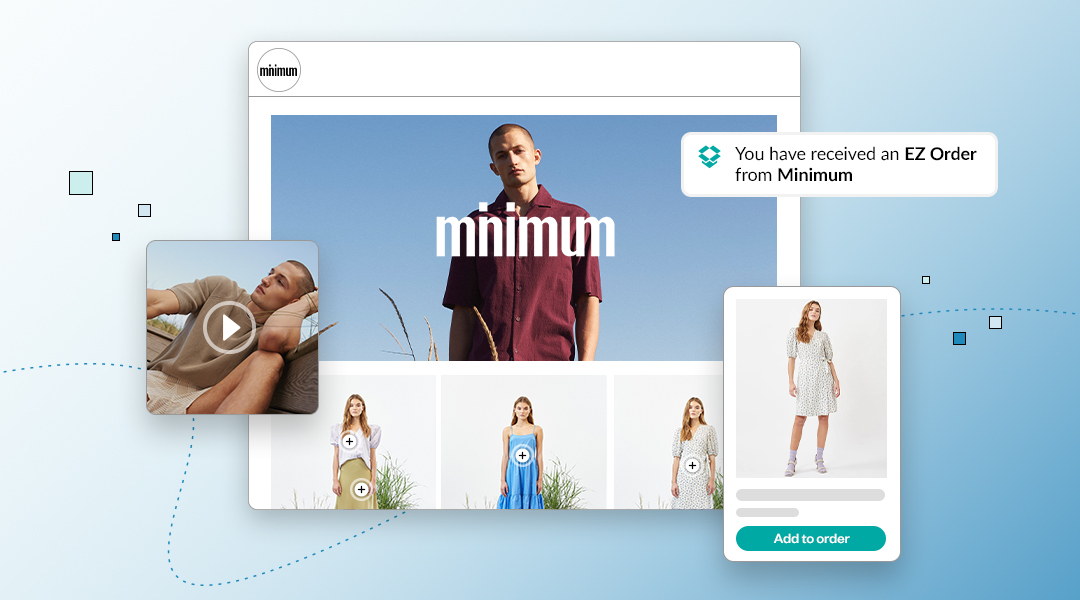
Danish brand [Minimum](https://blog.nuorder.com/international-fashion-brand-minimum-maximizes-sales-with-virtual-showroom) is a case in point. Using [NuORDER's Virtual Showroom](https://blog.nuorder.com/international-fashion-brand-minimum-maximizes-sales-with-virtual-showroom), the brand built a shared digital environment where global buyers could explore collections through branded videos, 360-degree product views, and shoppable hotspots—replacing the need for in-person appointments.
The result? Double-digit growth in three of four key markets, while reducing the brand's reliance on physical showrooms and travel.
## Spotlight: Embedding sustainability into wholesale ops
American denim brand [7 For All Mankind](https://go.nuorder.com/case-study-7-for-all-mankind) operates across nearly 100 retail stores on four continents and 18 global online regions—a scale that demands operational precision. To get there, the brand standardized its wholesale workflows in NuORDER, streamlining how assortments, orders, and inventory details are shared between internal teams and retail partners.
Those backend efficiencies played a key role in the brand’s [Recycle For All Mankind program](https://blog.nuorder.com/how-7-for-all-mankinds-efficient-backend-operations-enhance-the-customer-experience)—an initiative that collected used denim and sorted it into three pathways: resale as pre-owned goods through 7 Revival, reuse of fibers in future designs, and recycling into materials like automotive insulation and construction supplies. The program operated through a partnership with I:CO, a global textile waste collection network, across 12 European locations.
It's a powerful example of how wholesale efficiency and sustainability can fuel each other.

7 For All Mankind
## The competitive case for greener wholesale
Sustainability in wholesale isn't just the right thing to do—it’s increasingly what retailers expect, and it’s one of the [key trends shaping wholesale in 2026](https://blog.nuorder.com/top-10-wholesale-trends-to-follow-in-2026). Buyers want brand partners who make their jobs easier: cleaner data, faster ordering, fewer wasted samples.
This Earth Month, the question isn’t whether your brand cares about sustainability. It’s whether your wholesale operation reflects it.
Share article
[](https://www.instagram.com/nuorder/) [](https://www.instagram.com/nuorder/) [](https://www.facebook.com/NuORDERwholesale/) [](mailto:heroes@nuorder.com)
Inside this post 

## Related articles
[wholesale](https://6465908.hs-sites.com/topic?slug=wholesale&page=1)
#### [ How to digitize your wholesale business: A step-by-step guide for B2B sellers ](https://blog.nuorder.com/how-to-digitize-wholesale-business)
[wholesale](https://6465908.hs-sites.com/topic?slug=wholesale&page=1)
#### [ What do modern retailers expect from wholesale brands? ](https://blog.nuorder.com/what-retailers-expect-from-wholesale-brands)
[wholesale](https://6465908.hs-sites.com/topic?slug=wholesale&page=1)
#### [ The death of disconnected wholesale: Why the old playbook no longer works ](https://blog.nuorder.com/the-death-of-disconnected-wholesale-guide-nuorder)
[wholesale](https://6465908.hs-sites.com/topic?slug=wholesale&page=1)
#### [ Beyond the tech gap: How brands are creating better wholesale experiences ](https://blog.nuorder.com/beyond-the-tech-gap-how-brands-are-creating-better-wholesale-experiences)
## Get on the list
Wholesale tips and industry news you can’t miss, delivered weekly
### Are you ready to *transform* your wholesale business?
See how NuORDER by Lightspeed can help you reach new heights.
[ Talk to an expert
](https://cta-service-cms2.hubspot.com/web-interactives/public/v1/track/click?encryptedPayload=AVxigLKTDTbBempP%2BRIjgS9pAHdxVMcaOeuSCue926M3eS2Rv%2BdhlcAIirVFnV1lTIGUbsza0Fi2DJZGmb5f94C0BOHDgW4mgifcbgw8devaI11srUFx5DCBpB0Lg4jOVK9Tv6D5DWpy68tMh6%2BJiSpfUiu6tmeWXBL5FV79tyUkVbdm&portalId=6465908)

Demo request
Log in
- Network
- [Exclusive Retailers](https://www.nuorder.com/exclusive-retailers)
- [Partner Program](https://www.nuorder.com/partners/)
- [Resources ](https://www.nuorder.com/resources-archive/)
- [Content Library](https://www.nuorder.com/resources-archive/)
- [Blog](https://blog.nuorder.com/)
- [Case Studies](https://www.nuorder.com/resources-archive/#filter-case-studies)
- [eBooks & Guides](https://www.nuorder.com/resources-archive/#filter-ebooks)
- [Webinars](https://www.nuorder.com/resources-archive/#filter-webinars)
- [Learning & Support](https://learning-support.nuorder.com/)
- [Knowledge Base](https://helpdesk.nuorder.com/hc/en-us/)
- Company
- [About Us](https://www.nuorder.com/about-us/)
- [Careers](https://www.lightspeedhq.com/careers/)
- [Contact Us](https://www.nuorder.com/contactus/)
- [Privacy Policy](https://www.lightspeedhq.com/legal/privacy-policy/)
- [Terms & Conditions](https://www.nuorder.com/terms-and-conditions/)
Get the latest wholesale tips and industry news from our blog delivered to your inbox.
@2025 NuORDER Inc. All Rights Reserved

- [Resources ](https://www.nuorder.com/resources-archive/)
- [Content Library](https://www.nuorder.com/resources-archive/)
- [Blog](https://blog.nuorder.com/)
- [Case Studies](https://www.nuorder.com/resources-archive/#filter-case-studies)
- [eBooks & Guides](https://www.nuorder.com/resources-archive/#filter-ebooks)
- [Webinars](https://www.nuorder.com/resources-archive/#filter-webinars)
- [Learning & Support](https://learning-support.nuorder.com/)
- [Knowledge Base](https://helpdesk.nuorder.com/hc/en-us/)
- Network
- [Exclusive Retailers](https://www.nuorder.com/exclusive-retailers)
- [Partner Program](https://www.nuorder.com/partners/)
- Company
- [About Us](https://www.nuorder.com/about-us/)
- [Careers](https://www.lightspeedhq.com/careers/)
- [Contact Us](https://www.nuorder.com/contactus/)
- [Privacy Policy](https://www.lightspeedhq.com/legal/privacy-policy/)
- [Terms & Conditions](https://www.nuorder.com/terms-and-conditions/)
Demo request
Log in
Get the latest wholesale tips and industry news from our blog delivered to your inbox.
@2025 NuORDER Inc. All Rights Reserved