---
title: How Global Wholesale Buying Is Changing in 2026 | NuORDER
description: Explore how global wholesale buying is changing in 2026, from AI-driven decisions to agile, in-season ordering and digital B2B eCommerce.
image: https://blog.nuorder.com/hubfs/Blog_HowGlobalWholesaleBuyingIsChanging_hero-1.webp
---
[](https://nuorder.com)

- Solutions
- [Brand](https://www.nuorder.com/wholesale/)
- [Department Stores](https://www.nuorder.com/assortments/)
- [Specialty Retailers](https://www.nuorder.com/wholesale-buying/)
- [⏩ **Watch on demand** Winning in Wholesale: Closing the Tech Gap](https://go.nuorder.com/winning-wholesale-closing-the-tech-gap?utm_campaign=Winning+in+wholesale&utm_medium=display&utm_source=www&utm_content=blog+nav)
- Products
- [Wholesale](https://www.nuorder.com/wholesale)
- [eCommerce](https://www.nuorder.com/wholesale/ecommerce/)
- [Advanced Sales Tools](https://www.nuorder.com/wholesale/advanced-sales-tools/)
- [Order Management](https://www.nuorder.com/wholesale/order-management/)
- [Flexible Configurations](https://www.nuorder.com/wholesale/flexible-configurations/)
- [Integrated Payments](https://www.nuorder.com/wholesale/integrated-payments/)
- [Actionable Insights](https://www.nuorder.com/wholesale/actionable-insights/)
- [Assortments](https://www.nuorder.com/assortments/)
- [For Brands](https://www.nuorder.com/assortments/brands/)
- [For Retailers](https://www.nuorder.com/assortments/retailers/)
- [Point of Sale](https://www.lightspeedhq.com/pos/retail/)
- [📖 **Get the Guide ** The Death of Disconnected Wholesale: Learn how wholesale has become more connected](https://go.nuorder.com/death-of-disconnected-wholesale-guide)
- Resources
- Resource Library
- [Case Studies](https://www.nuorder.com/resources-archive/#filter-case-study)
- [Blog](https://blog.nuorder.com/)
- [Knowledge Base](https://helpdesk.nuorder.com/hc/en-us/)
- [Learning & Support](https://learning-support.nuorder.com/)
- [📖 **NEW!** State of B2B eCommerce 2026: Wholesale Reengineered](https://go.nuorder.com/report-state-b2b-ecommerce-2026-wholesale-reengineered?utm_campaign=2026+b2b+report&utm_medium=display&utm_source=www&utm_content=blog+nav)
Log In
Get Started
Blog home B2B eCommerce Blog eCommerce tools All topics

## Blog menu
Blog home B2B eCommerce Blog eCommerce tools All topics

[ wholesale ](https://6465908.hs-sites.com/topic?slug=wholesale&page=1)
# How is global wholesale buying changing in 2026?
Explore how global wholesale buying is changing in 2026, from AI-driven decisions to agile, in-season ordering and digital B2B eCommerce.
### Discover a better way to run your wholesale
[ Talk to our team **
](https://cta-service-cms2.hubspot.com/web-interactives/public/v1/track/click?encryptedPayload=AVxigLK26dqakqd%2FGfw8YDOhem1QoEDs7VL9UzC6foJig7hO%2F3kMQMzp6USlKsEZ0IQmM2cqePGYwdQdBbg0KKDZIYwtr9sHcIcTbPgU%2B1wL4NHySGVMsBNQto4jeX9wTIyGoUaoCoY5wHNN%2Fhyhvf03FkXxUfLOcLH18Mom%2FBxUrQ%2Bi&portalId=6465908)
Wholesale is no longer the back channel. It's re-emerging as a primary revenue driver—and for many brands, it's now the largest and most profitable channel in their portfolio. According to [NuORDER's 2026 State of B2B eCommerce Report](https://go.nuorder.com/report-state-b2b-ecommerce-2026-wholesale-reengineered), 78% of senior leaders now rank B2B wholesale as their #1 investment priority, up from 72% the prior year.
## A new era of wholesale buying in 2026
But the way wholesale buying happens is changing just as quickly. Market volatility, rising tariffs, and shifting consumer demand are forcing buyers to prioritize flexibility over long-term commitments. B2B buyers now want the same speed and convenience they experience in B2C. And lean operations have become essential to maintaining margins and reducing risk.
Platforms like [NuORDER](https://www.nuorder.com/) help brands and retailers keep pace—with real-time sell-through visibility, in-season ordering capabilities, and the self-service digital buying experiences that modern wholesale demands.
### Key takeaways
- Wholesale buying in 2026 favors agility over volume, with retailers shifting to smaller, more frequent in-season orders.
- Real-time data and AI are increasingly essential to forecasting, assortment planning, and buying decisions.
- Digital-first, self-service buying experiences are replacing manual workflows and rep-dependent processes.
- Geopolitical uncertainty and sustainability expectations are reshaping supply chains, sourcing strategies, and the wholesale partnerships brands pursue.
## The 5 biggest shifts shaping global wholesale buying
### 1. Shift toward agile, in-season buying
The era of massive pre-season orders is fading. Retailers are moving toward smaller, more frequent purchases that let them react to real-time consumer demand rather than bet on forecasts made months in advance. Lead times are shrinking, with growing demand for “at-once” inventory and rapid replenishment cycles.
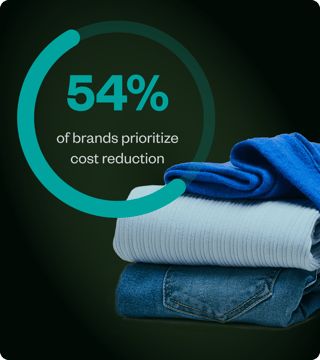
Brands are increasingly expected to hold buffer stock and support quick reorders. The upside: faster reaction to trends reduces markdown risk and excess inventory for both sides
of the partnership. Over half (54%) of brands now [prioritize cost reduction and margin protection](https://go.nuorder.com/report-state-b2b-ecommerce-2026-wholesale-reengineered) over high-risk bets—a sign that the industry is shifting to a more agile, demand-driven rhythm.
### 2. AI integration and data-driven decision making
AI is rapidly becoming an essential piece in the wholesale process. [AI adoption in buying and planning](https://go.nuorder.com/report-state-b2b-ecommerce-2026-wholesale-reengineered) grew from 11% to 17% over the past year, with inventory forecasting leading use cases at 44%. Notably, these are areas where margins are won or lost.
Meanwhile, 68% of brands now rely primarily on [quantitative data for forecasting](https://go.nuorder.com/report-state-b2b-ecommerce-2026-wholesale-reengineered)—nearly double the prior year's figure. [Sell-through data](https://blog.nuorder.com/how-to-drive-sell-through-with-retailers) is key to this transformation, with “strong” visibility of these metrics jumping 36% to 74% year over year, and 67% of brands using this data in daily decisions.
With better sell-through signals flowing between brands and retailers, predictive analytics can enable smarter [assortment planning](https://blog.nuorder.com/retail-assortment-planning) and reduce overproduction. Data transparency is fast becoming a requirement in [resilient wholesale partnerships](https://blog.nuorder.com/from-transaction-to-transformation-how-brands-and-retailers-can-build-stronger-relationships).
### 3. Streamlined product collections and inventory efficiency
Brands are shifting away from sprawling seasonal collections and toward smaller, curated assortments built around evergreen and best-selling products. This focused approach improves margins and reduces risk by prioritizing inventory turnover over bulk stockholding.
[Simplified assortments](https://www.nuorder.com/assortments/) make buying faster and more confident for retailers. When buyers can focus on a tighter selection of high-performing styles, purchasing decisions become quicker and more decisive—resulting in fewer markdowns, less waste, and stronger alignment between production and sell-through.
### 4. Digital-first and rep-optional buying experiences
[B2B eCommerce platforms](https://www.nuorder.com/wholesale/ecommerce/) are becoming the primary channel for wholesale transactions. Buyers prefer self-service tools that let them browse, order, and track inventory 24/7—on their own schedule, from any device. The days when every order required a phone call or rep-led appointment are giving way to seamless digital experiences that mirror B2C convenience.
Seamless integration between ERP, inventory, and eCommerce systems is increasingly expected. Manual processes and fragmented workflows are being phased out in favor of unified platforms. But [NuORDER’s research](https://go.nuorder.com/report-state-b2b-ecommerce-2026-wholesale-reengineered) found that only 9% of brands have achieved fully integrated ERP systems, revealing a critical gap between where the industry is headed and where most brands currently stand.
### 5. Expansion of independent and niche retail channels
Independent retailers are gaining a larger share of wholesale transactions globally. As department stores consolidate and large chains become more selective, indie retailers and specialty stores are stepping in to offer unique, localized, and differentiated products.
Brands are diversifying their distribution strategies beyond large retail chains to capture this demand. [Digital wholesale platforms](https://www.nuorder.com/wholesale/ecommerce/) make it easier than ever for brands to connect with smaller buyers worldwide, opening new revenue streams without the overhead of traditional expansion. [NuORDER's Marketplace](https://blog.nuorder.com/lightspeed-commerce-launches-a-new-multi-brand-shopping-and-ordering-experience-in-the-marketplace) is one example of how technology enables new connections at scale.
[Read the 2026 State of B2B eCommerce Report: Wholesale Reengineered 
](https://cta-service-cms2.hubspot.com/web-interactives/public/v1/track/click?encryptedPayload=AVxigLKzl7xIhg2oVSpmtsa22l7hhas2xL2XiIdXCZHZNq0niyWMU7ui3VSi9wXtlnogpAHKwjMUQaNYJhXUpM7H3b9LFat2NrtU6Swyjruc6ETcWgc9fmvEQWI%2FkyQMM%2B78wauN1T3PhzYW0hGgs0KCkjPplOTCGbCKvajN3dgvlXkfl4pJQoBK274cWRYGICj2W%2BoNG6BowVhllvZHI0vm1ra98UvPxeZYNciRXBGWWcFI&portalId=6465908)
## How buyer expectations are evolving in 2026
Behind these macro shifts is a fundamental change: wholesale buyer expectations are rising across the board. Retailers expect speed—faster ordering, fulfillment, and replenishment. Personalized buying journeys are becoming standard, with [curated catalogs](https://blog.nuorder.com/whiteboards-meet-the-secret-ingredient-behind-johnston-murphys-catalogs-and-curated-buys) shaped by past purchase behavior and regional demand.
[Johnston & Murphy](https://blog.nuorder.com/whiteboards-meet-the-secret-ingredient-behind-johnston-murphys-catalogs-and-curated-buys) uses NuORDER's Whiteboarding feature to build custom assortment recommendations for key accounts—giving enterprise retailers like department stores curated, door-level merchandising suggestions that speed up and elevate the buying process.
Buyers also expect seamless omnichannel experiences across wholesale, retail, and eCommerce systems. As [collaboration deepens](https://blog.nuorder.com/nuorder-and-david-jones-deepen-partnership), they also have higher expectations for accuracy, visibility, and proactive communication throughout the order lifecycle. The brands that deliver on these expectations earn long-term partnerships.
## The role of geopolitics and supply chain restructuring
[Tariff uncertainty](https://blog.nuorder.com/tariffs-ahead-five-tips-to-stay-ahead) continues to reshape how brands source and distribute products. Companies are diversifying sourcing away from single-country dependence, and nearshoring and regional production are increasing to improve speed and reduce risk.
[Global supply chains are being redesigned](https://blog.nuorder.com/challenges-of-global-ecommerce-growth) for resilience, not just cost efficiency. This is also reducing reliance on bulk inventory stockpiling. Instead, brands are aligning sourcing, production, and demand signals more tightly—ensuring that what gets made is what's most likely to sell.
## Sustainability and values-driven wholesale partnerships
Sustainability has moved [from a differentiator to a requirement](https://blog.nuorder.com/sustainability-more-important-than-style-the-numbers-say-yes). In a market where trust matters more than ever, retailers are auditing brands for [ethical sourcing](https://blog.nuorder.com/webinar-what-it-really-means-to-have-sustainable-supply-chain), responsible materials, and measurable environmental impact. The shift toward smaller collections and reduced overproduction directly supports sustainability goals.
[Smarter wholesale operations](https://blog.nuorder.com/how-your-wholesale-operations-can-drive-sustainability) is another key sustainability tool. When brands have visibility into what's selling—by style, color, size, and region—they can align production to real demand signals instead of producing excess inventory "just in case." Tracking sell-through rates and monitoring bestseller trends helps brands produce what the market actually wants, reducing the waste that ends up in landfills or on discount racks.
## How brands can adapt to stay competitive
Staying competitive in 2026 means matching the pace and precision buyers now expect:
- Invest in AI-driven forecasting and inventory planning tools to reduce overproduction and improve margins
- Adopt [B2B eCommerce platforms](https://blog.nuorder.com/virtual-showrooms-nuorder) to enable self-service buying and digital-first experiences
- Shorten production cycles to support in-season demand and rapid replenishment
- Focus on core, popular product assortments rather than sprawling seasonal collections
- Build flexible, diversified supply chains that can absorb disruption without friction
- Strengthen relationships with independent retailers and niche channels to capture growing demand
## Enabling faster, smarter wholesale with modern B2B eCommerce
Wholesale success in 2026 depends on speed, data visibility, and seamless collaboration between brands and retailers. Modern B2B eCommerce platforms eliminate manual workflows and unify ordering, inventory, and analytics in one place—giving both sides the tools to move faster and make smarter decisions.
Ready to modernize your wholesale buying? [Book a demo and see how NuORDER by Lightspeed enables faster, smarter, and more collaborative commerce for brands and retailers](https://www.nuorder.com/start/).
### FAQs about wholesale buying in 2026
#### What are the global trade trends in 2026?
Global trade in 2026 is shifting toward regionalization, diversification of suppliers, and nearshoring strategies designed to reduce geopolitical risk and improve supply chain speed.
#### What is the retail sales outlook for 2026?
Retail growth is steady but cautious, with brands and retailers focusing on operational efficiency, tighter inventory control, and demand-driven purchasing over speculative expansion.
#### How is AI impacting wholesale buying decisions?
AI is enabling more accurate demand forecasting, personalized assortment planning, and faster decision-making by providing real-time data on sell-through performance, regional demand, and pricing optimization.
#### Why are independent retailers becoming more important?
Independent retailers offer unique, localized assortments and strong community ties that consumers increasingly value. For brands, they represent new distribution opportunities and a way to diversify beyond large retail chains.
#### What role does eCommerce play in wholesale in 2026?
[B2B eCommerce platforms](https://blog.nuorder.com/virtual-showrooms-nuorder) are now central to wholesale operations, enabling self-service ordering, real-time inventory visibility, and seamless transactions that keep brands and retailers connected around the clock.
Share article
[](https://www.instagram.com/nuorder/) [](https://www.instagram.com/nuorder/) [](https://www.facebook.com/NuORDERwholesale/) [](mailto:heroes@nuorder.com)
Inside this post 

## Related articles
[wholesale](https://6465908.hs-sites.com/topic?slug=wholesale&page=1)
#### [ How to digitize your wholesale business: A step-by-step guide for B2B sellers ](https://blog.nuorder.com/how-to-digitize-wholesale-business)
[wholesale](https://6465908.hs-sites.com/topic?slug=wholesale&page=1)
#### [ What do modern retailers expect from wholesale brands? ](https://blog.nuorder.com/what-retailers-expect-from-wholesale-brands)
[wholesale](https://6465908.hs-sites.com/topic?slug=wholesale&page=1)
#### [ The death of disconnected wholesale: Why the old playbook no longer works ](https://blog.nuorder.com/the-death-of-disconnected-wholesale-guide-nuorder)
[wholesale](https://6465908.hs-sites.com/topic?slug=wholesale&page=1)
#### [ Beyond the tech gap: How brands are creating better wholesale experiences ](https://blog.nuorder.com/beyond-the-tech-gap-how-brands-are-creating-better-wholesale-experiences)
## Get on the list
Wholesale tips and industry news you can’t miss, delivered weekly
### Are you ready to *transform* your wholesale business?
See how NuORDER by Lightspeed can help you reach new heights.
[ Talk to an expert
](https://cta-service-cms2.hubspot.com/web-interactives/public/v1/track/click?encryptedPayload=AVxigLKTDTbBempP%2BRIjgS9pAHdxVMcaOeuSCue926M3eS2Rv%2BdhlcAIirVFnV1lTIGUbsza0Fi2DJZGmb5f94C0BOHDgW4mgifcbgw8devaI11srUFx5DCBpB0Lg4jOVK9Tv6D5DWpy68tMh6%2BJiSpfUiu6tmeWXBL5FV79tyUkVbdm&portalId=6465908)

Demo request
Log in
- Network
- [Exclusive Retailers](https://www.nuorder.com/exclusive-retailers)
- [Partner Program](https://www.nuorder.com/partners/)
- [Resources ](https://www.nuorder.com/resources-archive/)
- [Content Library](https://www.nuorder.com/resources-archive/)
- [Blog](https://blog.nuorder.com/)
- [Case Studies](https://www.nuorder.com/resources-archive/#filter-case-studies)
- [eBooks & Guides](https://www.nuorder.com/resources-archive/#filter-ebooks)
- [Webinars](https://www.nuorder.com/resources-archive/#filter-webinars)
- [Learning & Support](https://learning-support.nuorder.com/)
- [Knowledge Base](https://helpdesk.nuorder.com/hc/en-us/)
- Company
- [About Us](https://www.nuorder.com/about-us/)
- [Careers](https://www.lightspeedhq.com/careers/)
- [Contact Us](https://www.nuorder.com/contactus/)
- [Privacy Policy](https://www.lightspeedhq.com/legal/privacy-policy/)
- [Terms & Conditions](https://www.nuorder.com/terms-and-conditions/)
Get the latest wholesale tips and industry news from our blog delivered to your inbox.
@2025 NuORDER Inc. All Rights Reserved

- [Resources ](https://www.nuorder.com/resources-archive/)
- [Content Library](https://www.nuorder.com/resources-archive/)
- [Blog](https://blog.nuorder.com/)
- [Case Studies](https://www.nuorder.com/resources-archive/#filter-case-studies)
- [eBooks & Guides](https://www.nuorder.com/resources-archive/#filter-ebooks)
- [Webinars](https://www.nuorder.com/resources-archive/#filter-webinars)
- [Learning & Support](https://learning-support.nuorder.com/)
- [Knowledge Base](https://helpdesk.nuorder.com/hc/en-us/)
- Network
- [Exclusive Retailers](https://www.nuorder.com/exclusive-retailers)
- [Partner Program](https://www.nuorder.com/partners/)
- Company
- [About Us](https://www.nuorder.com/about-us/)
- [Careers](https://www.lightspeedhq.com/careers/)
- [Contact Us](https://www.nuorder.com/contactus/)
- [Privacy Policy](https://www.lightspeedhq.com/legal/privacy-policy/)
- [Terms & Conditions](https://www.nuorder.com/terms-and-conditions/)
Demo request
Log in
Get the latest wholesale tips and industry news from our blog delivered to your inbox.
@2025 NuORDER Inc. All Rights Reserved