While it’s important to secure new retail accounts over time, client acquisition can be expensive; don’t overlook the benefits of selling deeper into existing accounts. Repeat orders from your current base of retailer clients represent both quick wins and high-margin revenue. These opportunities can be easy to identify when it comes to your strongest relationships, but what about the retailers who ordered once, never to return? And how can you tell when one of your accounts is about to churn? Read on to learn how to solve these common challenges, how to improve reorder rates, and how to nurture your relationships with retailers for years to come.
What is a reorder rate (and what counts as a good one)?
Reorder rate is the percentage of retail accounts that place repeat orders within a defined period of time, or the share of revenue that comes from repeat orders (versus first-time orders). What’s considered to be a good reorder rate varies depending on the category and use rates of the goods at hand. For instance, since consumers use sunscreen regularly, buyers would need to replenish sunscreen SKUs on a regular basis. You can contrast sunscreen with something more durable and long-lasting, such as leather sofas and wool coats which would normally need to be replenished at far slower rates unless they were hot-ticket items marked by unusually high demand. However, as a general healthy range, you might aim for a reorder rate of 20-30%.
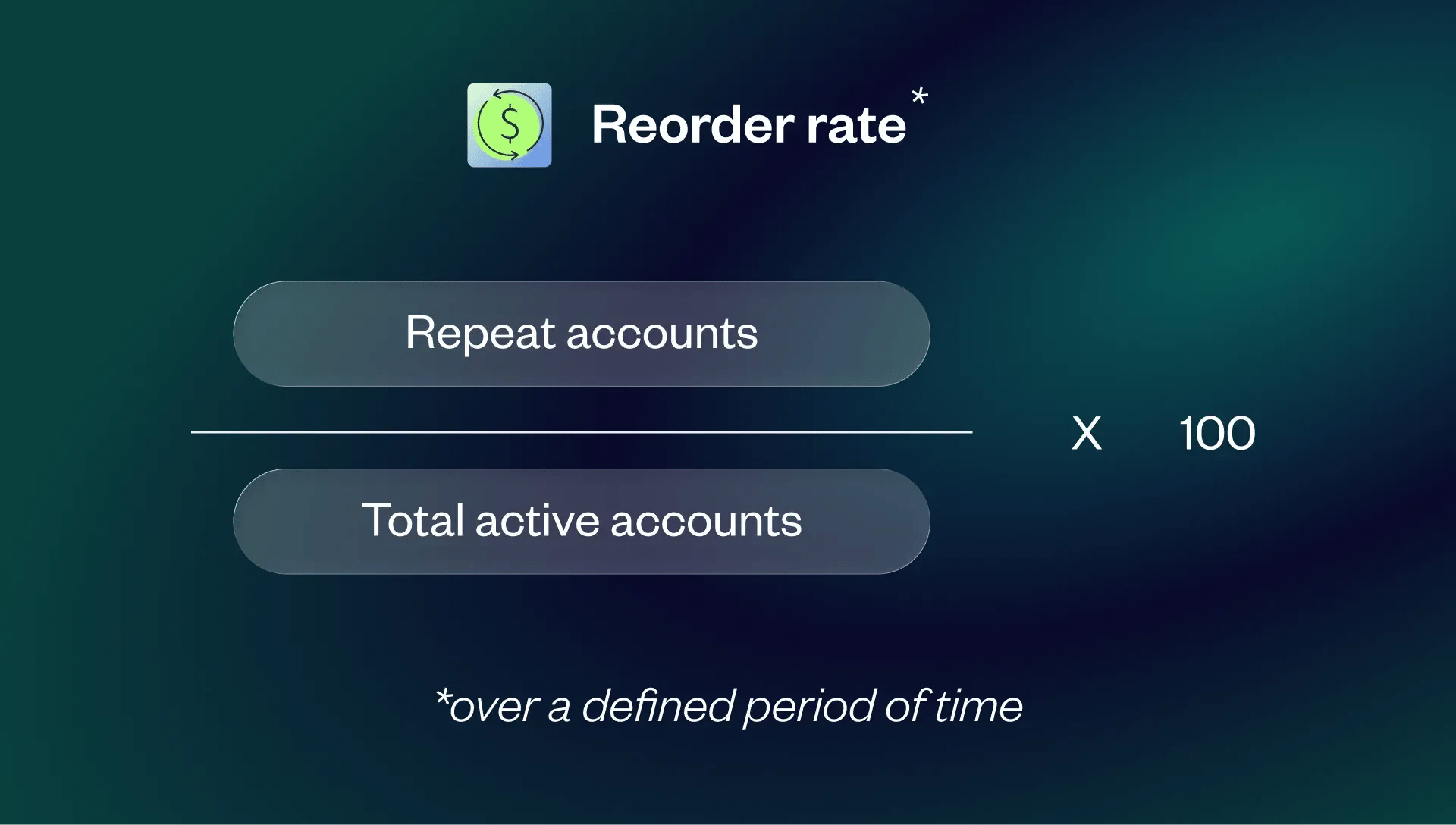
As you track your reorder rate, be sure to pay attention to your sell-through rates and average order value (AOV) too. Sell-through rates will help you understand why your reorder rate is what it is, while your average order value can help you predict what your sales might be for a specific period.
7 ways wholesale brands can improve reorder rates
Here are seven actionable steps you can take to improve your reorder rates:
1. Make reordering frictionless
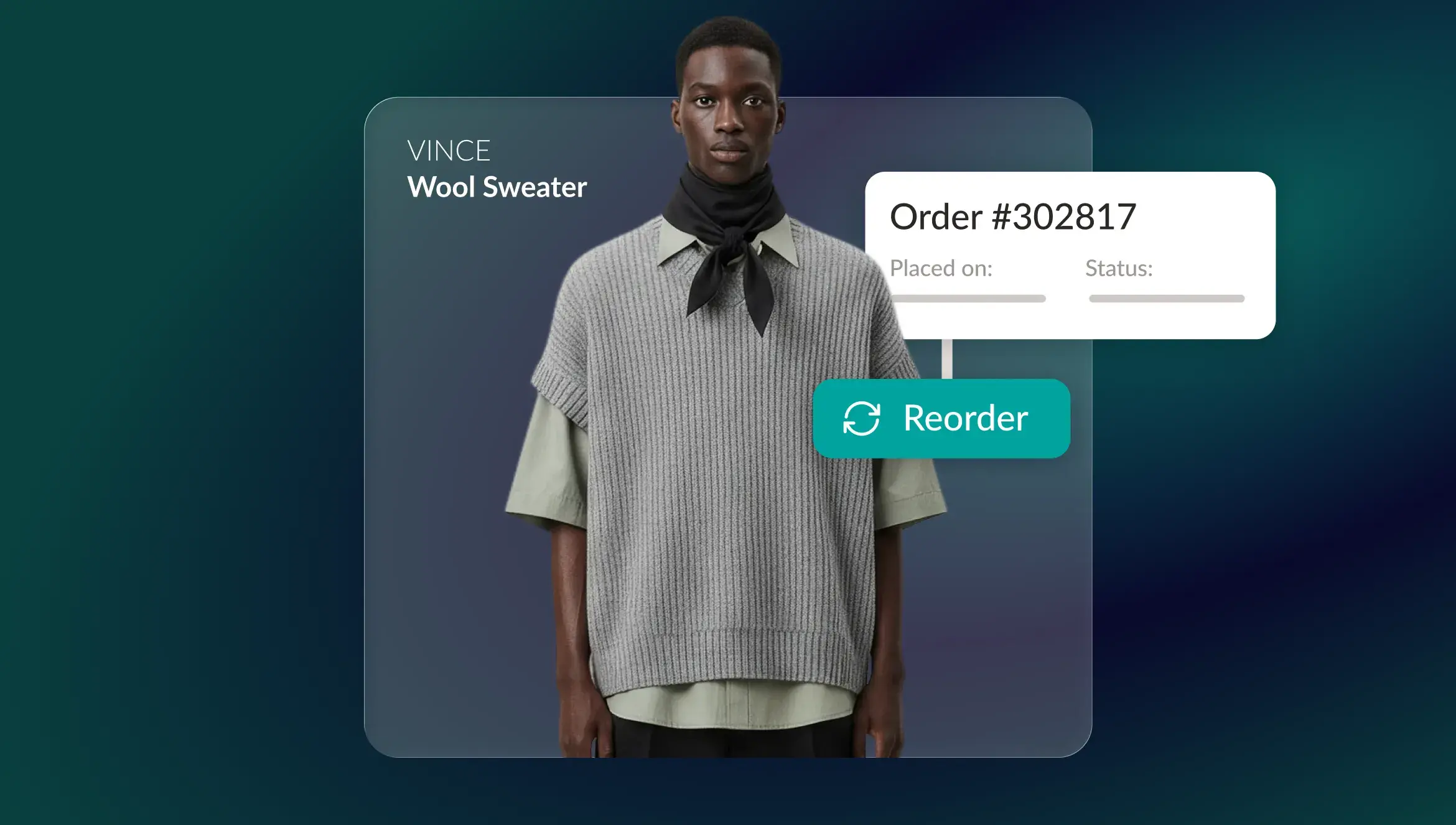
When you make it fast and easy to submit a reorder, buyers will be far more likely to replenish their buys. What’s more, B2B buyers have come to expect B2C-like, self-service reorders; that’s where tech comes in. Invite buyers to submit orders on their own via your wholesale platform. They can access your B2B portal at their convenience to place one-click reorders directly from their order histories. They can also view live, available-to-sell (ATS) inventory to reorder without worrying about potential cancellations. Your larger accounts, such as department stores, can even upload CSV files to place bulk reorders with ease while ensuring valid SKUs and minimum order quantities (MOQ). Frictionless reordering can greatly reduce the risk of bestsellers running out of stock, encourage frequent replenishments, and improve cash flow.
2. Deliver consistent product quality
Since retailers only reorder goods that sell, you have to make consistent product quality one of your top priorities; there’s no way around it. Products sell well when they’re of good quality and when they’re sized for the right fit. Prioritize quality control, consistent specifications and sizing, and share detailed, accurate product data and imagery in your B2B brand portal. The goal is to make sure everything that ships matches everything on your linesheets so buyers won’t be met with any unpleasant surprises. Reliable logistics are vital, too. Let your valued retailer partners order with peace of mind—stick to accurate shipping windows and communicate about any potential delays as early as possible.
Regardless of how great your relationships might be with your existing buyers, they have business metrics to meet and customer expectations to uphold. As such, set up your systems in ways that will help you avoid damaged shipments, incorrect orders, and missing invoices to the best of your ability. And since things can happen, if an issue ever pops up, communicate early and often and resolve them as quickly as you can.
3. Help retailers sell through
If you want to entice retailers to reorder more goods from you, think about how you can help them move more of your products in their stores. If your products aren’t selling, they won’t have any reason to replenish in season. Get creative. Send fresh product photography, ready-to-use social copy, point-of-sale displays, and other marketing collateral to your accounts. Give them strategic merchandising and display guidelines that help your products sell. Create product knowledge assets for their sales team, offer to provide them with a basic training on the selling points of your brand, or suggest bundling options or styling tips. You can even offer to host in-store experiences or events. The faster your products sell, the faster, larger, and more predictable retailers’ reorders will be.
4. Use pricing incentives and flexible terms to reward repeat orders
Imagine a buyer needs to replenish their activewear assortment, but they carry several brands. If they knew you offered an incentive for reorders, that could be the deciding factor as to whether they’ll place that reorder with you. To preserve your brand image and the equity of your brand, it’s better to skip discounts—opt for incentives instead. For instance, you can offer free shipping when buyers place orders over a certain threshold, flexible payment terms, financing, and even early access to soon-to-be-released collections.
5. Manage accounts proactively
Instead of waiting for your accounts to place reorders, stay in touch throughout the season. Buyers are far more likely to replenish assortments within the season when you reach out proactively to ensure they don’t run out of goods. Of course, you won’t know if SKUs are selling well if they don’t share that information with you, so it’s a good idea to lean on historicals. Segment your accounts by value and reorder cadence in your wholesale platform. Assign dedicated reps to top accounts and ask them to schedule strategic check-ins that align with their usual sell-through cycles. Finally, set up automated email reminders that nudge buyers when certain SKUs might be low in stock.
Communication can really alter everything. Just like it’s a great idea to be proactive about reorder conversations, be sure to be responsive whenever a buyer responds with any questions. Same-day replies are ideal.
6. Optimize with reorder data
Measure your reorder rates so you can come up with game plans to improve them in the future. Track your reorder rate, sell-through rate, and AOV by account and by SKU. Identify typical replenishment cycles to come up with a timely schedule for outreach, and use your wholesale platform to flag at-risk or lapsing accounts automatically. Finally, you can use CRM automation or predictive signals to trigger email reminders when it might be time for retailers to place reorder buys. With the right tech tools in place, you can greatly reduce how much time it takes you to stay on top of reorders while continually improving your outcomes.
7. Keep assortments fresh and regionally relevant
When you think about ways to improve your reorder rates, think about what attracts consumers into retail stores and ultimately inspires them to buy: fresh designs, newness, and pieces that feel relevant to their regions. That’s what wholesale buyers seek too. Produce a mix of tried-and-true core bestsellers and designs that feel fresh and new. Buyers will be happy to introduce fresh assortments into stores, and exciting designs can help your pieces sell well.
Reference historical sell-through data to ensure you produce enough core bestseller SKUs. And then introduce newness on a predictable cadence so buyers will remember that you have new things on offer on a regular basis. Then ensure your collections are relevant to buyers in different markets; offer regionally tailored assortments for their stores and localize those email campaigns to respect buyers’ schedules and to emphasize their relevance.
Share article


Get on the list
Wholesale tips and industry news you can’t miss, delivered weekly