For brands asking how eCommerce brands expand internationally, the answer typically involves a phased strategy that combines market research, localization, logistics planning, regulatory compliance, and the right technology infrastructure. This guide walks through each of those pillars so you can move from domestic success to sustainable global growth.
Needed components to sell online globally
There might be a lot to consider but you can succeed in eCommerce on a global scale by getting the foundational elements right from day one. Platforms like NuORDER can help you get everything in place. Here’s a checklist of everything to accomplish before you expand your business into different regions around the world..
Global-ready online storefront
To truly go global, choose a B2B storefront that makes it possible to customize your catalogs with multiple languages and currencies based on where the retail stores are based. It should be easy to apply regional rules. You should also be able to access the same level of customization when it comes to both merchandising and content management so your teams can localize assortments and messaging without reinventing the wheel with custom builds.
Some brands operate from a single global website when targeting geographically close markets with shared language expectations. Others build fully localized storefronts to curate more tailored customer experiences—an approach that requires greater investment but often produces stronger long-term growth.
International payments
When you offer local currencies, you offer buyers greater convenience and ease—it’s an excellent way to become a valued brand partner. You also remove the friction associated with currency conversions to save buyers money and time. This is so important that in some scenarios, not accepting local currencies could be a dealbreaker, or the buyer might simply decide to purchase less.
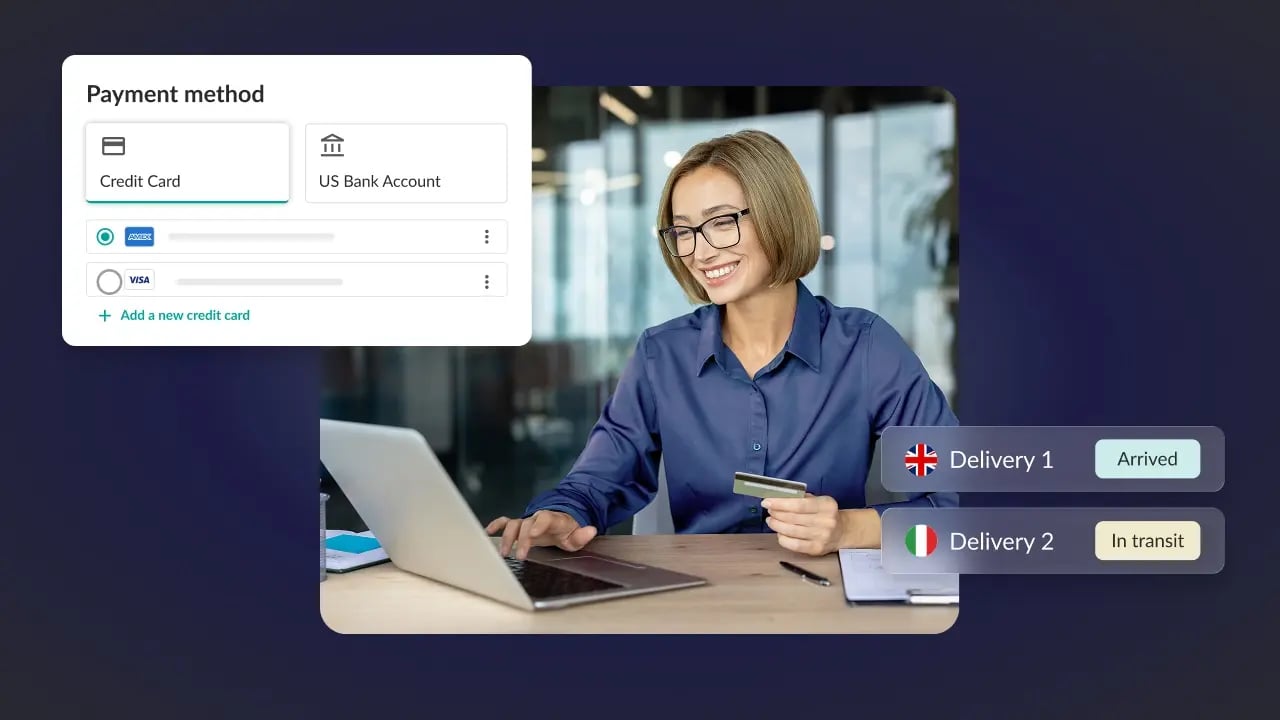
In addition to local currencies, get to know the preferred payment methods in various regions so you can further streamline the sales process, reduce friction, and encourage repeat sales. Finally, offer visibility into everything that impacts their invoices; think transparent pricing and clear representations of every associated duty and tax.
Offering native payment methods—such as digital wallets or regionally preferred financing options—can significantly increase conversion rates and reduce cart abandonment.
Cross-border shipping and logistics
No matter how long you’ve been fulfilling and shipping orders domestically, dispatching successful deliveries across borders will always call for different considerations. Work with reliable carriers, and be crystal clear about the shipping options you have to offer. When buyers access your online storefront, they should be able to see which SKUs are available for delivery during which timeframes; predictable delivery windows are a must.
Finally, it’s really important to provide buyers with pre-calculated duties and taxes, along with landed cost estimates so they won’t be hit with any surprise expenses or fees that could be detrimental to their margins and/or budgets. The easier you can make it for buyers to make informed decisions and succeed, the better the foundation you’ll create to build lasting and mutually beneficial partnerships.
Brands typically choose between cross-border shipping from a central warehouse, local warehousing through a 3PL partner, or dropshipping models depending on cost structure and delivery expectations.
Worldwide customer support and service
Selling around the world underscores the importance of selling 24/7 but also offering responsive support across time zones. Don’t ask buyers to conform to your schedule; offer multi-channel support across email, chat, and phone so they can get the answers they need while you sleep.
Take it a step further by offering multilingual support. Even if buyers can do business in English, many people feel more comfortable (and can work far faster) if they can access customer support and knowledge bases in their native or preferred languages. With the right platform, this can be simple to achieve but it goes a long way in enhancing your relationships with international buyers.
AI-powered chatbots and localized support teams are increasingly helping brands provide 24/7 multilingual assistance without dramatically increasing operational overhead.
Tax, duties, and compliance
If taxes and regulations can be complex selling domestically, imagine how much more complicated it can be across the global stage. Don’t take a manual approach; use technology to accurately calculate and disclose all the fees and taxes associated with every transaction at checkout. Import duties and regional tax rules can be nuanced and regulations often change; use agile processes and smart tech to maintain up-to-the-minute compliance.
Many companies now adopt Delivered Duty Paid (DDP) models so customers see the full landed cost at checkout—eliminating surprise fees and improving trust.
Understanding the opportunity: Why expand globally?
Expanding internationally gives brands access to larger customer bases, increased revenue potential, and a meaningful competitive advantage. It also helps future-proof operations by reducing reliance on a single economy while positioning the business for long-term resilience. Many organizations discover that global presence enhances brand credibility, opening doors to stronger partnerships, distributors, and press opportunities.
Tap into new markets
There are only so many people in any given area who fall within your target market. When you enter a new region, you instantly increase the size of your target audience and the amount of exposure you can obtain. However, no two markets operate exactly the same so there’s even more to gain. You can discover new segments of buyers and new verticals to serve and reap the benefits of fulfilling a previously untapped demand.

Unlock additional revenue streams
One of the best ways to safeguard the future of your brand is to diversify your revenue across multiple channels. It changes everything when you go from only generating revenue from your direct, wholly-owned channels such as your websites, stores, and social media platforms to also selling your products in different marketplaces and brick-and-mortar and eCommerce retailers around the globe. Due to the diversity of climates around the world, you can enjoy greater stability and reduce risk when it comes to selling goods that wear well in certain weather. And if you sell in both hemispheres, you can prolong the sales window for your designs for different seasons too.
Reduce regional dependency
Even broader economic effects tend to impact different regions in very different ways. Never be over-exposed to any single market’s economic cycles or regulatory changes; it can rattle your business overnight. Global eCommerce reduces your dependence on any single region which further reduces risk and opens the door to new opportunities. For example, in one booming region, consumers might be making more fun, personal purchases due to access to more disposable income, while a region with a slower economy might see consumers largely stick to the essentials in the same year.
Achieve greater economies of scale
Large corporations hold one of the greatest competitive advantages in the world: economies of scale. They’re able to purchase so many quantities of basically everything they produce and procure that they’re able to spend far less on any single item. Your brand can also take advantage of considerably lower costs and negotiated rates when you produce more quantities per SKU to sell in different markets around the globe. Use centralized catalogs, inventory, and data to improve your purchasing power, reduce your workload, and get a higher ROI from your technology investments.
Build a stronger brand and recognition
There’s something about having a brand presence in multiple markets around the globe that enhances its credibility. Elevate your brand image by selling in multiple regions and by gaining loyal clients around the globe. A global reputation can help you attract better retail partners, distributors, press coverage, and more.
Test markets digitally first
If you’ve been thinking about opening stores in other markets, consider launching your eCommerce global strategy first. It’s a low-risk way to validate demand and gain valuable insights before investing in a physical presence of your own. Use a platform that helps you access quality data and speak with your retail partners to learn more about those markets’ unique preferences and needs.
Global marketplaces can serve as an effective testing ground, allowing brands to evaluate product reception and gather customer insights before committing to deeper market entry.
Using global marketplaces as a launchpad
Tapping into international marketplaces offers a strategic entry point for ecommerce brands looking to expand globally. These platforms provide immediate access to large audiences while generating valuable data about regional preferences and buying behavior.
However, success requires more than listing products. Brands must optimize marketplace SEO, monitor competition, understand fee structures, and use analytics to refine assortment strategy. Insights gathered here often inform broader localization, pricing, and marketing decisions when transitioning into owned channels.
Common global eCommerce challenges
Even though eCommerce has so much to offer in the global arena, it’s important to proceed with a plan. The outsized rewards come along with a greater degree of complexity which can stall or derail your plans for expansion if they’re not properly addressed.
Complex global regulations
Do your due diligence before you dive in. Too many brands have been met with incredible financial and legal difficulties because they simply entered a new market without learning what their local obligations would be. Different markets have different legal, data privacy, and product compliance requirements, as well as different fines and punishments for falling out of compliance. Manually tracking regulations simply won’t do; find a platform and/or partner that can help you stay compliant as regulations vary across countries and regulations often change.
Managing international fulfillment partners
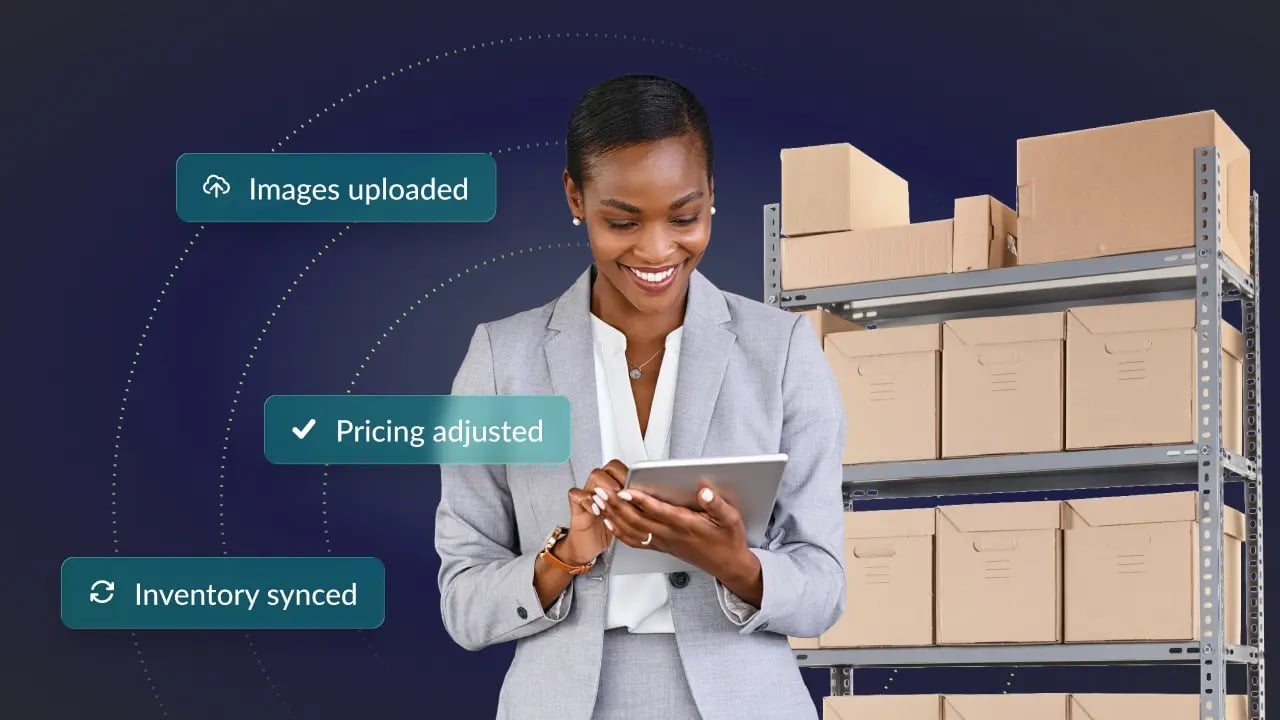
Choose your international fulfillment partners wisely. Research and ask for referrals and references. You have to be ready to coordinate multiple warehouses, third-party logistics providers (3PLs), and distributors. Look for consistent communication and service, streamlined, modern operations, total visibility into your inventory at all times, and other signs of capability and trust. Finally, make sure your partners’ solutions can integrate seamlessly with your platform; it’s something many brands overlook but it’s essential to sell globally successfully, and at scale.
Cultural and language barriers
With all of the translation tools on the market, it might seem deceptively easy to adapt your eCommerce presence for a multitude of languages. But if you ask anyone who speaks more than one language, they all have hilarious or uncomfortable stories about translations that missed the mark. Avoid a similar fate; use a trusted platform to ensure your translations make sense but also to ensure your messages are appropriately tailored to the local market. Think culturally relevant messaging, local insights, and adaptable content versus one-size-fits-all campaigns.
Supporting local payments and currency
How many times have you abandoned online purchases when you realized they didn’t support your preferred ways to pay? The same frustration rings true for buyers. Be sure to offer sufficient payment options, as well as the preferred payment methods of any given region to create a convenient experience and to reduce the risk of abandoned carts. Similarly, sometimes the local currency isn’t the preferred way to pay—research is key. Balance local payment and currency expectations while being mindful of taking on additional complexity and costs.
Underestimating shipping costs, ignoring regulatory nuances, and failing to localize experiences are among the most common pitfalls brands encounter when expanding internationally.
Global eCommerce trends for 2026
It’s important to think even further ahead; take a forward-thinking view to build a strategy that will continue to be effective for years to come.
In this section, you’ll discover three major trends that your brand should be planning for over a period of the next 12-24 months: AI-driven global personalization, the acceleration of social media shopping, and the rise of cross-border customer demand. And remember, when you have a flexible eCommerce tech stack with modern infrastructure, it makes it even easier to stay ahead of shifts like these to quickly pivot and adapt.
AI-driven, global personalization
AI can tailor assortments, pricing, and experiences by region and by the profiles of buyers. And the entire industry is familiar with the strength of personalization in B2B sales—it has the power to grow your average order sizes and deepen your relationships with buyers. Using AI to personalize your global eCommerce strategy is a game changer; studies show AI‑driven personalization can lift eCommerce conversion rates by as much as 10%.
Start exploring how you plan to share intelligent recommendations with buyers based on buyer attributes such as store sizes, regions, and whether specific retailers also carry adjacent categories, such as footwear. Find out how AI can help buyers reorder faster while helping you increase bottom line and research how smart tech can help you localize your assortments for various markets.
Acceleration of social media shopping
We’re witnessing a rapid evolution in the role of social media platforms when it comes to consumers’ shopping decisions. Social media continues to be a realm of discovery but it’s increasingly serving as a serious conversion engine too. The numbers are staggering; the global social commerce market was valued at $1.6 trillion in 2025 and is projected to quadruple by 2030.

What’s the role of social media when it comes to wholesale? It’s important to connect your wholesale, eCommerce, and social channels to ensure your inventory and assortments stay aligned. Truly omnichannel operations (also known as connected commerce) increase visibility, reduce the risk of potential error, improve service, and help you create a better experience for both consumers and your retail partners.
Rising cross-border customer demand
Merchants are increasingly comfortable with placing buys across borders and they expect nothing less than seamless experiences. The better you can get at solving cross-border friction, the greater the competitive advantage (and customer loyalty) you can gain. The numbers are telling; cross‑border eCommerce was worth over $1.2 trillion in 2025 and already accounts for close to one‑fifth of global online sales.
Your tech stack makes it possible for buyers to place orders 24/7 from almost anywhere in the world but don’t stop there. Explore how you can create an even better experience with up-to-the-minute calculations for delivery times, shipping fees, taxes, duties, and more. The easier it becomes to buy from you, the more you’ll position supporting your brand as a no-brainer.
As demand rises, brands that remove friction from the buying journey—through transparent pricing, faster delivery, and localized experiences—will gain the strongest competitive edge.
Why use a global eCommerce platform?
It can be tempting to build a homegrown solution but it’s a gargantuan investment that often leads to many problems. For example, some brands did well with their proprietary solutions until key employees moved on, updates were needed, or industry tech evolved faster than their limited tech teams could keep up. Sometimes brands reach for a combination of tools instead of a robust platform with the aim to reduce their costs.
Unfortunately, a patchwork of tools in their tech stack often run into technical issues, integration errors, and other resource-intensive hurdles. The challenges of both homegrown solutions and patchworks of tools only multiply when brands start to scale into multiple regions.
When you use a true global eCommerce platform, you’re accessing the strength of a unified platform that centralizes data, catalogs, orders, and workflows across multiple markets and teams. It simplifies and speeds up your operations as a single source of truth.
You can launch into markets much faster, you can reduce your operational costs, and you can improve internal processes for your teams while you simultaneously produce better experiences for buyers.
A unified platform becomes especially critical as operational complexity increases — helping brands centralize data while maintaining regional flexibility.
Partner with NuORDER for global eCommerce

Expanding into international markets is no longer reserved for enterprise organizations. With the right strategy and infrastructure, brands of all sizes can compete globally. Success depends on researching markets, localizing experiences, optimizing logistics, ensuring compliance, and building a scalable tech stack. Platforms like NuORDER support this evolution by helping brands unify operations, streamline workflows, and deliver consistent buying experiences across regions. If you’re ready to transform global ambition into measurable growth, explore how NuORDER supports international eCommerce expansion.
There’s a lot to consider when you’re scaling on the global stage. NuORDER removes technical headaches, operational hurdles, and regional-specific guesswork to help brands turn their global ambitions into an attainable reality.
Share article


Get on the list
Wholesale tips and industry news you can’t miss, delivered weekly