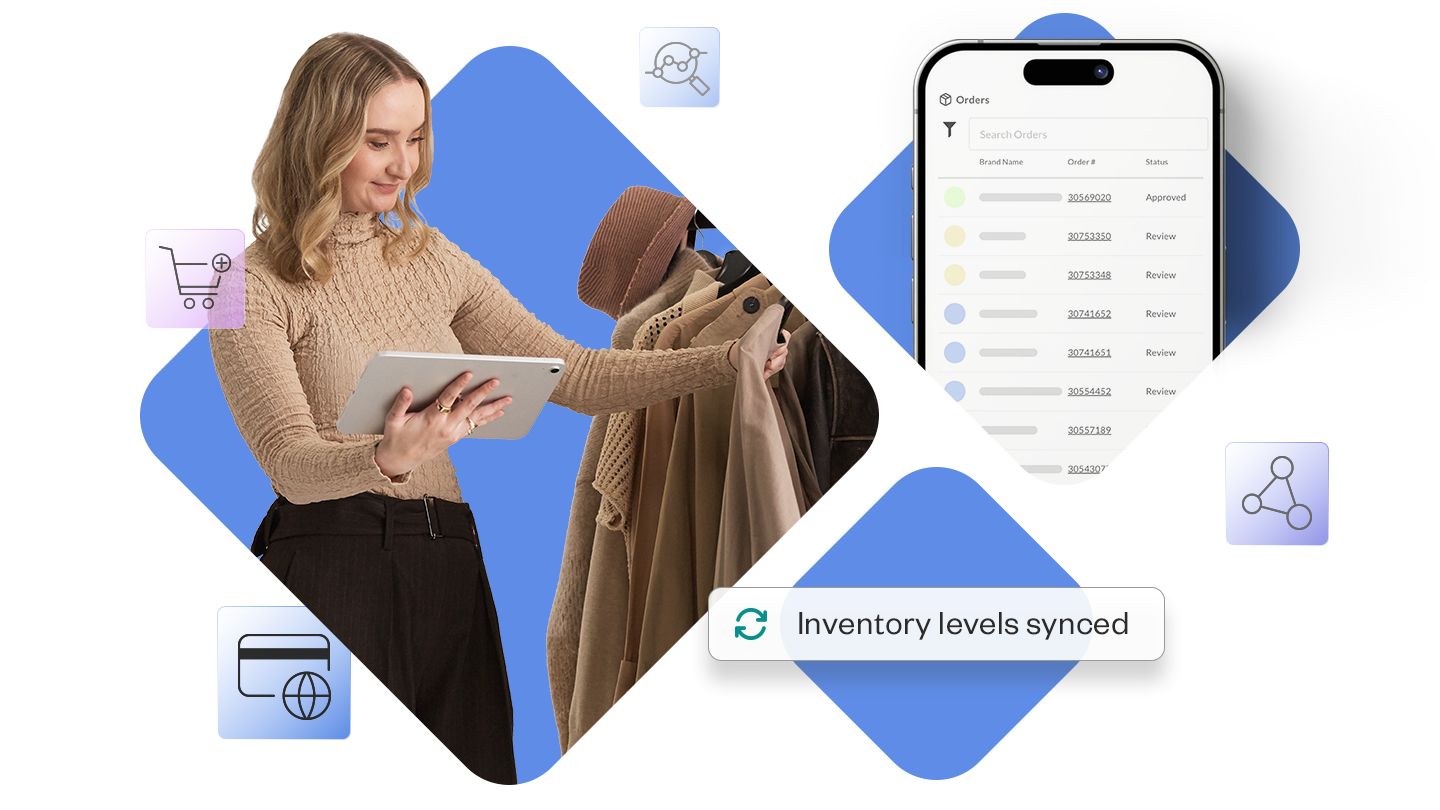
Scale wholesale operations without adding headcount. Automate orders and enable B2B self-service to grow with your team.
Your wholesale order volume and your accounts might be growing, but it can be slow and pricey to hire more operational staff. So the question becomes: can you scale your wholesale operations without adding headcount? And if so, how? Thankfully, the great news is you can. In wholesale operations, there are usually three sources of hiring pressure: manual order entry, inventory tracking, and customer support. When you remove the bottlenecks from these areas, you free up your existing team’s bandwidth; suddenly, they can handle several times the volume they once could.
Read this playbook to learn specific system and process changes for your wholesale hub to scale without expanding your team.
You can scale your wholesale operations by automating repetitive responsibilities: order entry, invoicing, and inventory.
Use a B2B portal that makes it easy and convenient for buyers to submit their own orders.
Connect your ERP, WMS, and EDI to eliminate double data entry and instantly process routine orders.
Let your teams manage by exception (rather than individual SKU) with data-driven forecasting.
Use 3PLs and role redesign to turn fixed labor costs into flexible, on-demand capacity.
Scaling your wholesale operations without adding headcount means growing order volume, accounts, and revenue by automating and streamlining tasks so your existing team can handle more. Your wholesale operations span order management, inventory, fulfillment, and account/customer service—and the key is to scale your systems and intelligence rather than take on new staff. While there’s certainly nothing wrong with growing your team, the costs of overhiring can be costly and can lead to later reductions in force. Often when brands think they need more people to run their wholesale operations, they haven’t taken a closer look at how they can do more with the systems they already have in place. It’s just the first place to start.
When your wholesale order volume grows, manual order entry processes start to become incredibly problematic for team members’ bandwidth. Manual inventory tracking and forecasting also slows things down considerably when spreadsheets start to fail in the face of far more accounts and SKUs. Finally, customer support starts becoming more reactive as your reps get swamped personally answering order status and pricing questions. This guide holds solutions for all three of these constraints.
You can swap out your phone, email, and PDF orders with a centralized B2B eCommerce portal to serve as a single source of truth. It’s one reliable place where buyers can plan, modify, and place buys and even reorder as sell-through rates rise. They can also access their account-specific terms and track their orders themselves. It’s wonderful when buyers work with your reps, but there’s no need for them to coordinate for every inquiry and transaction.
When you automate your orders with an online B2B marketplace, buyers can:
Access live inventory availability and custom tier pricing
Enjoy the ease of one-click reordering
Access past invoices and order history
Manual order entry processes are some of the fastest ways to hinder your ability to scale. But when you automate your orders, you speed up the buying process for your retailer partners and free up your reps to handle complex orders and exceptions.
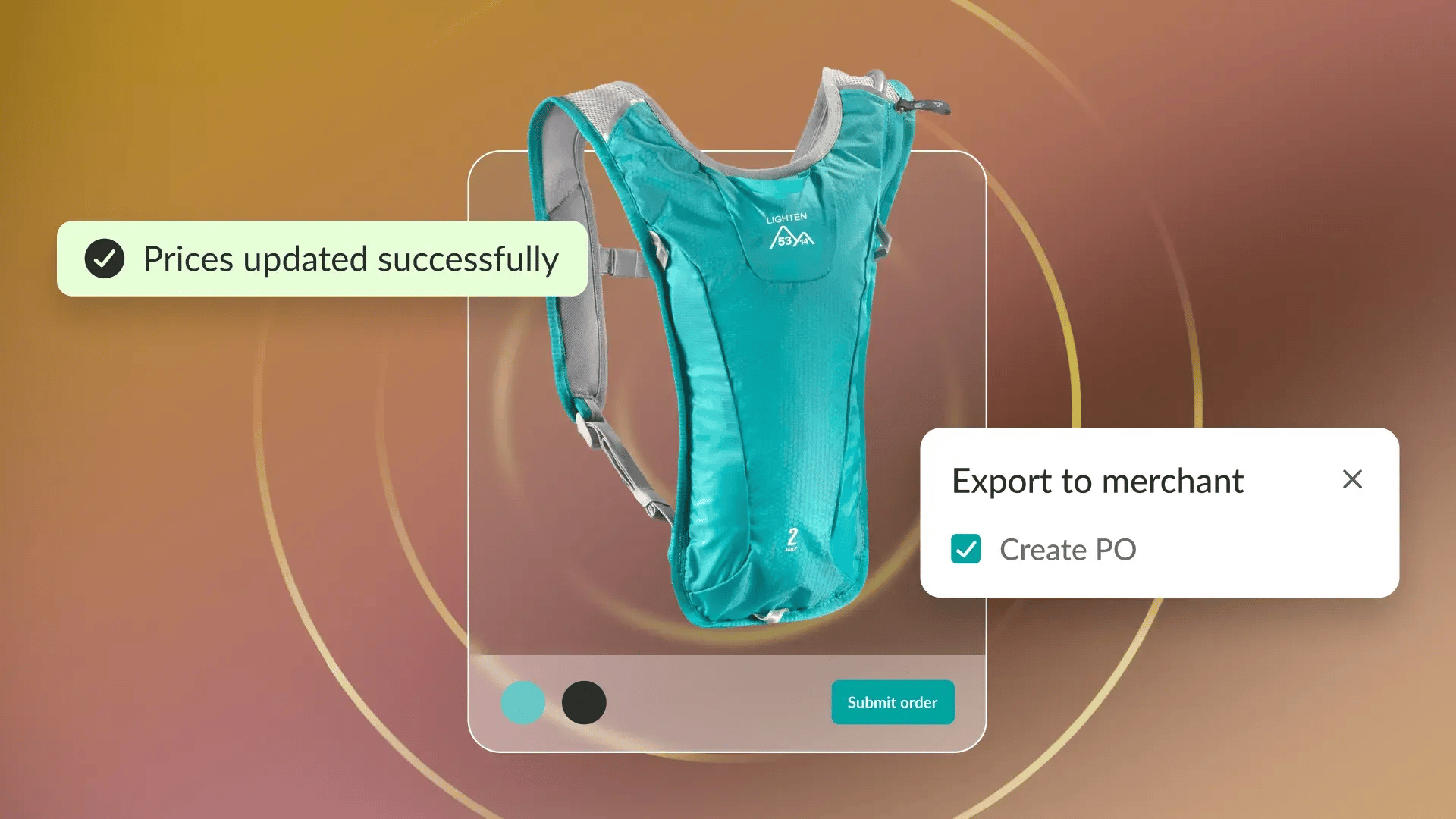
When you attempt to manually move data between your key platforms, these siloed streams of data become prone to errors and delays. While you might have several systems within your tech stack, consider your most essential systems: your enterprise resource planning system (ERP), warehouse management system (WMS), and electronic data interchange (EDI). Think about everything they do—even one error can be a costly mistake. But when you have fully-synced wholesale distribution software, you eliminate the risk of double data entry and speed up warehouse operations and fulfillment. You can even prevent issues like overselling via real-time visibility into your stock.
When you move from forecasting with spreadsheets to automating orders, you gain the ability to reference in-depth analytics and you can use predictive demand models that are far more sophisticated. Put these tools to good use to track your most essential key performance indicators (KPIs), including fill rate, order cycle time, and sell-through. You can also use them to manage by exception. For example, your wholesale platform can alert you when you reach certain stockout and overstock risk thresholds, and only auto-generate purchase orders up through a certain level of stock. As a result, you can manage your inventory better and make faster decisions without needing to rely on the guidance of analysts. This level of speed and agility becomes even more important as you scale into new markets as part of your global eCommerce strategy.
The more organized and streamlined your operations are, the more realistic it will be that you’ll be able to scale your operations without expanding the size of your team. Think in terms of lean principles. Map key processes to identify and eliminate inefficiencies and waste, and document standard operating procedures (SOPs) for repeatable tasks including returns, damaged-freight claims, and onboarding. Finally, build a searchable knowledge base or feed your SOPs into an internal AI search tool so your team members can quickly source answers on their own to reduce time spent in meetings.
When your physical fulfillment capacity reaches its max, consider shifting your warehousing, pick-pack, and freight to a third-party logistics (3PL) provider. This can be more cost-effective than expanding the headcount on your warehouse team if the excess orders are exceptions like seasonal spikes of business or a new regional expansion where you don’t have sufficient data to estimate future reorder demands. While this means you’ll be working with both fixed costs (your usual warehouse expenses) and variable costs (the 3PL’s services), when you work with a 3PL, you only pay for the warehouse footprint and labor that you use each month.
Now that your team members have more capacity, it’s important to shift their responsibilities to more valuable, strategic work. When automation cuts out unnecessary, repetitive processes, you can gain even more wins when you assign your teams to account growth, buyer relationships, merchandising, and managing exceptions. The more care and consideration that they can contribute to these areas, the better your relationships can be with buyers which can increase loyalty and lead to further growth.
At a time when the news is filled with reports of employees training their technological replacements, it’s important to put your team members at ease from the start. Be very clear that you’re only going to automate repetitive, manual tasks that slow down operations and open the door to human error. Get them excited about the fact that they’ll be able to spend more of their time on more meaningful work that adds even more value to your business. And never develop SOPs from the top; assign them to the people who are actually involved with these processes every day. They’ll be familiar with important nuances and details others might miss. Finally, even though your automated wholesale operations will make things a lot smoother for your team, automate in phases rather than attempting to overhaul everything at once.
The best way to scale without adding headcount is replacing manual order entry with a self-service B2B platform that’s synced to the most important systems in your tech stack. NuORDER is one such digital wholesale hub, complete with digital linesheets and catalogs, streamlined order management, easy ways for buyers to submit orders, and powerful analytics.
You can streamline your operations with a B2B portal and integrated systems by automating repetitive orders, invoicing, and inventory tasks and offering self-service orders to buyers. This will allow your existing team to handle far more orders.
Wholesale operations is the process of managing volume sales to retailers via order management, inventory, fulfillment, and account service (B2B). Retail operations is the process of managing selling to end consumers (B2C).
Yes, you can. Use wholesale software to automate your orders and to offer merchants the ability to place buys at their convenience.
Use your B2B eCommerce platform, inventory management system, ERP and WMS to scale your operations. The right wholesale distribution software, like NuORDER, can make all the difference.
Wholesale tips and industry news you can’t miss, delivered weekly