B2B ecommerce

What is eCommerce localization? Your complete implementation guide

Learn how to leverage eCommerce localization to reach global customers effectively with these best practices and tactics.

banner_image

Discover a better way to run your wholesale

Thanks to factors including international networks of merchants and influences felt across the globe, eCommerce is making a rapid expansion around the world. However, despite the vast number of similarities shared between disparate regions, wholesale buyers continue to expect experiences that feel native to their markets. That’s where localization comes in.

When you enhance your offerings and streamline the eCommerce experience for buyers, such as via local currencies, languages, and market-specific revenue opportunities, you have the power to stand out, earn loyalty, and shape stronger ties with retailers. Localization is an incredibly thoughtful gesture. When it’s executed well, buyers can take it to heart as a wonderful sign of respect. At the same time, it positions your brand to be much more interesting and enticing to shop than other brands in your category that don’t offer much more than basic translations; that can lead to a tangible rise in your top-line revenue.

Use this practical, step-by-step guide to start putting your eCommerce localization strategy into place.

Key takeaways


  • As the global eCommerce market expands, buyer expectations are evolving to include B2B experiences that feel native to their home markets.

  • Localization goes beyond simple translations; it also considers preferred payment methods, tailored assortments, shipping options, SEO, and more. 

  • When you offer a better, localized B2B experience, you can stand out from the competition, increase sales, and strengthen your relationships with buyers.

  • You can use your wholesale platform to elevate your localization efforts.

What is eCommerce localization?

eCommerce localization is the act of tailoring eCommerce experiences to honor local preferences and needs, including cultural considerations, linguistic nuances, legal requirements, and even user experience (UX) copy and design. If you were to simply translate your eCommerce pages and experience into the local language, it wouldn’t be enough of a difference or enough customization to be considered localization.

The main elements of eCommerce localization are:

  • Language (translations, tone, phrases…)

  • Currency 

  • Payment methods (preferred payment types in their region)

  • Shipping (local, preferred delivery options and seamless logistics)

  • Customer support (in their native language and in their favorite means to receive support)

  • Compliance (adhering to local regulations, clarifying local taxes and duties)

  • Marketing (native language campaigns, incorporating regional nuances and local phrases, localized SEO…) 

All of these components work together to produce a truly local eCommerce experience. For instance, size charts fall beneath the umbrella of customer support, and bra sizes and shoe sizes in the US are vastly different from sizes in Europe. If you were selling these items wholesale, it would be essential to ensure you’re offering precise size charts so buyers will order the right size pack ratios for their stores.

Holidays and local traditions also represent major areas of differentiation across markets. If you offered a truly localized eCommerce experience, you wouldn’t use a blanket promotional calendar for every region. Similarly, you wouldn’t send promotional emails to buyers when you know they’re away (such as during the month of August when most people in several Western European countries take their summer break). 

Why it’s critical to prioritize localization

Today, you can sell to retailers across the globe that sell to customers who span the planet. eCommerce localization has never been more important. Thanks to the ubiquitous nature of global commerce, buyers have rightly come to expect the ability to easily shop the collections of brands from around the world; in fact, for many, it’s an important aspect of curating unique and enticing assortments in the face of cross-border competition. 

And localization is a significant part of what makes buying wholesale via eCommerce “easy.” Localization saves merchants’ time, removes guesswork and major hurdles, and makes it much more appealing to buy. When you execute eCommerce localization well, you can improve conversion rates, reduce abandoned carts, increase your revenue, and earn long-term loyalty with retailers. And collectively, these elements can have an outsized effect on your ability to increase your regional market share. Localization pays off.

For best results, approach localization through the lens of your high-level strategies. Consider how and where it fits in with your global expansion efforts and how it can help you differentiate your brand to stand out in saturated markets. When you establish a strong presence across multiple markets, you decrease risk whenever demand shifts from region to region. You can think of localization as one of your resilience tools in business.

The decision to rely solely on the English language or solely on one-size-fits-all experiences, is a choice that’s filled with risk. Of course, it means fewer opportunities for your brand, but it also increases friction for buyers and can lead to lost trust.

Essential elements of eCommerce localization

What does localized mean when it comes to B2B eCommerce? Here’s a practical checklist of what needs to be localized across your storefront, content, and operations. The bullets below cover both customer‑facing and backend elements to give your product, marketing, and operations teams a shared blueprint for success.

  • Language and content translation: Convert all customer-facing content—including product descriptions, navigation menus, calls-to-action, and legal texts—into the local language. Think beyond translation: pay attention to cultural nuances and regional communication styles too (e.g., French in Quebec vs. French in France). 

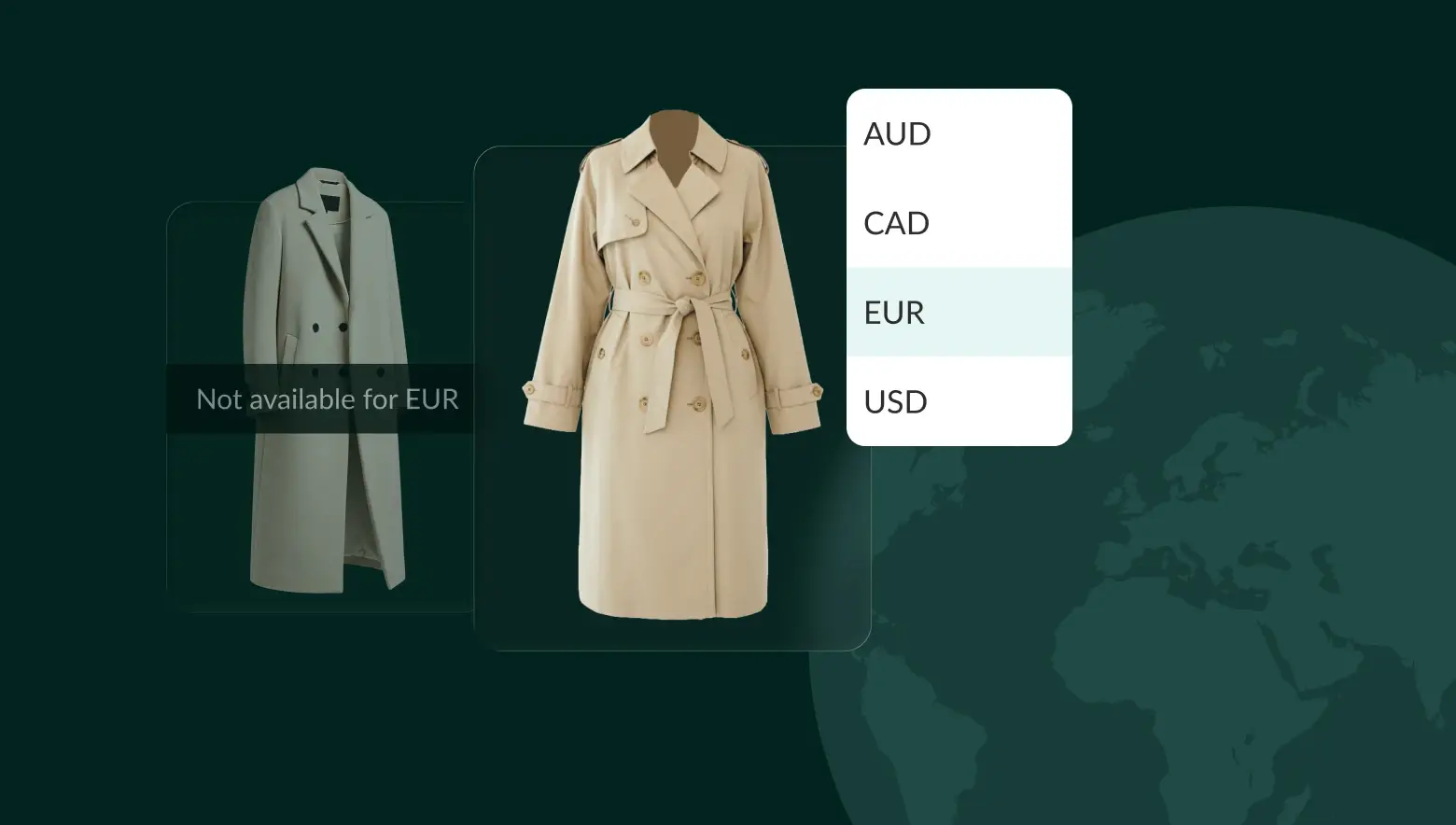
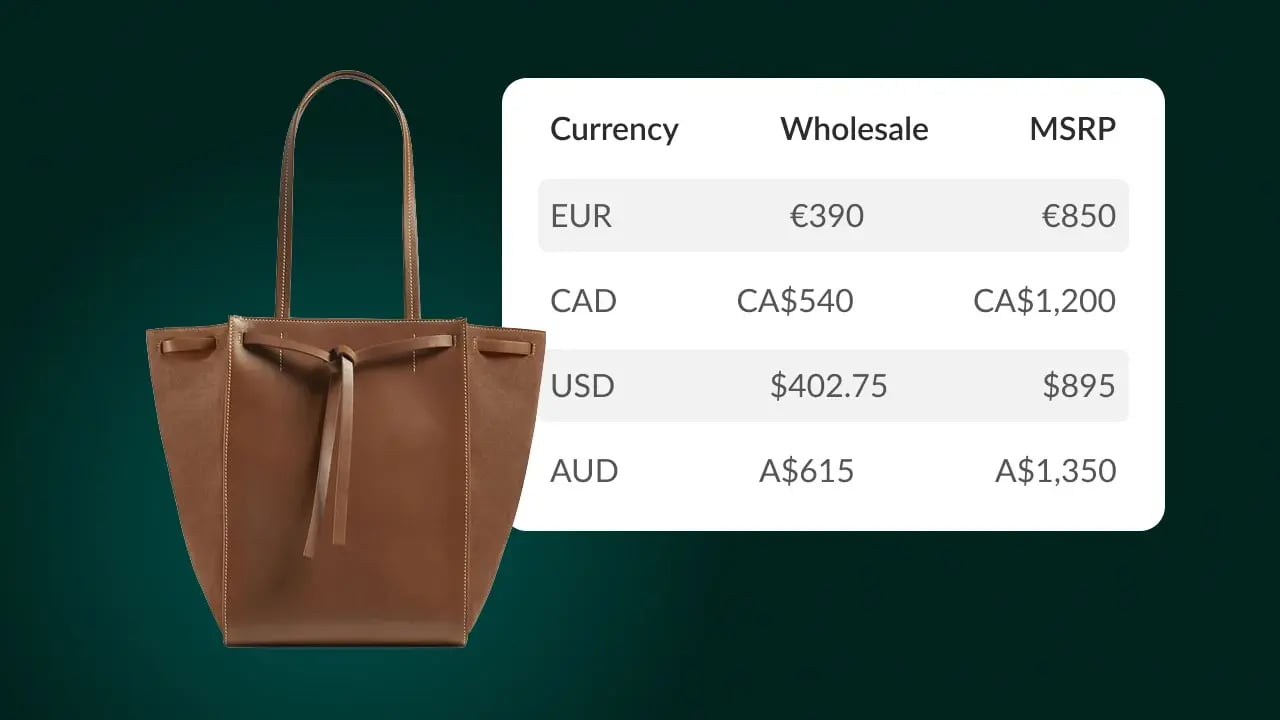
  • Currency and pricing: Display your prices in local currencies with real-time exchange rates and proper monetary representations; make it easy for buyers to mind their budgets as they shop or peruse your brand. Use a B2B eCommerce platform that offers multi-currency support. For example, NuORDER supports over 130 global currencies.
    Blog_eCommerceLocalization_currency

  • Payment methods: Integrate regional-specific payment systems that are popular in the countries you’ve decided to prioritize. For example, WhatsApp payment services is the preferred payment type in Malaysia where nearly all of the population uses the app, every day.

  • Information formats: Adapt numerical formats that reflect the formats that are typically used in that region. Use this approach for date structures (DD/MM/YYYY vs. MM/DD/YYYY), currency symbols, size charts, and measurement units to match regional conventions.

  • Product information: Tailor product descriptions, size charts, measurements, and specifications in your B2B catalog to reflect local terminology and standards that match market preferences.

  • Shipping and checkout: Customize shipping information, delivery times, fees, and form fields based on the customer’s location to accommodate local address structures and checkout preferences.

  • Legal and compliance considerations: Meet the standards of local regulations, consumer protection guidelines, and legislation by translating your terms of service, privacy policies, and return policies to meet regional requirements.

  • Customer support: Provide localized communication channels and support infrastructure in local languages via preferred platforms (including email communication, FAQs, and user-generated content (UGC)).

  • Domain structure and SEO: Choose between country-specific domains (e.g., .de for Germany), subdomains (e.g., de.yourstore.com), or subfolders (e.g., yourstore.com/de/) to structure localized content and optimize for regional search engines.

The benefits of eCommerce localization

Now, let's turn the elements outlined above into measurable outcomes (including revenue, performance, and customer sentiment).

Increased sales and conversion rates

When you feature localized content, currencies, and payment options, you’re effectively reducing friction across the funnel so buyers can place orders on their own—far more easily and in much less time. Every time you make it easier for buyers to order in market appointments, at trade shows, or for when they submit orders at their own leisure, you make it much easier to increase your add‑to‑cart (ATC) rate, checkout completion, and average order value (AOV).

Expanded market share and competitive advantage

In markets where your competitors still offer generic experiences or only do business in English, eCommerce website localization can do a great deal to elevate your brand. You can also suggest assortments that have been curated according to regional tastes or offer pricing that reflects your knowledge of the region and the segments they serve. For another example, you can simplify merchants’ in-store and online marketing campaigns by offering ready-to-use collection language and descriptions that appear in their local language and that have been tailored for local nuance.

Finally, your localized B2B storefront can serve as a powerful symbol of your commitment to the region. In turn, it will enhance your brand perception and make it possible to deepen your channel relationships with retailers, distributors, and partners. Localization says your brand cares and that you’re in it for the long haul.

Improved regional SEO and traffic

Localized content, metadata, structured data, and your domain structure all work together to help search engines surface your store in local queries. While generic, global SEO is also important, when it comes to eCommerce localization, it’s essential to cover regional-specific optimization too. In practice, that looks like using the primary local language, incorporating keywords that would be likely to be used by buyers in the region, and incorporating query logic based on regional search behavior.
Blog_eCommerceLocalization_keywords

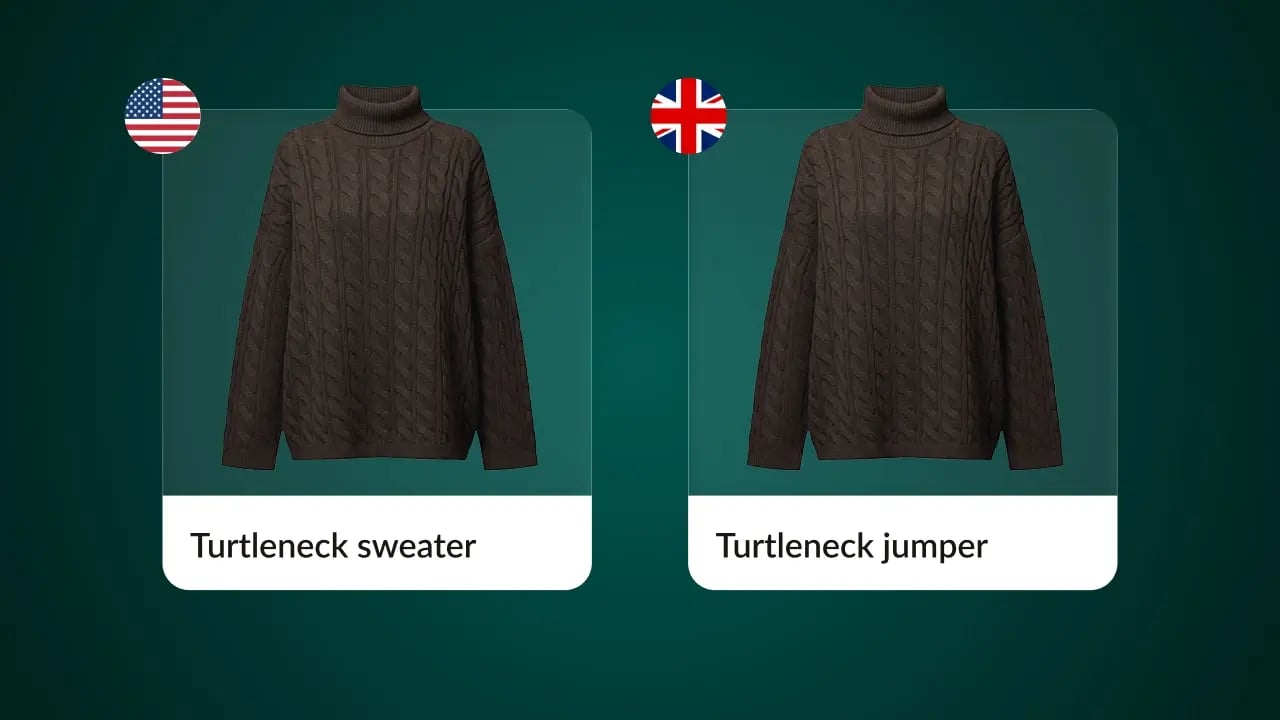
Work with someone local to learn or identify the kinds of keywords that would make the best sense for your brand in their market. For instance, even some English-speaking countries use very different words for certain garments than those used in the US. To illustrate, swimsuits are referred to as togs and cozzie or cossie in Australia and New Zealand; while the word jumper refers to a sweater in the UK. Complicating matters further, in the US, a jumper refers to a sleeveless dress designed to be worn over a tee, blouse, or sweater.

Better customer service and trust

Picture trying to do business with a website that doesn’t communicate in your native language. You have a basic understanding of the language but it features advanced, industry-specific jargon and local terms; it’s taken you several minutes to interpret just the top half of the homepage. This is why localization does so much to build trust. It’s a great sense of respect for buyers’ patience and time.

In fact, when you use local language, channels, and time zones, you can reduce or eliminate customer frustration as well as return requests—all while reducing negative reviews. Remember, local language should go beyond one-to-one translations. Think about the local tone, local expectations, and policies that locals would want to see in order to feel safe placing a buy with your brand for the very first time.

Faster delivery and better customer experience

Your local focus will also improve the customer experience when it comes to shipping and logistics. Picture multiple shipping options for local delivery, faster delivery times, and clear expectations when it comes to taxes and duties. You can even tailor your linesheets to buyers in a specific region to highlight the best SKUs based on local needs and tastes and even their current season, climate, and weather conditions. 

Altogether, this level of transparency and thoughtfulness can really help you shape some incredible relationships with buyers. And highly satisfied buyers will be more likely to shop with you again.

eCommerce localization: best practices and tips

Share this section with your teams to help them plan or refine your eCommerce website localization roadmap.

1. Conduct thorough market research

Monitor the profitability of your regional revenue streams via website analytics, user behavior, and conversion rates. Find out what’s working and what’s not, then adapt future assortments and strategies accordingly. It’s also a great idea to learn from the buyers themselves. They know their markets better than anyone. Ask for feedback and be open to receiving constructive criticism or advice. Think of them as additional data points that may or may not affect your future collections or campaigns.

2. Maintain brand consistency across localized sites

Use consistent logos, brand colors, and core messaging across all localized versions of your site so international buyers won’t feel confused. Consistency also preserves trust. No one wants to place a wholesale order online if they’re not 100% sure they know who’s on the other side of that transaction.

3. Localize beyond translation

Tailor your product catalogs to reflect local terminology, tone/energy, measurements, and sizing conventions. Also be sure to localize your UX navigation to match local shopping logic. Be careful with using generic translation programs online; use a B2B platform that’s equipped for reliable, comprehensive language support and speak to locals to learn nuances and terms that you can incorporate into your messaging and campaigns.

4. Adapt payment methods and currencies

Display your prices in buyers’ local currencies and accept alternative payment methods if they happen to be popular in your target region. You might be surprised to discover how payment preferences can vary wildly from region to region and across segments of customers.

5. Implement geolocation and smart redirects

Use geolocation technology to automatically redirect international buyers to their localized storefronts; the technology reroutes site visitors according to their IP addresses. This is something easy to implement. You can set it and forget it and yet it makes a world of difference in terms of the ease it brings to buyers’ experiences.

6. Optimize for local SEO

Manage subdomains and subfolders strategically, and implement international SEO best practices to increase discoverability in local search engines. Think about the local language and local culture, tone, phrases, and sometimes slang as you research keywords.

7. Localize customer support and communication

Offer customer service, email communications, and user-generated content in merchants’ local languages. Also, think about local etiquette and expectations. For example, many languages have both informal and formal ways that people can be addressed. It’s important to use the right form to show professionalism and respect. And it’s always better to err on the side of formality than to address a merchant with a greater level of familiarity than they’d expect.

8. Use filters and product attributes strategically

Use local terminology to create useful filters for size, color, style, and brand that match regional shopping behaviors and search terms. You might want to approach this in a similar fashion to the SEO keyword tips above (see #6). 

9. Test and iterate based on regional performance

Use analytics segments to understand which markets convert best. Research to find out what might be the greatest contributing factors of your success and continue to optimize based on performance data and the insights you gain. As a bonus, some of these insights will be helpful as you continue to introduce your brand to nearby markets.

10. Centralize data and automate processes

Simplify your operations; combine centralized data and automated processes with human expertise. It’s a great way to successfully manage multiple content eCommerce platforms with speed and to reduce the potential for strain on your teams.

Power your localization with NuORDER

NuORDER is a trusted strategic partner for brands that seek to scale via localized B2B eCommerce. NuORDER’s powerful wholesale features include many localization-ready tools, including centralized product data dashboards, digital catalogs, and the ability to produce and share market‑specific assortments. You can also use it to manage multiple markets at the same time and to produce localized experiences for retailers and distributors with everything from support for over 130 currencies and 14 languages (including Spanish, German, Italian, and Japanese).

eCommerce localization FAQ

What is an example of localization?

When a brand changes its sizing or sizing charts to match those used in a particular region, it paints a great example of eCommerce localization. As another example, you can also create a country or regional-specific promotion; for instance, you might create a marketing campaign for your collections in honor of Bastille Day for retailers in France.

Why should eCommerce stores consider localization?

eCommerce stores should consider localization because it offers a host of potential benefits; the greatest benefits include higher conversions, a better user experience (UX), and a more effective approach to global expansion. Localization has evolved from a “nice to have” to an essential part of doing business on a global scale.

What is eCommerce migration?

eCommerce migration is the process of moving an online store’s data and functionality from one platform or technical setup to another. To ensure a smooth transition, localization requirements—such as multi-currency and regional content—should be integrated directly into your migration plan from the start. By treating migration and localization as a unified project, brands avoid costly rework and build a future-proof foundation for seamless global expansion.

Share article

Inside this post

Get on the list

Wholesale tips and industry news you can’t miss, delivered weekly
Are you ready to transform your wholesale business?

See how NuORDER by Lightspeed can help you reach new heights.