---
title: "From transaction to transformation: How brands and retailers can build stronger relationships"
description: In this on-demand webinar, experts from NuORDER by Lightspeed unpack why traditional models are no longer enough, and how tech, shared insight, and smarter collaboration can help brands and retailers build more resilient partnerships.
image: https://blog.nuorder.com/hubfs/Blog_WebinarRecap-TransactionToTransformation_hero.webp
---
[](https://nuorder.com)

- Solutions
- [Brand](https://www.nuorder.com/wholesale/)
- [Department Stores](https://www.nuorder.com/assortments/)
- [Specialty Retailers](https://www.nuorder.com/wholesale-buying/)
- [⏩ **Watch on demand** Winning in Wholesale: Closing the Tech Gap](https://go.nuorder.com/winning-wholesale-closing-the-tech-gap?utm_campaign=Winning+in+wholesale&utm_medium=display&utm_source=www&utm_content=blog+nav)
- Products
- [Wholesale](https://www.nuorder.com/wholesale)
- [eCommerce](https://www.nuorder.com/wholesale/ecommerce/)
- [Advanced Sales Tools](https://www.nuorder.com/wholesale/advanced-sales-tools/)
- [Order Management](https://www.nuorder.com/wholesale/order-management/)
- [Flexible Configurations](https://www.nuorder.com/wholesale/flexible-configurations/)
- [Integrated Payments](https://www.nuorder.com/wholesale/integrated-payments/)
- [Actionable Insights](https://www.nuorder.com/wholesale/actionable-insights/)
- [Assortments](https://www.nuorder.com/assortments/)
- [For Brands](https://www.nuorder.com/assortments/brands/)
- [For Retailers](https://www.nuorder.com/assortments/retailers/)
- [Point of Sale](https://www.lightspeedhq.com/pos/retail/)
- [📖 **Get the Guide ** The Death of Disconnected Wholesale: Learn how wholesale has become more connected](https://go.nuorder.com/death-of-disconnected-wholesale-guide)
- Resources
- Resource Library
- [Case Studies](https://www.nuorder.com/resources-archive/#filter-case-study)
- [Blog](https://blog.nuorder.com/)
- [Knowledge Base](https://helpdesk.nuorder.com/hc/en-us/)
- [Learning & Support](https://learning-support.nuorder.com/)
- [📖 **NEW!** State of B2B eCommerce 2026: Wholesale Reengineered](https://go.nuorder.com/report-state-b2b-ecommerce-2026-wholesale-reengineered?utm_campaign=2026+b2b+report&utm_medium=display&utm_source=www&utm_content=blog+nav)
Log In
Get Started
Blog home B2B eCommerce Blog eCommerce tools All topics

## Blog menu
Blog home B2B eCommerce Blog eCommerce tools All topics

[ Webinar ](https://6465908.hs-sites.com/topic?slug=webinar&page=1)
# From transaction to transformation: How brands and retailers can build stronger relationships
In this on-demand webinar, experts from NuORDER by Lightspeed unpack why traditional models are no longer enough, and how tech, shared insight, and smarter collaboration can help brands and retailers build more resilient partnerships.
### Discover a better way to run your wholesale
[ Talk to our team **
](https://cta-service-cms2.hubspot.com/web-interactives/public/v1/track/click?encryptedPayload=AVxigLK26dqakqd%2FGfw8YDOhem1QoEDs7VL9UzC6foJig7hO%2F3kMQMzp6USlKsEZ0IQmM2cqePGYwdQdBbg0KKDZIYwtr9sHcIcTbPgU%2B1wL4NHySGVMsBNQto4jeX9wTIyGoUaoCoY5wHNN%2Fhyhvf03FkXxUfLOcLH18Mom%2FBxUrQ%2Bi&portalId=6465908)
The wholesale landscape has changed—quickly and fundamentally. Rising costs, tighter margins, inventory risk and unpredictable demand have fundamentally changed how retailers buy and how brands engage with them.
In a recent webinar, [From transaction to transformation: Leveraging technology to redefine brand–retailer collaboration](https://go.nuorder.com/webinar-from-transaction-to-transformation), NuORDER by Lightspeed experts explored why the old wholesale playbook needs a revamp and what both sides can do to build stronger, more resilient partnerships.
The conversation brought together perspectives from across the wholesale landscape, with insights from Marie Baldauf-Lenschen, Director of Lightspeed NuORDER, Jessica Schirmer, B2B Customer Success Lead, and Kristen Macliver, Retail Customer Success Team Lead.
## Why the brand–retailer relationship needs a reset
For years, wholesale success was largely defined by one metric: sell-in. Large pre-book orders placed months in advance formed the foundation of most brand–retailer relationships.
As Marie Baldauf-Lenschen explained, that model no longer reflects the reality retailers are facing today. Inflation, tariffs, consolidation, and volatile consumer demand have made inventory risk one of the biggest constraints on buying behavior. When retailers buy wrong, the impact extends far beyond margin; it can put the health of the business at risk.
As a result, buyers are placing smaller opening orders, relying more heavily on in-season replenishment, and sourcing new products more frequently to stay relevant. In this environment, brands that focus solely on pushing products struggle to earn trust.
The shift underway is clear: partnerships must move from a transactional, sell-in mindset to a sell-through mindset—one where brands actively help retailers buy with confidence and reduce risk.
## Collaboration as a differentiator
Throughout the session, the panel emphasized that the strongest brand–retailer relationships are built proactively, not reactively. Preparation, shared context, and initiative matter more than ever.
Effective collaboration often includes:
- Aligning on seasonal budgets and priorities early
- Sharing performance insights transparently—wins and misses alike
- Bringing thoughtful order suggestions across both pre-book and in-season buys
These practices shift conversations away from individual purchase orders and toward overall business performance. The goal isn’t to overwhelm buyers with more information but to make decisions easier, faster, and more confidently. In a market where retailers are cautious by necessity, brands that simplify the buying process stand out.
## Technology should simplify buying, not complicate it
As buying becomes increasingly data-driven, the role of technology has evolved as well.
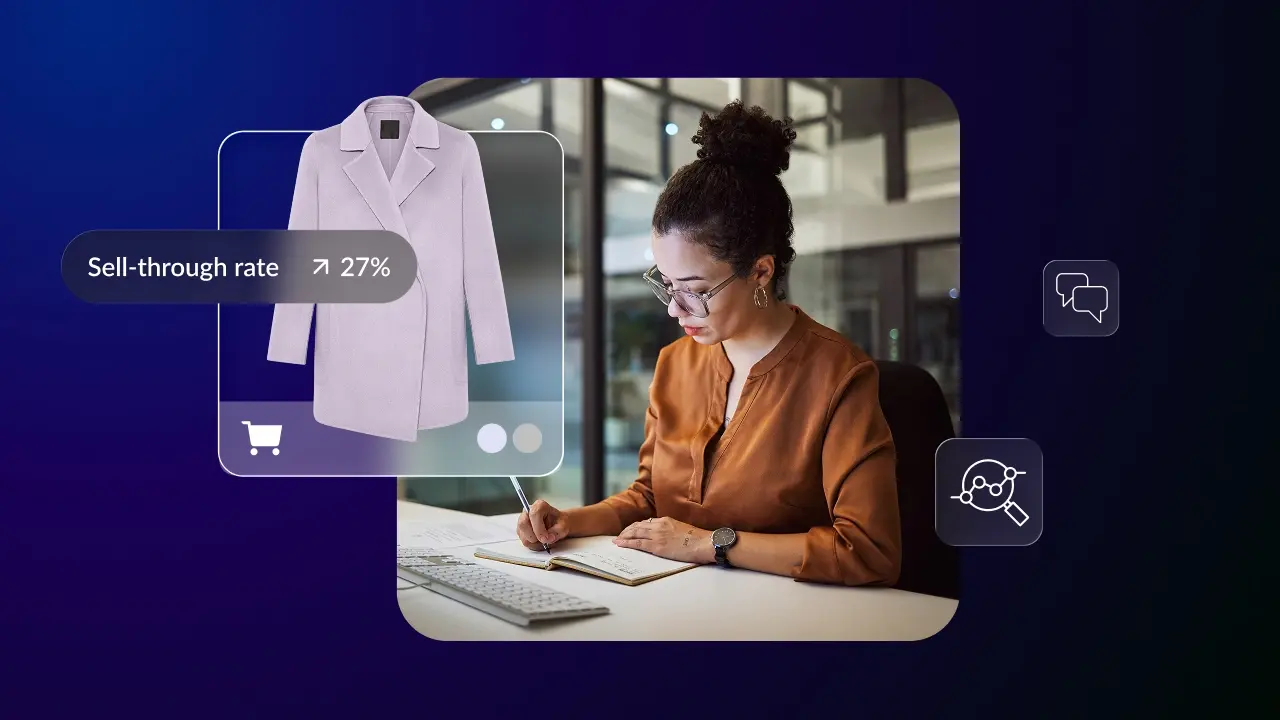
Jessica Schirmer highlighted that wholesale buying is no longer driven by gut instinct alone. Bestseller data, order history, and sell-through metrics now play a central role in planning decisions—for both brands and retailers.
To support this shift, brands need tools that remove friction and create clarity:
- Real-time availability and pricing, so buyers can plan and reorder on their own schedule
- User-friendly catalogs and digital assortments, supported by clean, complete product data
- Self-serve access to insights, reducing back-and-forth and manual follow-ups
When information is accurate, accessible, and easy to navigate, retailers move faster—and brand teams spend less time troubleshooting and more time building relationships. Technology becomes a facilitator of trust, not a barrier.
## Looking ahead to a more connected future
The webinar closed with a look at where brand–retailer collaboration is headed next.
Marie outlined a future defined by deeper connectivity, where systems work together and brands and retailers plan from the same source of truth. Predictive replenishment, network-informed assorting, and shared visibility will continue to shift conversations from debating past orders to planning future opportunities.
The panelists emphasized how technology isn’t replacing the relationship; when paired with the right habits, processes, and mindset, it can strengthen it.
[ Watch From transaction to transformation: Leveraging technology to redefine brand–retailer collaboration on demand. ](https://cta-service-cms2.hubspot.com/web-interactives/public/v1/track/click?encryptedPayload=AVxigLJHPUA7Eyf48CjZjY5JN1aDngzVGxiHPWTeaYzhL6aLYbmgzkQTWGTBF%2F8GRqAm3Bj1%2BWXoHavTxlMdYVd%2Fdpz%2FML0PiukFkxLOSZRELIBQZ2TfVh5BgmNLmppIKgfc0IePCvT9h2VTw1YcuVm2VG3GqO2diTGhMupjQv3YUFmUrjA2QMvyFTk%2BReAXPWfvCgkpb2g9f%2FrPKe3cA0lx5ytOonUT&portalId=6465908)
Share article
[](https://www.instagram.com/nuorder/) [](https://www.instagram.com/nuorder/) [](https://www.facebook.com/NuORDERwholesale/) [](mailto:heroes@nuorder.com)
Inside this post 

## Related articles
[webinar](https://6465908.hs-sites.com/topic?slug=webinar&page=1)
#### [ Beyond the tech gap: How brands are creating better wholesale experiences ](https://blog.nuorder.com/beyond-the-tech-gap-how-brands-are-creating-better-wholesale-experiences)
[webinar](https://6465908.hs-sites.com/topic?slug=webinar&page=1)
#### [ From transaction to transformation: How brands and retailers can build stronger relationships ](https://blog.nuorder.com/from-transaction-to-transformation-how-brands-and-retailers-can-build-stronger-relationships)
[webinar](https://6465908.hs-sites.com/topic?slug=webinar&page=1)
#### [ Webinar recap: How to safeguard margins in a shifting economy ](https://blog.nuorder.com/webinar-recap-how-to-safeguard-margins-in-a-shifting-economy)
[webinar](https://6465908.hs-sites.com/topic?slug=webinar&page=1)
#### [ Commerce meets culture: Insights from a roundtable of fashion industry leaders ](https://blog.nuorder.com/commerce-meets-culture-insights-from-a-roundtable-of-fashion-industry-leaders)
## Get on the list
Wholesale tips and industry news you can’t miss, delivered weekly
### Are you ready to *transform* your wholesale business?
See how NuORDER by Lightspeed can help you reach new heights.
[ Talk to an expert
](https://cta-service-cms2.hubspot.com/web-interactives/public/v1/track/click?encryptedPayload=AVxigLKTDTbBempP%2BRIjgS9pAHdxVMcaOeuSCue926M3eS2Rv%2BdhlcAIirVFnV1lTIGUbsza0Fi2DJZGmb5f94C0BOHDgW4mgifcbgw8devaI11srUFx5DCBpB0Lg4jOVK9Tv6D5DWpy68tMh6%2BJiSpfUiu6tmeWXBL5FV79tyUkVbdm&portalId=6465908)

Demo request
Log in
- Network
- [Exclusive Retailers](https://www.nuorder.com/exclusive-retailers)
- [Partner Program](https://www.nuorder.com/partners/)
- [Resources ](https://www.nuorder.com/resources-archive/)
- [Content Library](https://www.nuorder.com/resources-archive/)
- [Blog](https://blog.nuorder.com/)
- [Case Studies](https://www.nuorder.com/resources-archive/#filter-case-studies)
- [eBooks & Guides](https://www.nuorder.com/resources-archive/#filter-ebooks)
- [Webinars](https://www.nuorder.com/resources-archive/#filter-webinars)
- [Learning & Support](https://learning-support.nuorder.com/)
- [Knowledge Base](https://helpdesk.nuorder.com/hc/en-us/)
- Company
- [About Us](https://www.nuorder.com/about-us/)
- [Careers](https://www.lightspeedhq.com/careers/)
- [Contact Us](https://www.nuorder.com/contactus/)
- [Privacy Policy](https://www.lightspeedhq.com/legal/privacy-policy/)
- [Terms & Conditions](https://www.nuorder.com/terms-and-conditions/)
Get the latest wholesale tips and industry news from our blog delivered to your inbox.
@2025 NuORDER Inc. All Rights Reserved

- [Resources ](https://www.nuorder.com/resources-archive/)
- [Content Library](https://www.nuorder.com/resources-archive/)
- [Blog](https://blog.nuorder.com/)
- [Case Studies](https://www.nuorder.com/resources-archive/#filter-case-studies)
- [eBooks & Guides](https://www.nuorder.com/resources-archive/#filter-ebooks)
- [Webinars](https://www.nuorder.com/resources-archive/#filter-webinars)
- [Learning & Support](https://learning-support.nuorder.com/)
- [Knowledge Base](https://helpdesk.nuorder.com/hc/en-us/)
- Network
- [Exclusive Retailers](https://www.nuorder.com/exclusive-retailers)
- [Partner Program](https://www.nuorder.com/partners/)
- Company
- [About Us](https://www.nuorder.com/about-us/)
- [Careers](https://www.lightspeedhq.com/careers/)
- [Contact Us](https://www.nuorder.com/contactus/)
- [Privacy Policy](https://www.lightspeedhq.com/legal/privacy-policy/)
- [Terms & Conditions](https://www.nuorder.com/terms-and-conditions/)
Demo request
Log in
Get the latest wholesale tips and industry news from our blog delivered to your inbox.
@2025 NuORDER Inc. All Rights Reserved