B2B wholesale platform

Digital B2B catalogs: A complete guide for 2026

A B2B catalog lets wholesale brands present products, pricing, and ordering terms to buyers—learn what it is, what it needs, and how to make it work.

banner_image

Discover a better way to run your wholesale

A B2B catalog is a specialized product presentation tool that lets wholesale brands share their full product line—including pricing, SKUs, colors, sizes, availability, and delivery dates—with retail buyers and business customers. 


Though traditionally shared in print, the past two years have seen their digital counterparts provide undeniable advantages for businesses in industries as diverse as outdoor, lifestyle, home goods, and fashion.

Key takeaways


  • A B2B catalog is a digital or print tool that presents a brand’s product line—pricing, SKUs, availability, and ordering terms—to wholesale buyers and business customers.

  • Unlike B2C catalogs, a B2B catalog supports tiered pricing, account-specific access, bulk ordering, and ERP integration.

  • Digital B2B catalogs update in real time, enable 24/7 ordering, and eliminate the errors and delays that come with static PDFs.

  • Key features to look for include custom pricing, interactive formats, seamless integrations, self-service reordering, and built-in analytics.

  • NuORDER’s B2B catalog software connects digital catalogs directly to ordering workflows, inventory systems, and sales rep tools in one platform.

What is a B2B catalog?

A B2B catalog creates value for businesses by simplifying purchases and expanding market reach. For clients, it provides easy access to comprehensive product information, which leads to better-informed purchasing decisions. With clean navigation and personalized recommendations, the catalog improves the user experience, promoting loyalty and repeat business. Integrating your B2B catalog with inventory management systems creates accurate stock availability, reducing order errors and fulfillment delays. Using a B2B catalog for your business and products shows your company’s adaptability as the eCommerce world continues to evolve.

How is a B2B catalog different from a B2C catalog?

A B2C catalog is built for individual shoppers at fixed prices—one checkout, no negotiation. A B2B catalog has to support the complexity of a wholesale relationship: multiple buyers within the same account, contract-specific pricing, bulk order quantities, approval workflows, and purchasing terms tied to each buyer’s agreement. This is why purpose-built B2B catalog software matters: it enforces pricing rules by account, manages account hierarchies, and integrates with back-end systems in ways a B2C tool simply isn’t designed to do.

Key features of an effective B2B catalog

The best B2B catalog software shares a core set of features that separate it from generic eCommerce tools:

  1. Custom pricing and product visibility—each buyer sees only the products and prices relevant to their account, enforced automatically.

  2. Detailed product information—SKUs, specs, inventory status, MOQs, pack sizes, and availability to support informed purchasing decisions.

  3. Interactive ordering—buyers can place orders directly from the B2B catalog with real-time inventory confirmation.

  4. Streamlined procurement—CSV upload, quick-order forms, one-click reordering, and B2B-specific payment terms.

  5. ERP and systems integration—two-way sync with NetSuite, SAP,, and QuickBooks.

  6. Analytics and buyer intelligence—track product views, reorder gaps, and top performers.

What do I need to create a B2B catalog?

When creating a B2B catalog, there are a couple of things you will want to include. Comprehensive product information, clear pricing, and intuitive navigation are all important to incorporate. Things like detailed descriptions, specifications, and high-quality images can help your buyers make informed decisions about your products. Consider using features like filtering options and search functionality to improve the browsing experience. 

Integration with inventory management systems makes it possible to access real-time inventory updates, while personalized recommendations can make it easier to upsell clients. Make sure your clients have easy access to customer support and seamless checkout processes for a positive user experience. By making your customer support more accessible and making checkout simple and easy, you contribute to a positive user experience that will encourage your customers to return again and again.

7 reasons to switch to a digital B2B catalog

1. One-click shopping

Make it easy to support your brand with a faster and easier buying process. Use digital B2B catalogs so buyers can buy with just one click from shoppable images and videos. When you go digital, you can also accept credit card payments, set up automated payment terms (such as payment upon shipping), and even offer instant point-of-sale financing at checkout — three great tools that encourage retailers to buy. As for buyers who aren’t ready to finalize their orders, eCatalogs can help them plan with one-click order drafts, access to digital notes, and the ability to share drafted orders. 

2. Engaging presentations

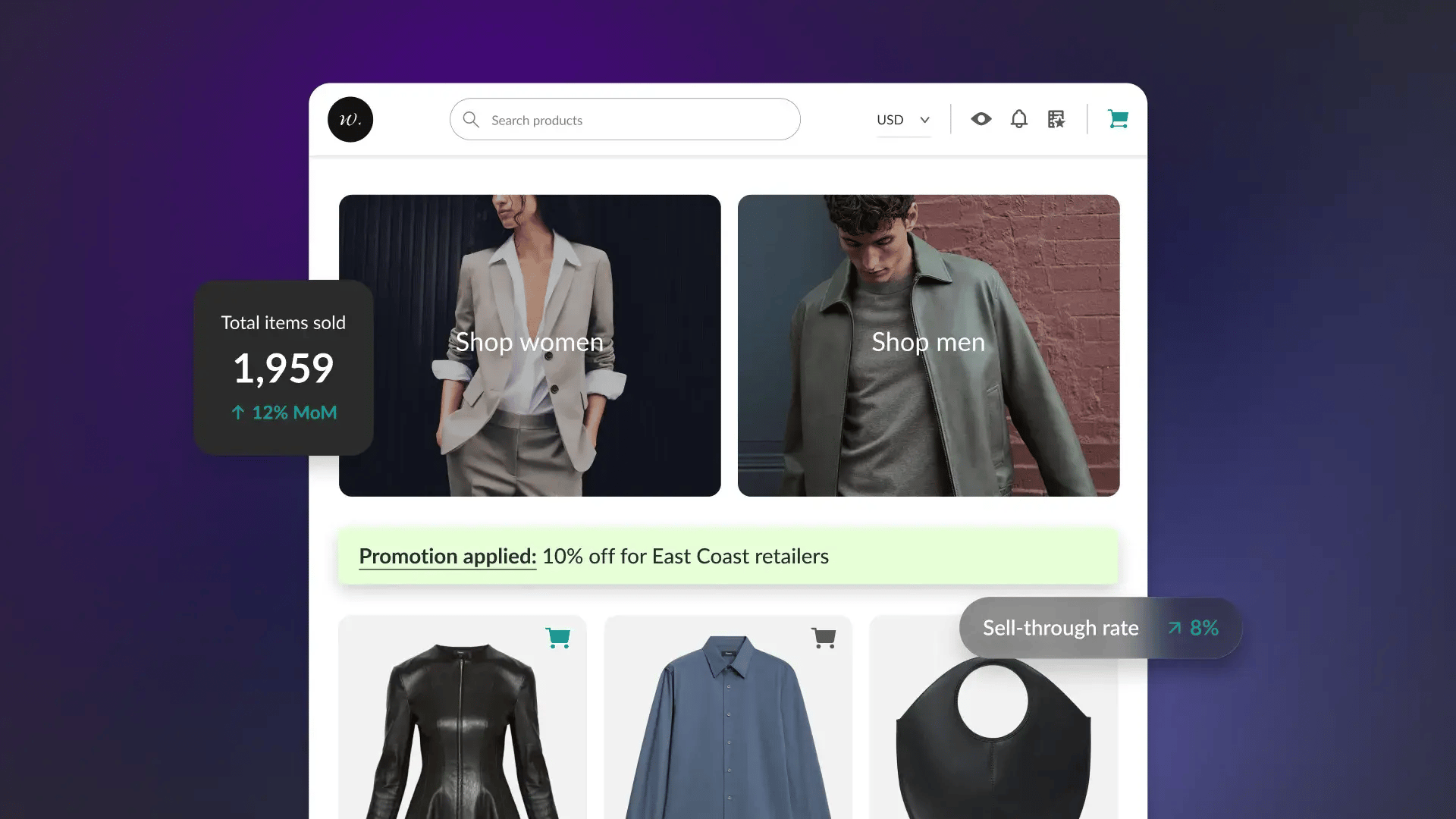
Showcase your products in an eCatalog to bring your company’s vision to life. The right B2B eCommerce platform lets you present high-quality images with all of the details your customers need to place informed buys, including static images, videos, zoomable 360° images, and 3D models. Look for a solution that makes it easy to create an experience buyers won’t soon forget — but remember, a custom catalog is only as useful as you make it. Choose a product that makes it easy to swap out images and update information with flexible templates and drag-and-drop functionality.
B2B Ecom platform-1

3. Round-the-clock sales

When you use digital catalogs in your B2B eCommerce platform, buyers can place orders while you sleep! Reap the benefits of 24/7, 365 sales and the ease of selling to retailers around the globe during the most suitable timeframes for their schedules. Buyers can even shop in their own currencies and languages when you use a top product catalog app solution. Your digital B2B catalog will also help your in-house team and external sales reps collaborate effectively from afar.

4. Efficient appointments

Use your digital B2B catalogs to support your virtual and hybrid appointments. Buyers don’t want to sift through outdated printed materials or request an updated catalog. 

With eCatalogs, you’ll streamline the buying process via:

  • Detailed digital presentations

  • Personalized linesheets

  • Whiteboard for better live collaboration (including merchandising and visualization)

  • Filters for departments, categories, sizes, colors, delivery dates, and custom pricing (such as discounts for specific retailers)

When you get rid of traditional pen and paper, you’ll also have the opportunity to reduce or completely eliminate human error.

Then there’s access to a rich source of data, insights, and reports. You can harness this information to offer better-targeted assortments, identify best-selling products, and otherwise strengthen your relationships with buyers.

5. Digital trade shows

Brands collaborate online with buyers via digital catalogs and B2B platforms, while a product catalog app lets them participate in the world’s best digital trade shows. You can showcase products, sell to businesses 24/7 throughout the shows, share your latest marketing content, and host virtual market appointments with buyers.

6. Seamless sales management

The best digital B2B catalog solutions integrate with all of your software needs across accounting, distribution, ERP, and more to keep your business running smoothly across the board, and in every channel. Find a product catalog app that integrates via real-time two-way sync with products like NetSuite, SAP, and QuickBooks. Live inventory can also help you grow your business by encouraging in-season orders and replenishment buys.

7. Reduced carbon footprint

Offering digital catalogs allows you to skip the printed material at in-person meetings and trade shows, reducing waste and decreasing expenses. 

Bonus: Virtual showrooms

Look for a B2B eCommerce solution that also has a virtual showroom feature. Your virtual showroom will support all of your virtual and hybrid sales as your wholesale hub’s online counterpart.You can use a virtual showroom to share:

  • Key SKUs

  • Collection inspiration

  • Color palettes 

  • Size charts and fit guides

  • Branded videos 

  • Editorials and press

  • Social media content 

How can NuORDER help with B2B catalogs?

NuORDER’s B2B catalog software is built for the complexity of wholesale, not adapted from a B2C storefront. Brands use NuORDER to create dynamic, buyer-specific digital catalogs that show each retailer only the products and prices they’re entitled to see, while connecting directly to ordering workflows so buyers can move from browsing to placing an order in one place.

NuORDER supports custom pricing rules by account, segment, or region; multi-brand and multi-catalog management; real-time inventory sync with major ERP systems, including NetSuite and SAP; and built-in analytics that surface buyer behavior, reorder gaps, and top-performing products. Sales reps can place orders on behalf of buyers and access account-specific dashboards—making the B2B catalog a tool for rep-led growth, not just self-service ordering.

B2B catalog FAQs

What is a B2B catalog?

A B2B catalog is a digital or print tool that lets wholesale brands present their full product line — including pricing, SKUs, availability, and ordering terms — to retail buyers and business customers. Unlike a consumer catalog, it supports complex pricing structures, account-specific access, and bulk ordering at scale.

What does B2B stand for?

B2B stands for business-to-business, meaning transactions between two businesses rather than between a business and an individual consumer. In wholesale eCommerce, B2B typically refers to brands selling products to retailers, distributors, or other business buyers through tools like a digital B2B catalog.

Which B2B site is the best?

The best B2B eCommerce platform depends on your industry, catalog size, and integration needs. NuORDER is purpose-built for wholesale brands in apparel, lifestyle, and consumer goods — offering buyer-specific digital catalogs, direct ordering, ERP integration, and global marketplace access in one connected platform. 

What are examples of B2B products?

B2B products span virtually every industry: apparel and footwear sold wholesale to retailers, industrial equipment sold to manufacturers, software licenses sold to enterprises, and consumer goods sold to distributors. In wholesale eCommerce, these products are typically presented through a digital B2B catalog that manages buyer-specific pricing, inventory, and ordering.

Share article

Inside this post

Get on the list

Wholesale tips and industry news you can’t miss, delivered weekly
Are you ready to transform your wholesale business?

See how NuORDER by Lightspeed can help you reach new heights.