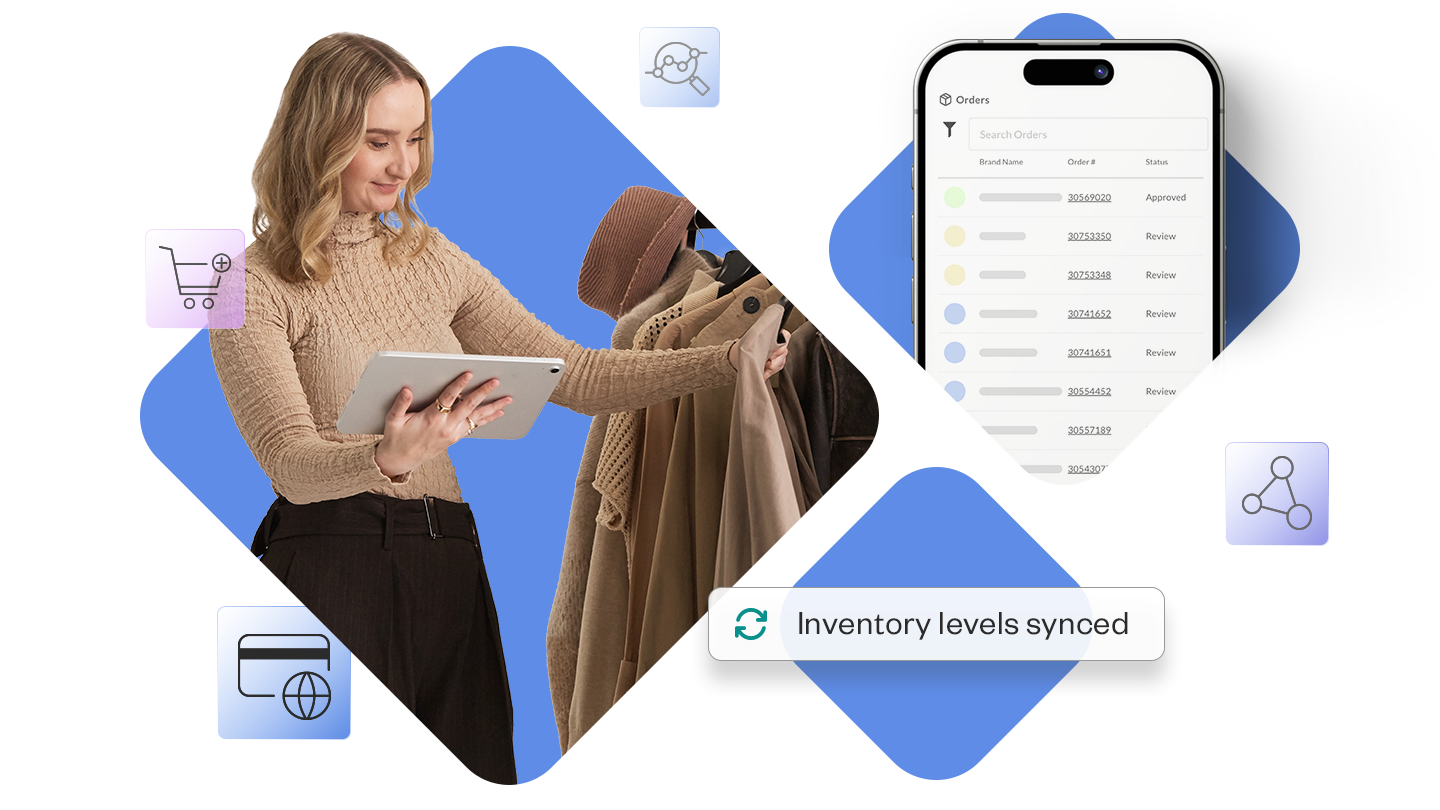
AI in ecommerce is reshaping B2B wholesale buying
See how AI in eCommerce is transforming B2B wholesale buying through smarter forecasting, pricing, and buyer tools.
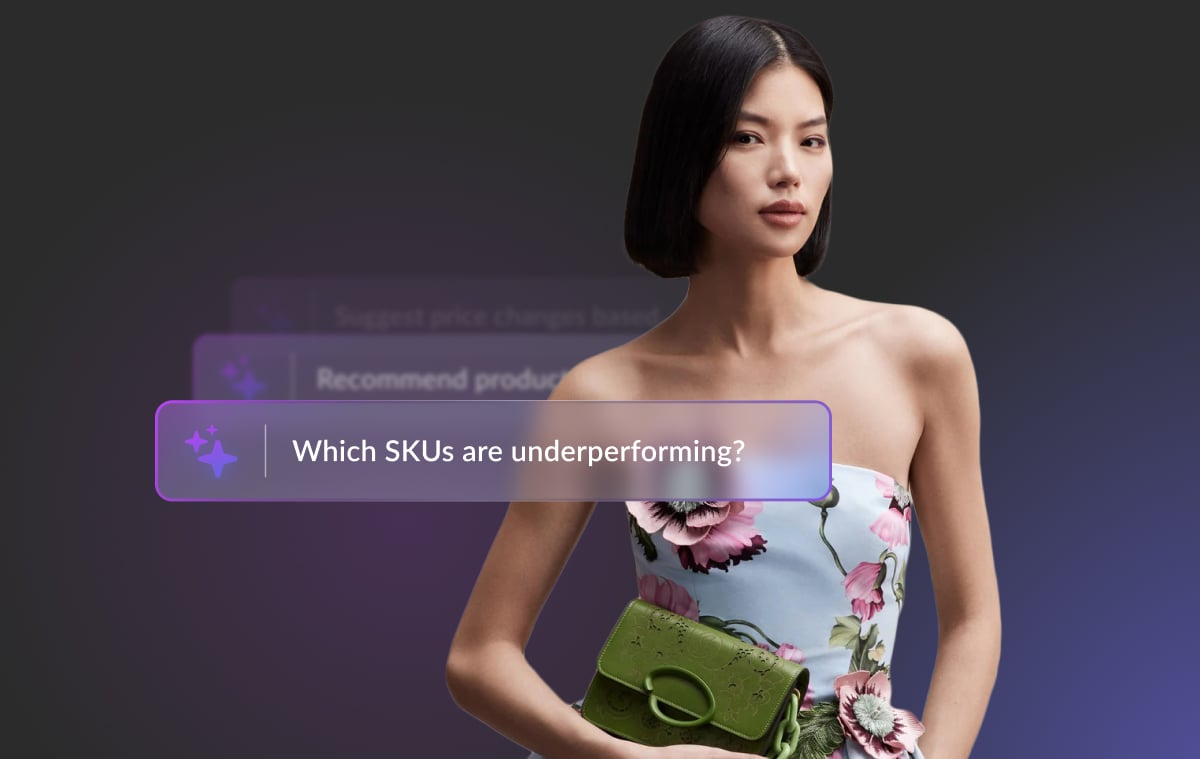
AI in eCommerce has moved well beyond product recommendations and chatbots, and it's quickly reshaping how wholesale buying gets done. From forecasting demand to writing orders, AI is starting to take on work that once relied entirely on manual judgment. This article looks at what AI in eCommerce means for wholesale buyers specifically, where it's already making a measurable difference, and what brands can do to start putting it to work.
Key takeaways
-
AI in eCommerce used to be a nice-to-have; now it’s a core capability across recommendations, pricing, forecasting, and support.
-
Agentic commerce is next on the horizon, autonomous AI systems that act on the behalf of buyers and brands.
-
AI can improve wholesale buying by way of faster assortment decisions, smarter reordering, and more accurate demand forecasting.
-
AI adoption is already linked to measurable gains in conversion, order value, retention, and operational efficiency.
What AI in eCommerce means for wholesale buyers
It’s important to get familiar with common AI in eCommerce technology, including data mining, natural language processing, machine learning, and deep learning. Data mining is when AI explores and cleans your raw data to then identify patterns and provide actionable insights.
Natural language processing is what it sounds like: how AI processes human language to “understand” and interpret it and how it uses it to generate language written or oral communication to respond to your query or interaction. Machine learning refers to how certain AI systems operate; they need some human intervention in order to operate successfully. Think about when you don’t like an answer from a generative AI system or when it misunderstands you or replies with incorrect information; you can re-prompt and explain the issue until you get your desired outcome. Finally, deep learning refers to AI designed in an attempt to mimic the human brain so it can solve issues on its own via behind-the-scenes, complex components, including algorithms.
In B2B wholesale buying, this tech shows up in various features, including predictive reordering, buyer-facing chat support, and automated catalog recommendations. AI adoption in wholesale is accelerating. As a result, these tools are becoming a lot more accessible to brands and retailers of every size.
According to the NuORDER 2026 State of B2B eCommerce Report, the top three AI use cases in wholesale are inventory forecasting, automating routine processes to improve efficiency, and optimizing pricing strategies. Both inventory forecasting and pricing strategies saw considerable YOY jumps in adoption with increases of 22% and 26%, respectively. Automating routine processes increased from 34% adoption in 2025 to 41% in 2026. It’s clear the industry is embracing AI to make faster, smarter decisions.
The rise of agentic commerce in wholesale buying
The rise of agentic commerce in wholesale buying
Agentic commerce presents a vastly different landscape of opportunities from traditional automation. Traditional, rule-based automation is set up to carry out repetitive tasks or to respond in specific ways based on a specific set of actions, criteria, or inputs. Think: input, process, output. Agentic AI is far more sophisticated. These autonomous agents are able to carry out various tasks completely on their own on the behalf of a buyer or brand based on whatever permissions and access they’ve been granted. They’re also able to discern, within limitations, of course. Think: perceive, decide, act, evaluate. This means agentic AI can help buyers and brands make decisions to reduce manual tasks that would otherwise have been the responsibility of employees.
Agentic commerce could reshape wholesale buying by automating reorders, flagging SKUs that are low in stock, and adjusting recommended order quantities in real time. Adoption is expected to expand quickly across enterprise software, which will create a major shift in how buyers and sellers interact across B2B platforms.
Where AI creates the most impact in B2B wholesale buying
AI-powered assortment recommendations help buyers discover relevant products faster based on past orders they've placed, and their distinct buying patterns. Dynamic pricing tools can help brands calculate optimal discounts on and promotions on an account-by-account basis. Finally, demand forecasting models reduce stockouts and overstock by identifying patterns across historical and real-time order data.
Personalized assortment and product recommendations
AI models can streamline the discovery process for wholesale buyers exploring large catalogs. They have the power to analyze buyer order history and buyer behavior to present the most relevant products in a catalog. These personalized recommendations help buyers spend a lot less time browsing while helping them place more confident, complete buys. In turn, this can make your brand more of a priority partner and improve your relationships with buyers.
Dynamic, account-based pricing
No matter how dialed in you are to pricing strategies, it’s impossible for you and your team to have of-the-minute insights into variables like market fluctuations. That’s where dynamic, account-based pricing comes in. These tools remove the guesswork and pull from data and insights to determine when prices should be raised or lowered—and by how much, in order for you to stay competitive in the market without leaving too much money on the table.
Smarter demand forecasting and reordering
AI can be used to support inventory decisions on both the brand and retailer side of a wholesale relationship. In fact, AI-driven forecasting analyzes historical sales data and market trends to predict future demand with greater accuracy. Better forecasting is better for everyone involved; it helps brands and retailers avoid the costly repercussions of stockouts and excess inventory.
Business benefits of AI adoption for brands and retailers
AI-powered wholesale buying offers a host of benefits with measurable results. The speed and level of AI-powered personalization improves customer retention and encourages buyer-submitted orders. AI adoption is also associated with higher conversion rates and increased average order value (AOV) across eCommerce and wholesale channels. Finally, AI-powered automation can take over your sales and merchandising team’s repetitive, manual tasks so they can spend time on strategic aims and relationship-building.
How to implement AI into your wholesale buying strategy
Start with a clear strategy:
-
What are the specific, high-impact AI use cases in your sights?
-
How are those use cases linked to your business goals?
-
And what’s your plan for measuring those goals after implementation?
Prioritize use cases connected to your most in-depth, valuable data, such as order history or buyer behavior. Many brands also benefit from bringing in outside expertise to ensure they build and refine their AI roadmap before they develop a full solution.
How NuORDER supports AI-driven wholesale buying
NuORDER's assortment planning tools help brands and retailers turn buyer data into smarter, faster purchasing decisions. The wholesale platform is designed for collaborative business and easy communication, while its digital catalog gives buyers a far more personalized, data-informed way to discover and reorder products.
Ready to bring AI into your wholesale buying process?
AI in eCommerce is no longer optional in wholesale, and early-adopter brands are positioned to gain a serious edge in speed and personalization. Your best next step? Identify one high-impact use case, such as forecasting or assortment recommendations, then build from there.
NuORDER gives brands and retailers the tools to apply AI-driven insights directly to their wholesale buying workflows. It’s a straightforward process to get started—a live walkthrough is the fastest way to see the platform in action for yourself.
FAQs about AI in eCommerce for wholesale buying
What is AI in eCommerce and how does it apply to wholesale buying?
AI in eCommerce refers to any deployment of artificial intelligence to improve sales, operations, or customer service. While AI in eCommerce once primarily referred to product recommendations and chatbots, it’s much more sophisticated today. In wholesale buying, AI is taking eCommerce to a new level by forecasting demand, writing orders, personalizing recommendations for individual wholesale accounts, and more.
How does agentic commerce differ from traditional eCommerce automation?
Agentic commerce is able to interpret scenarios (perceive) to choose specific sets of action (decide) to then act and evaluate the results of their actions. That’s why people and businesses can task agentic AI with taking actions on their behalf. This is far more sophisticated than traditional eCommerce automation which operates based on a set of rules (think: input, process, output).
What are the most common AI use cases for B2B wholesale brands?
The most common AI use cases for B2B wholesale brands are inventory forecasting to improve sell-through, automating routine processes to improve efficiency, and optimizing pricing strategies to improve margins and sell-through.
Can small and mid-sized wholesale brands afford to adopt AI tools?
AI adoption is no longer the sole domain of massive enterprise businesses; these tools are now affordable for small and mid-sized wholesale brands too. Brands of all sizes can also use AI features within the most important tools in their tech stacks, such as within their wholesale platforms.
How does AI improve demand forecasting for wholesale buyers?
AI can analyze a considerable amount of information to forecast demand with greater accuracy and speed. Specifically, that information encompasses historical sales data as well as market trends.
How does AI powered personalization affect wholesale buyer retention?
When buyers have access to spot-on, personally-tailored recommendations, it gives them the opportunity to both improve their assortments and do business with far greater speed. This makes it much more enticing to continue buying from a particular brand which can help improve buyer retention and increase customer lifetime value (CLV).
Share article


Get on the list
Wholesale tips and industry news you can’t miss, delivered weekly