---
title: How Global Brands Manage Inventory Across Regions | NuORDER
description: Explore how digital wholesale solutions give brands agility and control in multi-region inventory management.
image: https://blog.nuorder.com/hubfs/Blog_manage-inventory_hero.webp
---
[](https://nuorder.com)

- Solutions
- [Brand](https://www.nuorder.com/wholesale/)
- [Department Stores](https://www.nuorder.com/assortments/)
- [Specialty Retailers](https://www.nuorder.com/wholesale-buying/)
- [⏩ **Watch on demand** Winning in Wholesale: Closing the Tech Gap](https://go.nuorder.com/winning-wholesale-closing-the-tech-gap?utm_campaign=Winning+in+wholesale&utm_medium=display&utm_source=www&utm_content=blog+nav)
- Products
- [Wholesale](https://www.nuorder.com/wholesale)
- [eCommerce](https://www.nuorder.com/wholesale/ecommerce/)
- [Advanced Sales Tools](https://www.nuorder.com/wholesale/advanced-sales-tools/)
- [Order Management](https://www.nuorder.com/wholesale/order-management/)
- [Flexible Configurations](https://www.nuorder.com/wholesale/flexible-configurations/)
- [Integrated Payments](https://www.nuorder.com/wholesale/integrated-payments/)
- [Actionable Insights](https://www.nuorder.com/wholesale/actionable-insights/)
- [Assortments](https://www.nuorder.com/assortments/)
- [For Brands](https://www.nuorder.com/assortments/brands/)
- [For Retailers](https://www.nuorder.com/assortments/retailers/)
- [Point of Sale](https://www.lightspeedhq.com/pos/retail/)
- [📖 **Get the Guide ** The Death of Disconnected Wholesale: Learn how wholesale has become more connected](https://go.nuorder.com/death-of-disconnected-wholesale-guide)
- Resources
- Resource Library
- [Case Studies](https://www.nuorder.com/resources-archive/#filter-case-study)
- [Blog](https://blog.nuorder.com/)
- [Knowledge Base](https://helpdesk.nuorder.com/hc/en-us/)
- [Learning & Support](https://learning-support.nuorder.com/)
- [📖 **NEW!** State of B2B eCommerce 2026: Wholesale Reengineered](https://go.nuorder.com/report-state-b2b-ecommerce-2026-wholesale-reengineered?utm_campaign=2026+b2b+report&utm_medium=display&utm_source=www&utm_content=blog+nav)
Log In
Get Started
Blog home B2B eCommerce Blog eCommerce tools All topics

## Blog menu
Blog home B2B eCommerce Blog eCommerce tools All topics

[ Brand ](https://6465908.hs-sites.com/topic?slug=brand&page=1)
# How do global brands manage inventory across regions?
Explore how digital wholesale solutions give brands agility and control in multi-region inventory management.

### Discover a better way to run your wholesale
[ Talk to our team **
](https://cta-service-cms2.hubspot.com/web-interactives/public/v1/track/click?encryptedPayload=AVxigLK26dqakqd%2FGfw8YDOhem1QoEDs7VL9UzC6foJig7hO%2F3kMQMzp6USlKsEZ0IQmM2cqePGYwdQdBbg0KKDZIYwtr9sHcIcTbPgU%2B1wL4NHySGVMsBNQto4jeX9wTIyGoUaoCoY5wHNN%2Fhyhvf03FkXxUfLOcLH18Mom%2FBxUrQ%2Bi&portalId=6465908)
[Global eCommerce ](https://blog.nuorder.com/a-complete-guide-to-global-ecommerce-and-expanding-to-foreign-markets)opens the door to considerable growth, but you can only be as successful as your operations. For instance, you can’t do well on the global stage if you’re battling inventory management issues behind the scenes. You need real-time information about your inventory across every region, channel, and point of fulfillment to make well-informed, strategic decisions about everything from forecasting to allocation. And you need tech tools designed for inventory visibility, control, and speed. Read on to discover how top global brands make it happen.
### Key takeaways
- Visibility is an essential ingredient in global inventory management
- You can set yourself up for success when you get familiar with common challenges and best practices alike
- The right tech tools can greatly improve your global inventory management operations
- Let forecasting and automation bring greater accuracy and ease to your business
## What global inventory management means
Global inventory management is the tracking, allocating, and replenishing of stock across different countries, warehouses, and channels. Global operations can be complex, and that complexity only grows as brands expand into additional markets. There are many factors to consider, including having different partners in different regions with varying levels of reliability, logistical challenges and changes, international trade policies and tariffs, and warehouses with varying processes and systems.
### Why global visibility matters
Going global can elevate the future of your brand—it’s just important to understand the ins and outs of your operations so you can plan for successful outcomes and mitigate risk. The first step is to secure a centralized system so you can have one source of truth where your inventory is concerned. When you’re equipped with real-time visibility into all of your inventory worldwide, you can reduce overselling, stockouts, and [excess inventory](https://go.nuorder.com/ebook-excess-inventory). You can also plan with greater confidence and make faster decisions.
### Common challenges across regions
When you’re selling globally across different regions, you might be faced with such challenges as fragmented systems, uneven demand, manual reporting, and even delayed fulfillment decisions. Any or a combination of these common challenges can produce substantial inefficiencies for your global brand. For instance, you might need to ship slow-selling inventory to a region where it’s selling significantly faster, or fragmented systems could ruin the reliability of your data.
## Best practices for regional inventory allocation
Now that you know more about how global inventory management works, here’s how you can put it into action in a practical sense. Remember, the number one goal is to place the right inventory in the right region at the right time.
### Balance central control with regional flexibility
Use a hybrid model to combine centralized oversight with local responsiveness. This keeps things organized and transparent at the HQ level while offering the kind of adaptability selling across regions requires, such as different timing, logistics, and even categories of SKUs. Hybrid models are the most effective structures for global brands.
### Match inventory to local demand
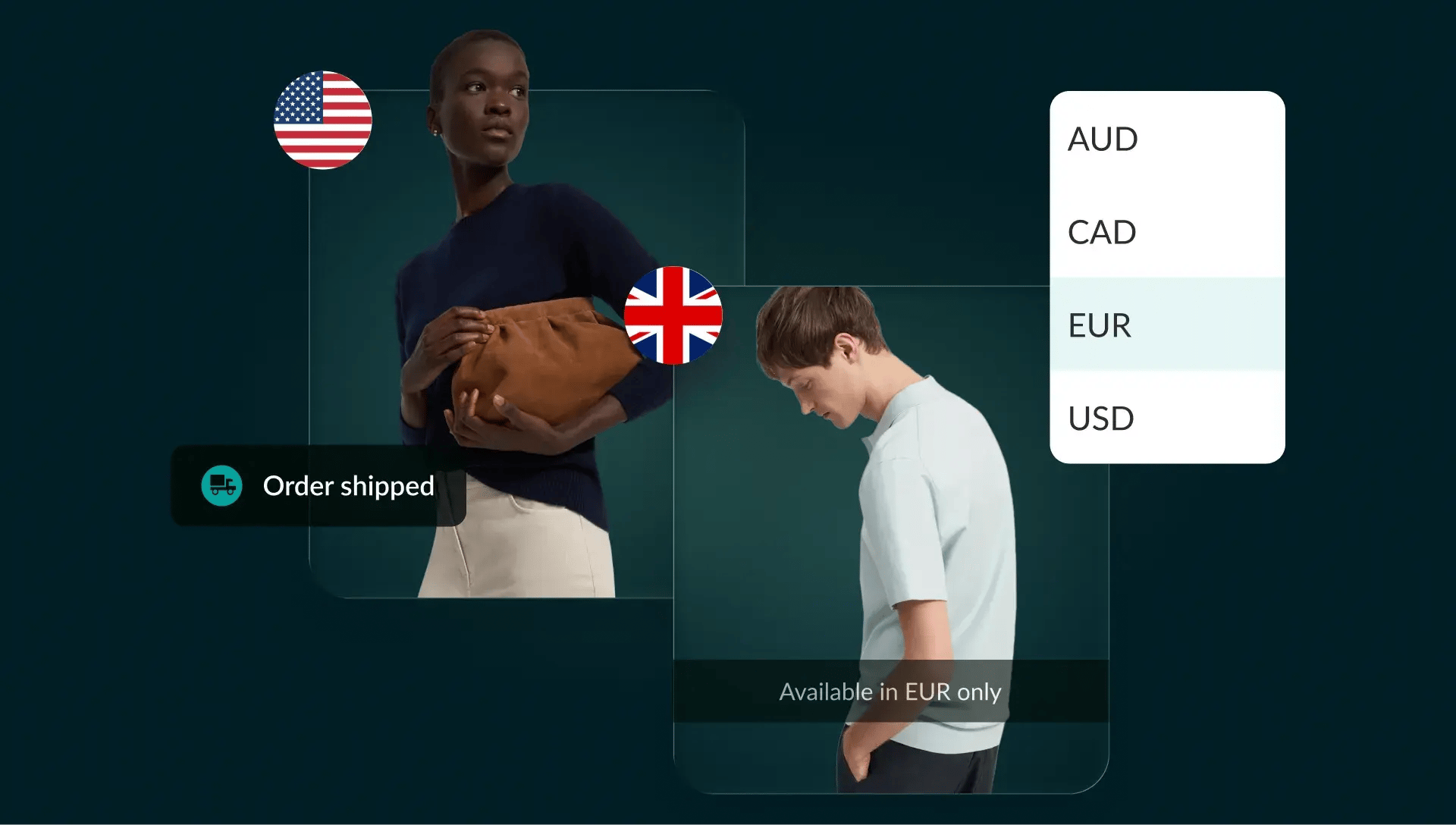
To reduce extra shipping and logistics costs and future markdowns, take the time to understand which inventory works best in which regions. [Cross-border commerce](https://blog.nuorder.com/cross-border-ecommerce-for-b2b) also requires you to be savvy about regional preferences, seasonality, and market timing differences. Regardless of the popularity of your brand and your products, there will always be nuances when it comes to which products sell best in which regions. Always prioritize demand when you allocate inventory, and understand that the same products will require different stock levels in different regions and may even call for different size packs and colors.
### Set reorder points and safety stock
Use your wholesale platform to set reorder points for every region, so that whenever a SKU or category of SKUs dips to a predetermined point, its replenishment will be ordered automatically. Use demand patterns to uncover those strategic reorder points.
It’s also a great idea to send a certain amount of safety stock to each of your warehouses. You can almost think of it as physical inventory’s answer to insurance. Safety stock greatly increases the odds that you’ll still be able to sell and ship goods to retailers even if you experience a sudden increase in demand, shipping delays, supply chain delays, or other events and scenarios that could prevent you from receiving timely replenishments. Not only is this an important move to protect your bottom line, but it’s also significant in maintaining the health of your relationships with retailers.
## Technology platforms that make it possible
Technology is the backbone of modern global [inventory management](https://blog.nuorder.com/inventory-control-techniques). Manual processes are often too slow for multi-region operations, and they’re notorious for being prone to error. Use connected platforms instead, so you can act on your inventory data in real time.
### Use a centralized inventory system
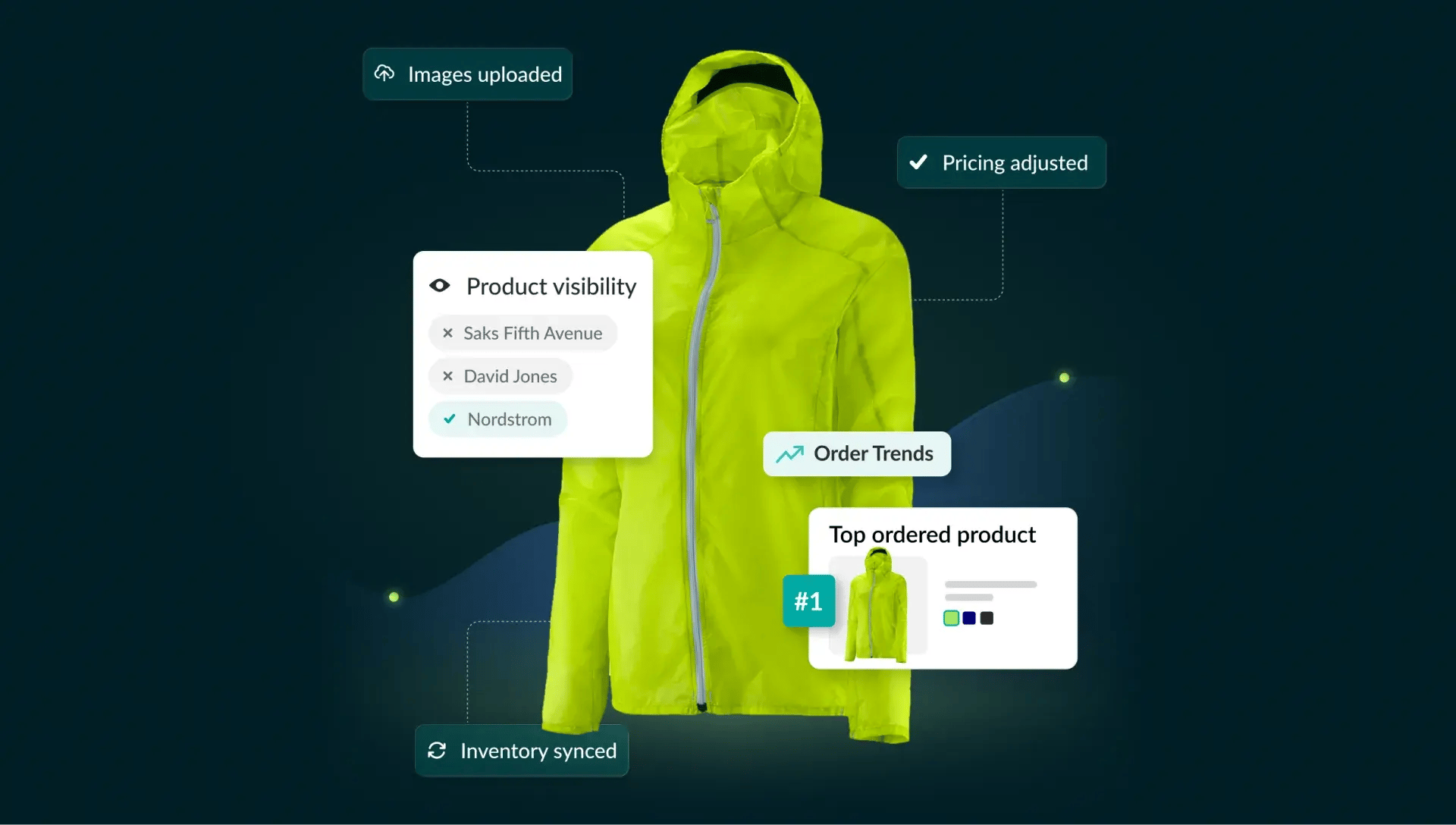
A centralized system creates a single view of inventory across markets and channels. This gives you better control and visibility. It also reduces duplicate work, reporting gaps, and manual errors.
### Connect orders, fulfillment, and reporting
You can greatly improve inventory management when you connect orders, fulfillment, and reporting. Your teams will have reliable insights into what’s available, what’s committed, and what needs to be replenished. This value of this level of operational clarity can’t be emphasized enough. What’s more, your teams will be able to enhance the ways in which they coordinate with one another across functions.
### Enable wholesale teams with shared data
If you want to scale across the globe successfully, it’s important to look at your tech stack, data, and processes. Your wholesale teams need access to the same inventory data as your teams in operations and merchandising. [Quality data also improves alignment when it’s shared](https://blog.nuorder.com/hubfs/Reports/Report_StateofB2BCommerce2026.pdf) across sales, planning, and fulfillment.
## Forecasting and automation
After inventory visibility and allocation, it’s time to get the right forecasting and automation in place. These tools can help you move from reactive inventory management to proactive planning—which changes everything. You can reduce costs, better serve your wholesale partners, and reduce the burden on your teams.
### Forecast demand by region
It’s important for brands to use historical sales, regional buying behavior, and market trends to predict demand. Forecasting will never be a one-size-fits-all endeavor; think regional, every time. The better your forecasts, the better your inventory placement, and thus your sell-through rates and costs.
### Automate replenishment decisions
Use automation to reduce manual effort and to help your teams respond faster. Automate reorder alerts, replenishment workflows, and inventory balancing. Note: automation works best when it’s tied to accurate, connected inventory data.
## Why NuORDER is built for global brands
[NuORDER helps brands scale globally](https://www.nuorder.com/) with greater visibility and control. The wholesale platform is designed to support wholesale operations across regions for healthier and more strategic global growth and opens the door to true connected commerce.
### A connected foundation for wholesale growth
NuORDER helps brands unify their wholesale operations, inventory visibility, and order management, which establishes a stronger foundation for their expansion around the world. It offers reliable data, deep insights, and seamless two-way sync integrations so brands can lean on less friction, greater consistency, and stronger operations.
### Better coordination across teams
When you use NuORDER, your sales, merchandising, and operations teams can all work from the same data. And that shared visibility supports better decision-making across your business. The advantages and complexities of global commerce are clear; if you’d like to scale around the world, you’ll need the right tech tools and connected teams. It’s a game changer when you can go global with plenty of visibility, excellent coordination, and strategic, informed insights. Even though there are so many variables to consider on the international stage, superior execution in these areas will greatly increase your odds for success.
**[Learn how you can sell your products online, in person, and around the world with NuORDER—the B2B commerce platform built to scale with your needs.](https://www.nuorder.com/wholesale/)**
Share article
[](https://www.instagram.com/nuorder/) [](https://www.instagram.com/nuorder/) [](https://www.facebook.com/NuORDERwholesale/) [](mailto:heroes@nuorder.com)
Inside this post 

## Related articles
[brand](https://6465908.hs-sites.com/topic?slug=brand&page=1)
#### [ How do global brands manage inventory across regions? ](https://blog.nuorder.com/how-global-brands-manage-inventory-across-regions)
[brand](https://6465908.hs-sites.com/topic?slug=brand&page=1)
#### [ How to sell wholesale without relying on trade shows ](https://blog.nuorder.com/how-do-brands-sell-wholesale-without-relying-on-trade-shows)
[brand](https://6465908.hs-sites.com/topic?slug=brand&page=1)
#### [ From transaction to transformation: How brands and retailers can build stronger relationships ](https://blog.nuorder.com/from-transaction-to-transformation-how-brands-and-retailers-can-build-stronger-relationships)
[brand](https://6465908.hs-sites.com/topic?slug=brand&page=1)
#### [ Inside 2025 wholesale: What we learned and what brands need to know for 2026 ](https://blog.nuorder.com/inside-2025-wholesale-what-we-learned-and-what-brands-need-to-know-for-2026)
## Get on the list
Wholesale tips and industry news you can’t miss, delivered weekly
### Are you ready to *transform* your wholesale business?
See how NuORDER by Lightspeed can help you reach new heights.
[ Talk to an expert
](https://cta-service-cms2.hubspot.com/web-interactives/public/v1/track/click?encryptedPayload=AVxigLKTDTbBempP%2BRIjgS9pAHdxVMcaOeuSCue926M3eS2Rv%2BdhlcAIirVFnV1lTIGUbsza0Fi2DJZGmb5f94C0BOHDgW4mgifcbgw8devaI11srUFx5DCBpB0Lg4jOVK9Tv6D5DWpy68tMh6%2BJiSpfUiu6tmeWXBL5FV79tyUkVbdm&portalId=6465908)

Demo request
Log in
- Network
- [Exclusive Retailers](https://www.nuorder.com/exclusive-retailers)
- [Partner Program](https://www.nuorder.com/partners/)
- [Resources ](https://www.nuorder.com/resources-archive/)
- [Content Library](https://www.nuorder.com/resources-archive/)
- [Blog](https://blog.nuorder.com/)
- [Case Studies](https://www.nuorder.com/resources-archive/#filter-case-studies)
- [eBooks & Guides](https://www.nuorder.com/resources-archive/#filter-ebooks)
- [Webinars](https://www.nuorder.com/resources-archive/#filter-webinars)
- [Learning & Support](https://learning-support.nuorder.com/)
- [Knowledge Base](https://helpdesk.nuorder.com/hc/en-us/)
- Company
- [About Us](https://www.nuorder.com/about-us/)
- [Careers](https://www.lightspeedhq.com/careers/)
- [Contact Us](https://www.nuorder.com/contactus/)
- [Privacy Policy](https://www.lightspeedhq.com/legal/privacy-policy/)
- [Terms & Conditions](https://www.nuorder.com/terms-and-conditions/)
Get the latest wholesale tips and industry news from our blog delivered to your inbox.
@2025 NuORDER Inc. All Rights Reserved

- [Resources ](https://www.nuorder.com/resources-archive/)
- [Content Library](https://www.nuorder.com/resources-archive/)
- [Blog](https://blog.nuorder.com/)
- [Case Studies](https://www.nuorder.com/resources-archive/#filter-case-studies)
- [eBooks & Guides](https://www.nuorder.com/resources-archive/#filter-ebooks)
- [Webinars](https://www.nuorder.com/resources-archive/#filter-webinars)
- [Learning & Support](https://learning-support.nuorder.com/)
- [Knowledge Base](https://helpdesk.nuorder.com/hc/en-us/)
- Network
- [Exclusive Retailers](https://www.nuorder.com/exclusive-retailers)
- [Partner Program](https://www.nuorder.com/partners/)
- Company
- [About Us](https://www.nuorder.com/about-us/)
- [Careers](https://www.lightspeedhq.com/careers/)
- [Contact Us](https://www.nuorder.com/contactus/)
- [Privacy Policy](https://www.lightspeedhq.com/legal/privacy-policy/)
- [Terms & Conditions](https://www.nuorder.com/terms-and-conditions/)
Demo request
Log in
Get the latest wholesale tips and industry news from our blog delivered to your inbox.
@2025 NuORDER Inc. All Rights Reserved