---
title: "Inside 2025 wholesale: What we learned and what brands need to know for 2026"
description: A look back on the wholesale trends that shaped 2025 and what they signal for brands in the new year.
image: https://blog.nuorder.com/hubfs/Blog_2025Wholesale_hero-1.webp
---
[](https://nuorder.com)

- Solutions
- [Brand](https://www.nuorder.com/wholesale/)
- [Department Stores](https://www.nuorder.com/assortments/)
- [Specialty Retailers](https://www.nuorder.com/wholesale-buying/)
- [⏩ **Watch on demand** Winning in Wholesale: Closing the Tech Gap](https://go.nuorder.com/winning-wholesale-closing-the-tech-gap?utm_campaign=Winning+in+wholesale&utm_medium=display&utm_source=www&utm_content=blog+nav)
- Products
- [Wholesale](https://www.nuorder.com/wholesale)
- [eCommerce](https://www.nuorder.com/wholesale/ecommerce/)
- [Advanced Sales Tools](https://www.nuorder.com/wholesale/advanced-sales-tools/)
- [Order Management](https://www.nuorder.com/wholesale/order-management/)
- [Flexible Configurations](https://www.nuorder.com/wholesale/flexible-configurations/)
- [Integrated Payments](https://www.nuorder.com/wholesale/integrated-payments/)
- [Actionable Insights](https://www.nuorder.com/wholesale/actionable-insights/)
- [Assortments](https://www.nuorder.com/assortments/)
- [For Brands](https://www.nuorder.com/assortments/brands/)
- [For Retailers](https://www.nuorder.com/assortments/retailers/)
- [Point of Sale](https://www.lightspeedhq.com/pos/retail/)
- [📖 **Get the Guide ** The Death of Disconnected Wholesale: Learn how wholesale has become more connected](https://go.nuorder.com/death-of-disconnected-wholesale-guide)
- Resources
- Resource Library
- [Case Studies](https://www.nuorder.com/resources-archive/#filter-case-study)
- [Blog](https://blog.nuorder.com/)
- [Knowledge Base](https://helpdesk.nuorder.com/hc/en-us/)
- [Learning & Support](https://learning-support.nuorder.com/)
- [📖 **NEW!** State of B2B eCommerce 2026: Wholesale Reengineered](https://go.nuorder.com/report-state-b2b-ecommerce-2026-wholesale-reengineered?utm_campaign=2026+b2b+report&utm_medium=display&utm_source=www&utm_content=blog+nav)
Log In
Get Started
Blog home B2B eCommerce Blog eCommerce tools All topics

## Blog menu
Blog home B2B eCommerce Blog eCommerce tools All topics

[ Brand ](https://6465908.hs-sites.com/topic?slug=brand&page=1)
# Inside 2025 wholesale: What we learned and what brands need to know for 2026
A look back on the wholesale trends that shaped 2025 and what they signal for brands in the new year.
### Discover a better way to run your wholesale
[ Talk to our team **
](https://cta-service-cms2.hubspot.com/web-interactives/public/v1/track/click?encryptedPayload=AVxigLK26dqakqd%2FGfw8YDOhem1QoEDs7VL9UzC6foJig7hO%2F3kMQMzp6USlKsEZ0IQmM2cqePGYwdQdBbg0KKDZIYwtr9sHcIcTbPgU%2B1wL4NHySGVMsBNQto4jeX9wTIyGoUaoCoY5wHNN%2Fhyhvf03FkXxUfLOcLH18Mom%2FBxUrQ%2Bi&portalId=6465908)
The world of retail saw a rollercoaster of ups and downs this year. While economic uncertainty and tariffs dominated news cycles, we also saw a renewed appetite for in-store shopping and more intentional consumer spending. It was a mixed bag of pressures and unexpected bright spots, nudging businesses to adapt to a rapidly changing market. Brands and retailers alike turned to their wholesale tools and data to tighten collaboration and bring more efficiency to the buying cycle.
Let’s take a look back on 2025 and see how these shifts reshaped the wholesale landscape—and what they signal for the year ahead. The patterns that emerged this year offer a clearer blueprint for how brands can plan smarter, build stronger retailer partnerships, and enter 2026 with more confidence.
## Tariffs and cost pressures
[Tariffs were on everyone’s minds this year](https://blog.nuorder.com/beyond-price-tags-margins-and-market-strategy-tariff-era). Ongoing cost pressures continued to shape how brands and retailers approached their operations. Higher import costs created margin strain and added uncertainty across supply chains, prompting some businesses to slow or rethink purchasing decisions.
In response, many brands and retailers sharpened their operations and placed greater emphasis on product value. Assortments became more intentional, price transparency took on new importance, and partnerships with suppliers were explored more proactively as a way to relieve cost pressure and maintain stability.
## AI’s leaps in wholesale and the shift toward intelligent buying
This year, more retailers leaned on data and AI to aid in their decision making. Almost 70% of respondents in our [2025 Retail Insights Report](https://go.nuorder.com/retail-insights-report-2025-age-of-intelligent-buying) said they relied heavily on quantitative data like sales and revenue for forecasting purposes. In addition, 17% of buyers acknowledged using AI in the buying and planning process, up from 11% in 2024.
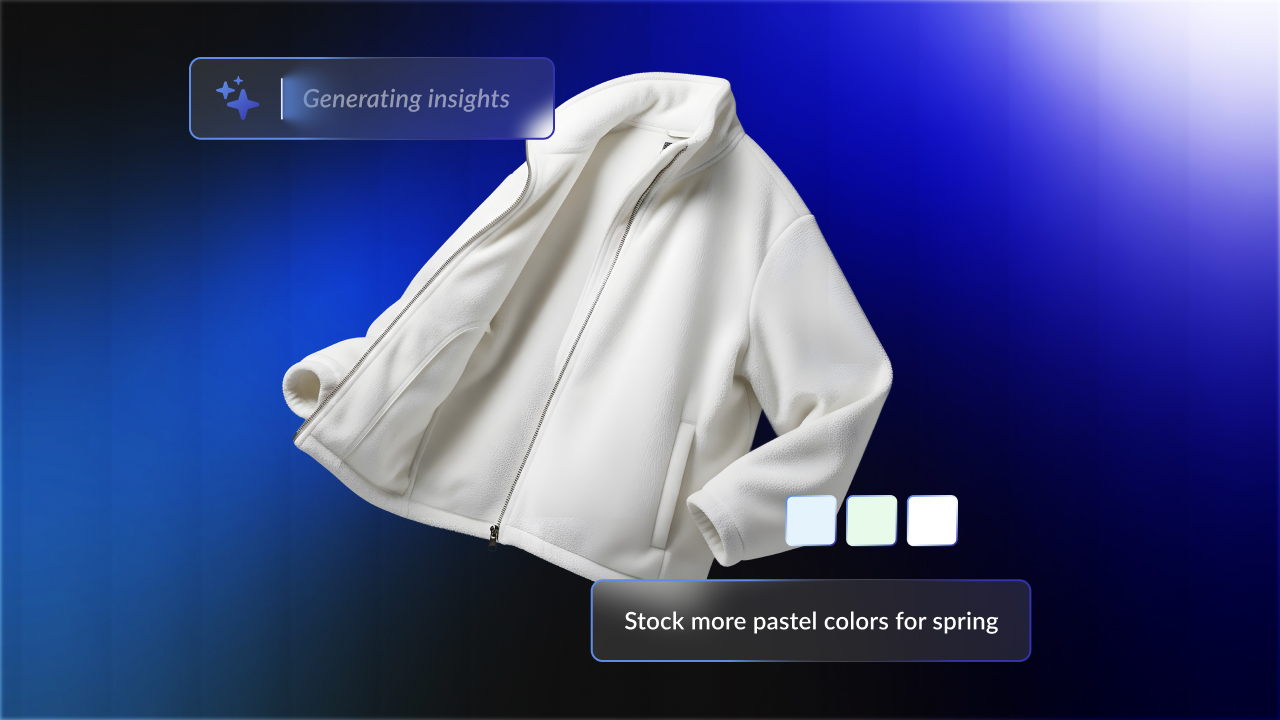
2025 Retail Insights Report
This shift in the use of data to inform buying decisions was necessary to maintain profitability amidst changing consumer behavior and unstable demand. Many retailers opted to mix data with intuition when building assortments in order to remain relevant and in line with consumer tastes.
## The resurgence of brick-and-mortar and the return of experiential retail
After years of uncertainty, physical retail has reasserted its importance. In 2025, shoppers showed a renewed appetite for in-person experiences—seeking out [stores that feel curated, local, and grounded in real human connection](https://blog.nuorder.com/observations-from-the-rise-of-independent-fashion-boutiques). Retailers responded by sharpening their brand identity, tailoring assortments to specific audiences, and creating spaces that invite discovery rather than just transactions.
Community building became a defining focus. Independent retailers leaned into what makes them unique: personalized service, localized product mixes, and experiences that reflect the character of their neighborhoods. As consumers looked for more meaningful interactions, many retailers used experiential retail as a strategic differentiator.
## How technology kept pace—and how platforms like NuORDER helped teams stay agile
In 2025, brands continued investing in the tools that help them move faster and serve customers more consistently. Reporting and analytics became essential for personalization and loyalty, while omnichannel capabilities helped create a smoother end-to-end experience.
On the wholesale side, teams took a closer look at their eCommerce platforms to understand how to get more value from them—from improving product presentation to simplifying order workflows and strengthening collaboration with retailers. For many, technology became the bridge that kept teams agile amid shifting demand and rising expectations.
For example, luxury fashion brand [Massimo Alba](https://go.nuorder.com/case-study-massimo-alba) turned to NuORDER to improve convenience and accessibility for retailers by enabling multi-user access, allowing buyers from separate departments to collaborate. [7 For All Mankind](https://go.nuorder.com/case-study-7-for-all-mankind), another luxury brand, leveraged the platform to boost their customer experience by tackling disruptive backend issues like inventory management.
[Arc’teryx](https://go.nuorder.com/case-study-arcteryx) adopted a similar mindset, setting a goal to become one of the easiest brands for retailers to work with. By prioritizing long-term partnerships and streamlining the buying journey, they used NuORDER to deliver a more seamless and collaborative experience.

Source: Arc'teryx
## Looking forward to 2026: What brands should prepare for
Despite the challenges that shaped wholesale this year, the outlook for 2026 remains optimistic. One of the biggest developments to watch is the growing role of AI in the buying and planning process. As these tools mature, retailers are becoming more comfortable weaving AI-driven insights into their decision-making—helping them plan assortments, manage risk, and respond to shifts more quickly.
That said, the market will continue to evolve. Changes in consumer behavior and broader global trends may bring periods of adjustment—but they also create opportunities for brands that stay flexible and data-driven. To navigate this environment, brands should focus on tightening their operations with the help of technology and AI, strengthening long-term partnerships to create stability, and exploring new revenue opportunities through cross-border expansion.
[Explore NuORDER's all-in-one wholesale commerce platform for brands
](https://cta-service-cms2.hubspot.com/web-interactives/public/v1/track/click?encryptedPayload=AVxigLJO%2F4yyuyfUZk8de1CgBsi8A6rbZb43rTTff1qHi%2Fh6b12btLE0m6mizaA1wvjvxv%2F5wwRfyKZlYh5COV5loE8M4hleP4icSUAyI6CCDEj7gchoenoNfKFiNN4PHdvi9fB2nRNgvlxFK6RMgCy5J4%2FZzuu2OA4XCgJpztqRWN2NIxG5BH0%3D&portalId=6465908)
Share article
[](https://www.instagram.com/nuorder/) [](https://www.instagram.com/nuorder/) [](https://www.facebook.com/NuORDERwholesale/) [](mailto:heroes@nuorder.com)
Inside this post 

## Related articles
[brand](https://6465908.hs-sites.com/topic?slug=brand&page=1)
#### [ How do global brands manage inventory across regions? ](https://blog.nuorder.com/how-global-brands-manage-inventory-across-regions)
[brand](https://6465908.hs-sites.com/topic?slug=brand&page=1)
#### [ How to sell wholesale without relying on trade shows ](https://blog.nuorder.com/how-do-brands-sell-wholesale-without-relying-on-trade-shows)
[brand](https://6465908.hs-sites.com/topic?slug=brand&page=1)
#### [ From transaction to transformation: How brands and retailers can build stronger relationships ](https://blog.nuorder.com/from-transaction-to-transformation-how-brands-and-retailers-can-build-stronger-relationships)
[brand](https://6465908.hs-sites.com/topic?slug=brand&page=1)
#### [ Inside 2025 wholesale: What we learned and what brands need to know for 2026 ](https://blog.nuorder.com/inside-2025-wholesale-what-we-learned-and-what-brands-need-to-know-for-2026)
## Get on the list
Wholesale tips and industry news you can’t miss, delivered weekly
### Are you ready to *transform* your wholesale business?
See how NuORDER by Lightspeed can help you reach new heights.
[ Talk to an expert
](https://cta-service-cms2.hubspot.com/web-interactives/public/v1/track/click?encryptedPayload=AVxigLKTDTbBempP%2BRIjgS9pAHdxVMcaOeuSCue926M3eS2Rv%2BdhlcAIirVFnV1lTIGUbsza0Fi2DJZGmb5f94C0BOHDgW4mgifcbgw8devaI11srUFx5DCBpB0Lg4jOVK9Tv6D5DWpy68tMh6%2BJiSpfUiu6tmeWXBL5FV79tyUkVbdm&portalId=6465908)

Demo request
Log in
- Network
- [Exclusive Retailers](https://www.nuorder.com/exclusive-retailers)
- [Partner Program](https://www.nuorder.com/partners/)
- [Resources ](https://www.nuorder.com/resources-archive/)
- [Content Library](https://www.nuorder.com/resources-archive/)
- [Blog](https://blog.nuorder.com/)
- [Case Studies](https://www.nuorder.com/resources-archive/#filter-case-studies)
- [eBooks & Guides](https://www.nuorder.com/resources-archive/#filter-ebooks)
- [Webinars](https://www.nuorder.com/resources-archive/#filter-webinars)
- [Learning & Support](https://learning-support.nuorder.com/)
- [Knowledge Base](https://helpdesk.nuorder.com/hc/en-us/)
- Company
- [About Us](https://www.nuorder.com/about-us/)
- [Careers](https://www.lightspeedhq.com/careers/)
- [Contact Us](https://www.nuorder.com/contactus/)
- [Privacy Policy](https://www.lightspeedhq.com/legal/privacy-policy/)
- [Terms & Conditions](https://www.nuorder.com/terms-and-conditions/)
Get the latest wholesale tips and industry news from our blog delivered to your inbox.
@2025 NuORDER Inc. All Rights Reserved

- [Resources ](https://www.nuorder.com/resources-archive/)
- [Content Library](https://www.nuorder.com/resources-archive/)
- [Blog](https://blog.nuorder.com/)
- [Case Studies](https://www.nuorder.com/resources-archive/#filter-case-studies)
- [eBooks & Guides](https://www.nuorder.com/resources-archive/#filter-ebooks)
- [Webinars](https://www.nuorder.com/resources-archive/#filter-webinars)
- [Learning & Support](https://learning-support.nuorder.com/)
- [Knowledge Base](https://helpdesk.nuorder.com/hc/en-us/)
- Network
- [Exclusive Retailers](https://www.nuorder.com/exclusive-retailers)
- [Partner Program](https://www.nuorder.com/partners/)
- Company
- [About Us](https://www.nuorder.com/about-us/)
- [Careers](https://www.lightspeedhq.com/careers/)
- [Contact Us](https://www.nuorder.com/contactus/)
- [Privacy Policy](https://www.lightspeedhq.com/legal/privacy-policy/)
- [Terms & Conditions](https://www.nuorder.com/terms-and-conditions/)
Demo request
Log in
Get the latest wholesale tips and industry news from our blog delivered to your inbox.
@2025 NuORDER Inc. All Rights Reserved