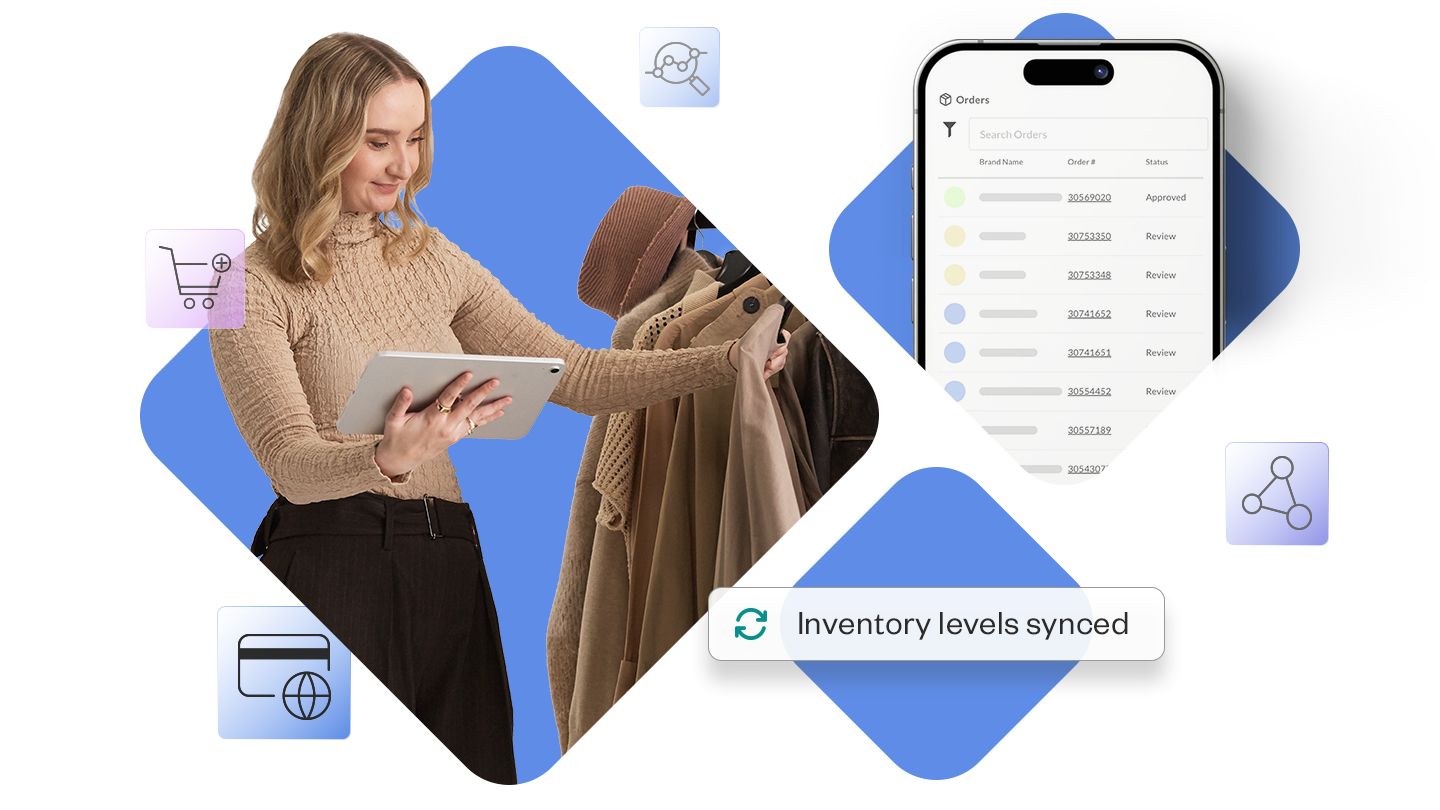
Learn how eCommerce tools improve operational efficiency through automation, faster fulfillment, and real-time data insights.
Operational efficiency is the ability to complete processes with minimal investments of time and money while reducing the risk of error and maintaining quality output. There are several ways in which inefficiencies can appear in your eCommerce business. For example, manual data entry creates delays and can lead to costly inaccuracies and disconnected systems can duplicate work. Further, inventory mismatches can lead to overselling or stockouts.
Thankfully, efficient operations can help you reap richer, healthier outcomes. Faster fulfillment can decrease your costs and help you strengthen customer satisfaction and loyalty. Your efficient operations can also make it much more feasible for your business to scale without needing to make proportional increases in your headcount.
The right eCommerce tools can automate key processes to transform your operations.
Those operational efficiencies can reduce strain on your teams, reduce costs, make your business more scalable, and more.
Some automations offer greater benefits, advantages, and ROI.
eCommerce tools are software solutions that automate, integrate, and optimize business processes. And the right automations have the power to significantly enhance your operations because they reduce repetitive, manual tasks. For instance, inventory management systems update your stock levels in real time, order management systems centralize your order workflows, and CRM and marketing platforms support personalization at scale. What’s more, if your tech tools are integrated in a way that lets them communicate effectively (like NuORDER’s powerful two-way sync), you’ll be able to work from a unified operational ecosystem.
These workflows automate tasks like invoicing, order confirmations, and email follow-ups. They also reduce manual workload and human error, and free up team members’ valuable time so they can focus on strategy and growth initiatives.
The best eCommerce tools can synchronize your inventory across multiple channels in real time. As a result, you can prevent both overselling and stockouts. These tools also allow you to automatically place reorders whenever inventory levels hit predetermined quantities and help you improve your inventory planning for the seasons ahead.
You can use eCommerce tools to streamline order processing and improve how you coordinate fulfillment to reduce errors and delivery delays. You can also use them to generate accurate labels and to gain access to instant tracking updates.
Ensure you and your team can operate your business from a single hub by connecting your storefronts, inventory systems, CRM, and finance tools. Not only will it provide a single source of truth for your business performance, but you’ll eliminate duplicate data entry and siloed information.
Reference your data to identify buying trends and best-selling products. When you have deeper visibility into order performance and inventory movement, you can help your wholesale partners make more informed buying and merchandising decisions. This improves sell-through rates for everyone involved while strengthening these essential relationships.

Inventory management gets a lot easier when you have access to real-time stock tracking across all of your channels; it offers better visibility and more reliable fulfillment. You can even create automated replenishment triggers based on thresholds to maintain your desired inventory levels.
Use a centralized dashboard and automated order routing to manage orders from every channel and across systems and partners. This speeds up your operations with faster processing times and lower costs.
Use automated workflows to manage inquiries and order updates with faster response times and higher customer satisfaction. You can even automate ticket routing and prioritize the order of their responses.
eCommerce tools can help you scale your marketing activities and protect your revenue through such features as automated email campaigns, seamless segmentation and targeting, and abandoned cart recovery. You can also put behavior-based, personalized product recommendations into action to increase average order value (AOV) and customer satisfaction.
Reduce strain on your customer service teams with automated return approvals and label generation. Customers will appreciate your faster refunds and exchanges, and it can help them feel more comfortable shopping from your eCommerce site again. Respecting their time creates a better customer experience.
Improving your operational efficiency opens the door to a number of wins. Picture higher productivity at the same headcount, lower costs, and better customer experiences thanks to greater accuracy and speed. You can also bring your new products and campaigns to market faster and make it much easier to scale.
No two eCommerce tools are alike. Look for scalable tools that can be seamlessly integrated with the existing systems in your tech stack. Opt for user-friendly interfaces so your team members will understand and adopt them much faster. Finally, reach for eCommerce tools that are both customizable and flexible so you can create unique workflows that truly meet your needs.
Will there be upfront investments to make? Yes. But with the right eCommerce tools in place, you’ll enjoy a long-term reduction in costs thanks to automation. You might also be able to reduce labor and operational expenses, like scaling your business without doubling your team or their responsibilities. It’s also important to remember that your investment will be offset by your tools’ impact on your revenue; greater efficiency can lead to greater sales.
Even though the right software and automations will ultimately simplify your operations, it’s important to know that the initial setup does involve some complexity. You might face some integration challenges too—work with your software providers’ integration teams to get set up for success. You’ll also need ongoing maintenance and optimization/updates so choose eCommerce tool companies that have great customer support and technical expertise.
And while automation comes with many advantages, it’s by no means a replacement for the human touch. It’s important to maintain a certain level of manual oversight and to be strategic when it comes to deciding what should be automated and what should really be approached on a case-by-case basis with a person making the decisions.
Finally, your automations will only ever be as good as the accuracy of your inputs. Make sure you can rely on the data sources that are integrated with your tools.
So what’s next in the world of eCommerce automation and tech? In our retail insights report, “The Age of Intelligent Buying,” we discovered the following:
AI-driven personalization is becoming more advanced and better at predictions
Buyers are increasingly using predictive analytics to support demand forecasting
Voice commerce and conversational AI use are on the rise
We’re seeing more low-code and no-code automation tools
There’s a greater emphasis on unified commerce ecosystems
The right eCommerce platform will help you drive operational efficiency with a combination of top-tier integration, automation, and scalability. And modern platforms have the power to unify wholesale workflows across ordering, inventory visibility, the buyer experience, and more. Finally, the human experience is an important element; when wholesale partners can collaborate in a shared digital environment designed to meet their business’ needs, it strengthens relationships and brings speed to the buying process.
NuORDER offers the perfect example of eCommerce platform advantages. It offers 24/7 ordering via a password-protected wholesale website, and real-time inventory visibility for seamless pre-book orders and orders for goods that are available to sell (ATS)—all of which reduces errors and delays. NuORDER’s centralized order management system also reduces errors and delays, thanks to the elimination of manual processes (like jotting orders with paper and pen) and disconnected systems (with wildly different data standards). You can also use it to create personalized pricing and assortments and to offer visual, shoppable product experiences that help buyers browse and order more efficiently.
Look for issues like manual order entry and a reliance on spreadsheets. Inventory mismatches, overselling, and stock visibility issues also create lags in efficiency. And if your systems are disconnected, you’re giving your teams extra work. When your teams want to work faster but your systems process order slowly or they produce frequent errors, it slows everything down. Instead of improving systems and sales, your team has to focus on troubleshooting instead.
Automate high-volume, repetitive tasks like order entry, invoicing, and confirmations. Automate your inventory syncing across all channels, as well as order updates and status tracking. Finally, automate any account-specific pricing and approvals to speed up the buying process—and automate any internal workflows that create bottlenecks.
Pay special attention to integrating your ERP for reliable product, pricing, and order data. Integrate your inventory systems for real-time stock visibility, and your POS systems for alignment with retail stores. Be sure to integrate your payments, invoicing systems, and order management systems too, so you can centralize your workflows and access reliable insights and data.
Measure the efficacy and return on investment (ROI) of your eCommerce automation tools by how much time you’ve been able to save and how much you’ve been able to reduce your errors and duplicate work. Compare your new order processing times with what it was before you integrated your new tools, and see if your turnaround times are faster. How accurate is your inventory now? Are you experiencing fewer inventory issues? What about order volumes and average order value (AOV)—have you been able to increase them through your better buying experience?
Wholesale tips and industry news you can’t miss, delivered weekly